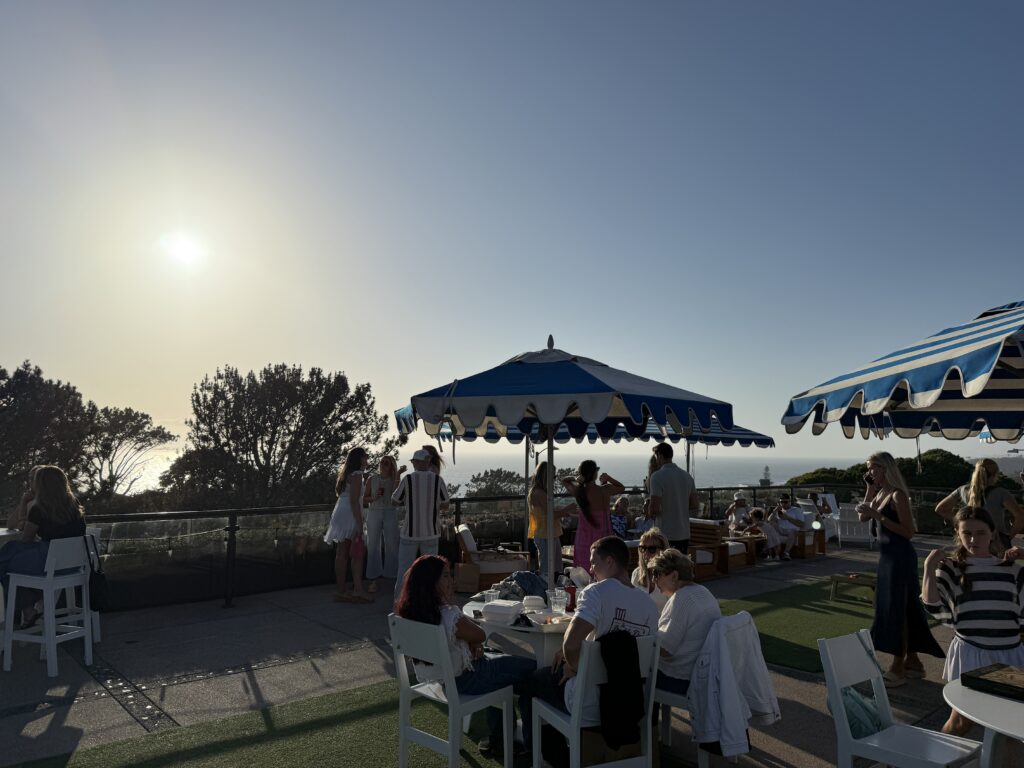
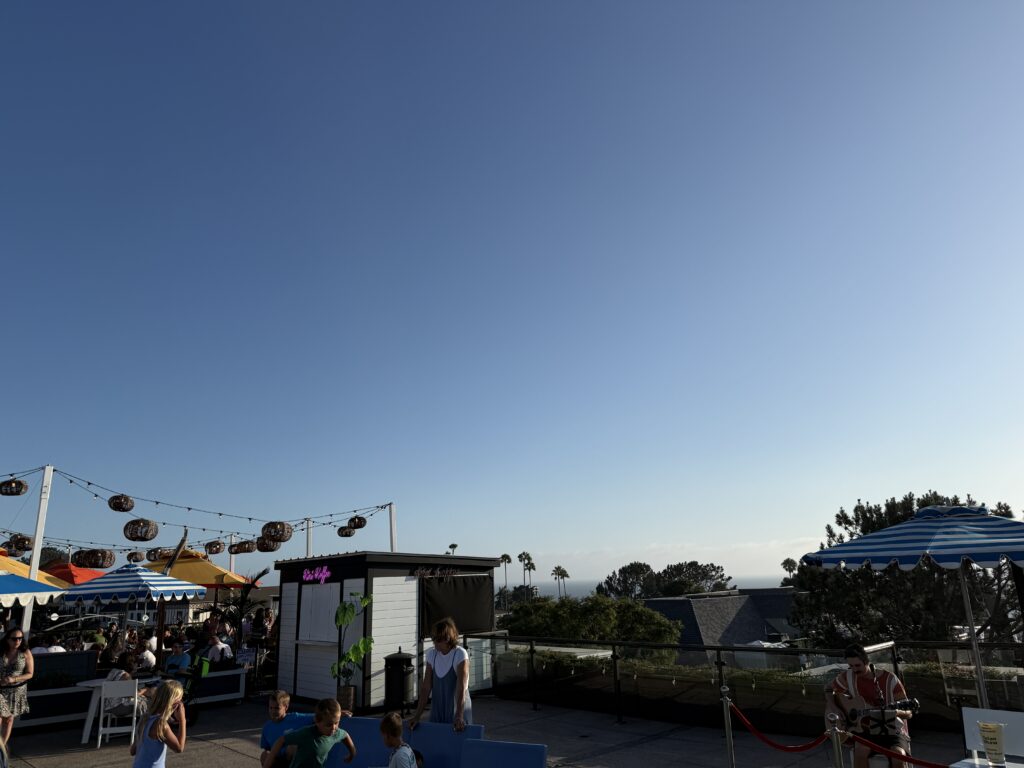
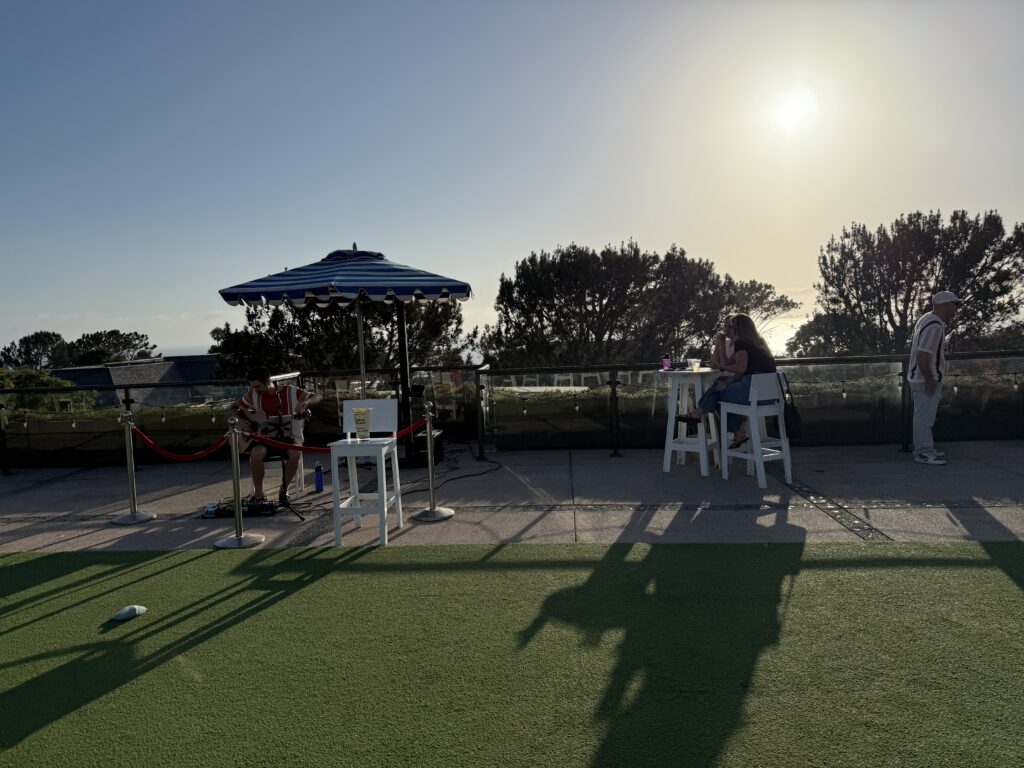
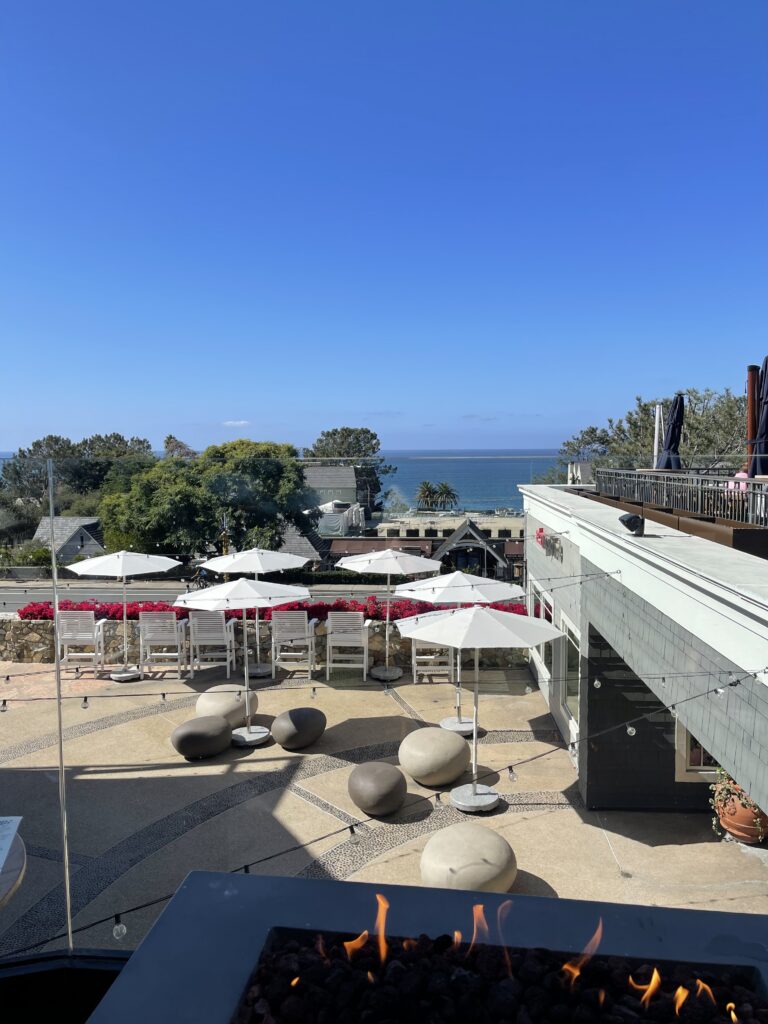
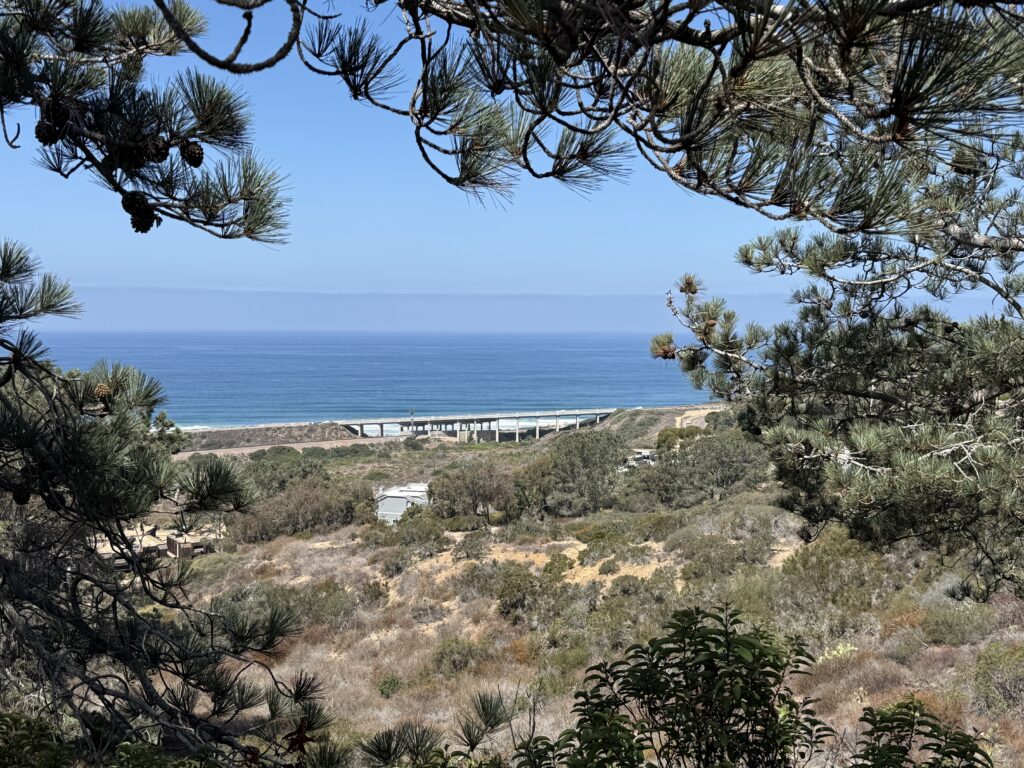
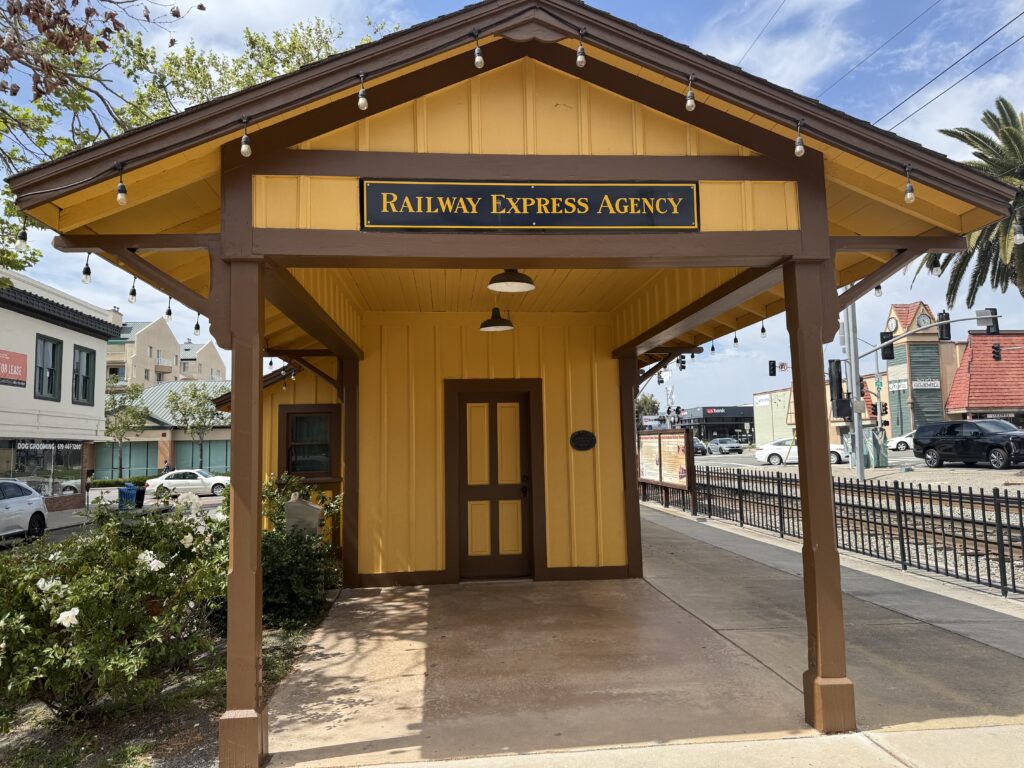
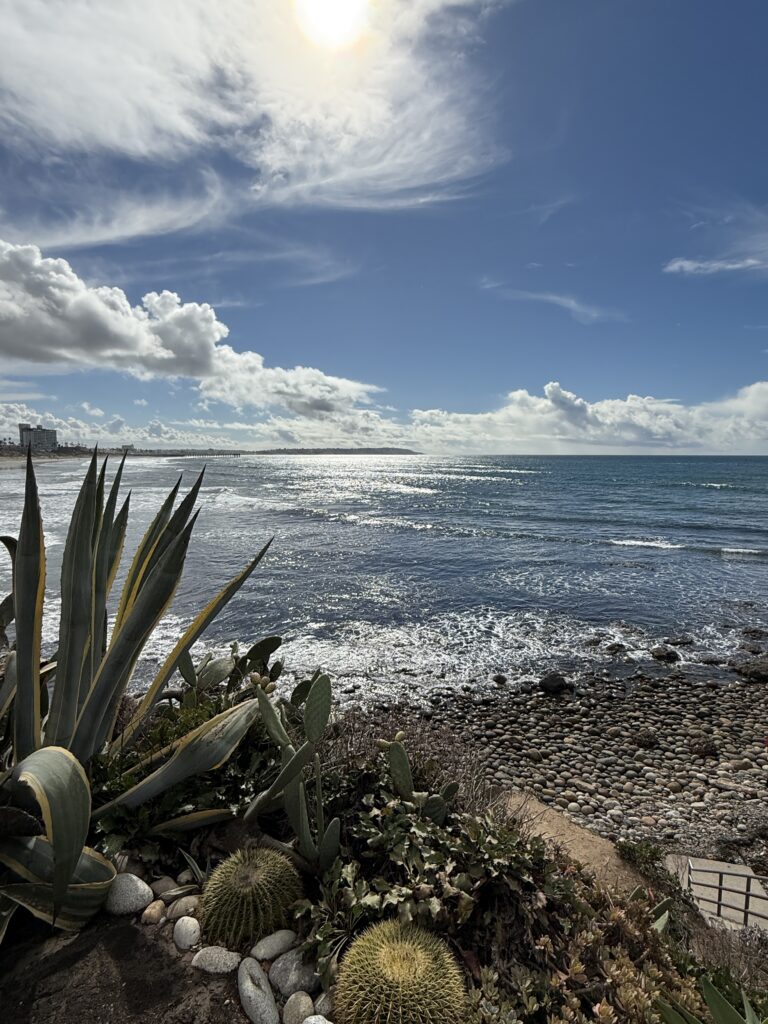
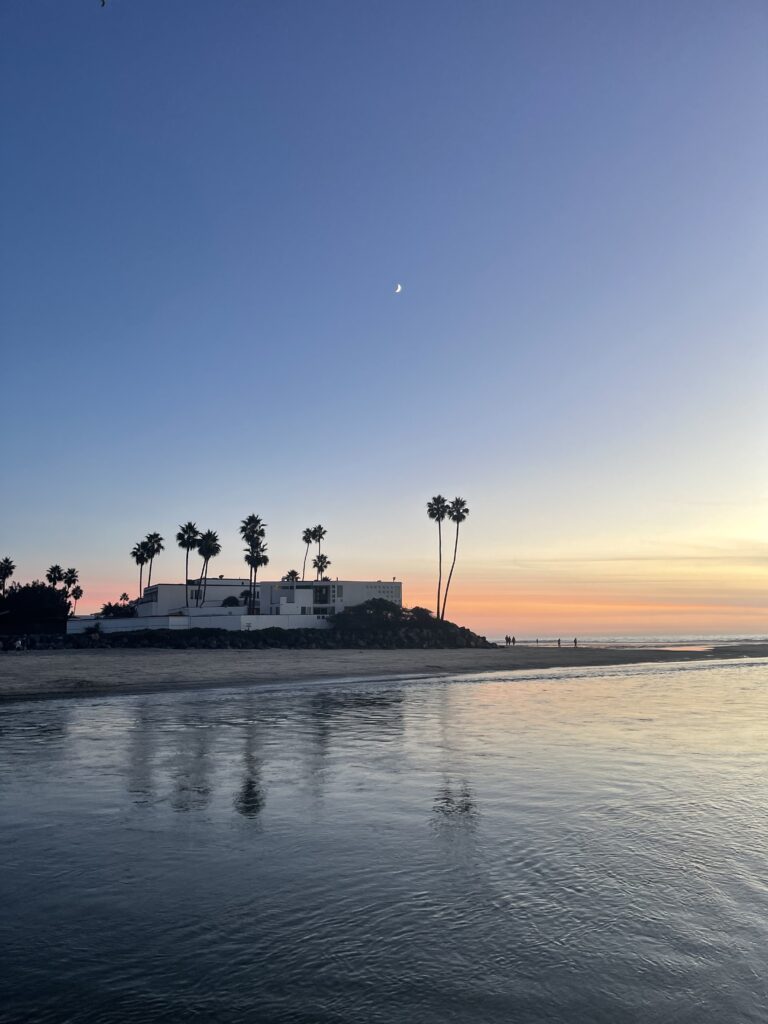
If you are looking for the perfect blend of ocean views, vibrant nightlife, exceptional food, and relaxed beachside energy, Del Mar Plaza needs to be at the top of your list. Perched right in the heart of Del Mar, and just a few minutes’ walk from Sea Grove Park, Powerhouse Park, and the beach, this open-air shopping and dining center captures the best of coastal San Diego living.
Here is everything you need to know to make the most of your visit, whether you are stopping by for a quiet morning coffee or hitting the rooftop for an evening out.
1. Rooftop Live Music & Ocean Views
The top-deck ocean views at Del Mar Plaza are unmatched, making it one of the premier spots in North County for sunset drinks and live entertainment.
Rooftop Deck Music: Catch live music performances directly on the main ocean-view deck every Thursday and Saturday.
Monarch Ocean Pub: For mid-week and weekend music, Monarch hosts live performances on Wednesdays, Fridays, and Sundays. It boasts sweeping Pacific views, great cocktails, and a lively crowd. If you ask locals where to go for a vibrant 40+ or 50+ social scene, Monarch is always at the top of the list. While you will occasionally see a younger crowd, the demographic leans age-appropriate for those of us in this middle stage of life. I was also pleasantly surprised to see several very attractive men – take note, ladies. 😉
2. World-Class Treats & Purpose-Driven Coffee
Del Mar Plaza hosts a mix of upscale restaurants, casual bites, and local markets, but two spots deserve special mention:
Coming Soon: The insanely popular cafe brand La La Land Cafe (famous in LA and beyond for its signature yellow cups and “drive-by kindness” campaign) is opening at Del Mar Plaza. Beyond great coffee, La La Land’s core mission is providing job training, mentorship, and paid internships for youth aging out of the foster care system—a phenomenal initiative to support.
3. The Ultimate Saturday Morning Routine: Kini Coffee
While waiting for La La Land to open its doors, your morning stop should be Kini Coffee, a charming coffee cart parked right in the plaza.
The Pick: Grab an iced vanilla latte—it is easily one of the best around.
Pro Tip on Hours: Check Google Maps for their opening hours rather than their website, as local cart hours can vary (they typically open at 9:00 AM).
The Vibe: Grab your brew right at 9:00 AM on a Saturday, head up to the rooftop deck, snag a cozy couch under an umbrella, and enjoy a quiet chapter of your book. During the summer, the quiet peacefulness lasts until about 10:00 AM before the weekend energy picks up.
4. More to Explore in the Plaza
Beyond music and coffee, Del Mar Plaza is home to a balanced ecosystem of wellness and local shopping:
Fitness & Wellness: Drop in for a class at the local yoga or pilates studio, or get a mani and pedi.
Boutiques: Check out the new bookstore, or market, or find your next statement piece at the jewelry store.
Food: From artisanal bakeries to Mexican or Italian food, Japanese or breakfast, you can find something for just about any craving.
Event Calendar: Always check the official Del Mar Plaza website before visiting—they maintain an updated schedule of weekly happy hours, live music lineups, and seasonal community events.
5. Logistics: Parking & Beach Access
Parking Warning: There is an underground parking garage on-site, that is free for the first hour, but the spots are notoriously tight. If you drive a large SUV or truck, you may want to save yourself the stress, and opt for street parking nearby or use a rideshare.
Beach Proximity: Planning a full day out? The plaza is just a quick 2-to-3-minute walk down to Sea Grove Park and Del Mar City Beach, making it easy to pair a morning beach walk with an afternoon gelato or evening cocktails.
Have you visited Del Mar Plaza recently, or do you have a favorite business to visit there?
If you visit San Diego, someone is bound to tell you to hike Torrey Pines. And they are absolutely right—you should. The sweeping ocean views, the rugged cliffs, and the iconic coastal chaparral make it an amazing, quintessential Southern California experience.
But there is a catch: everyone else knows it’s amazing, too.
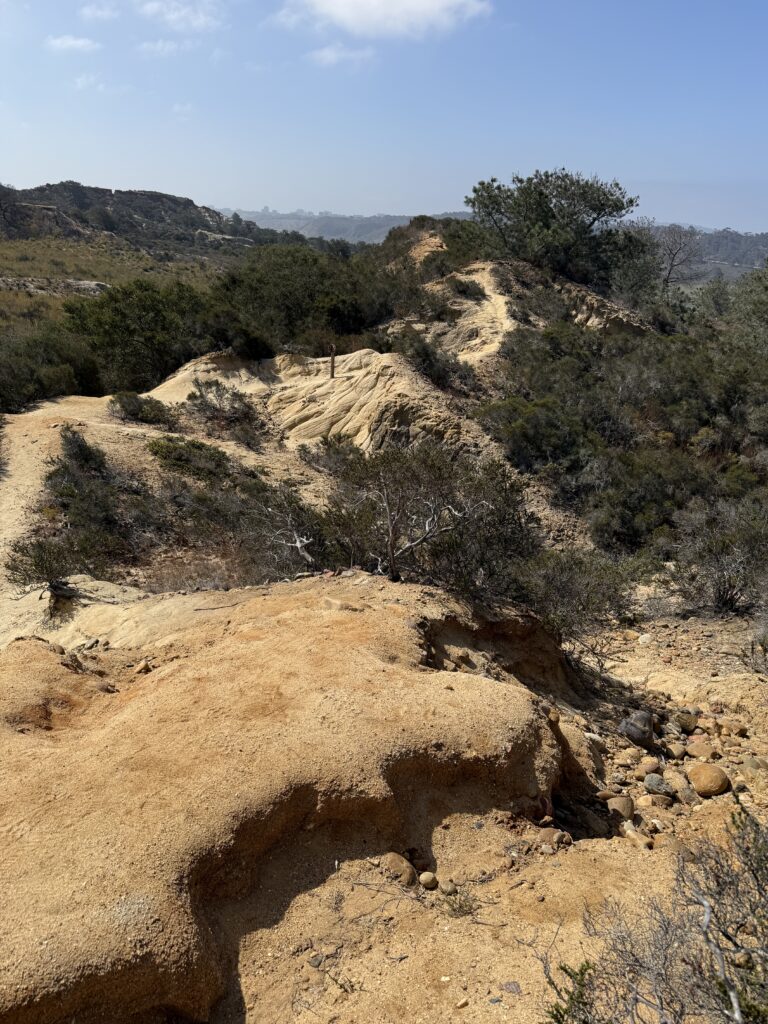
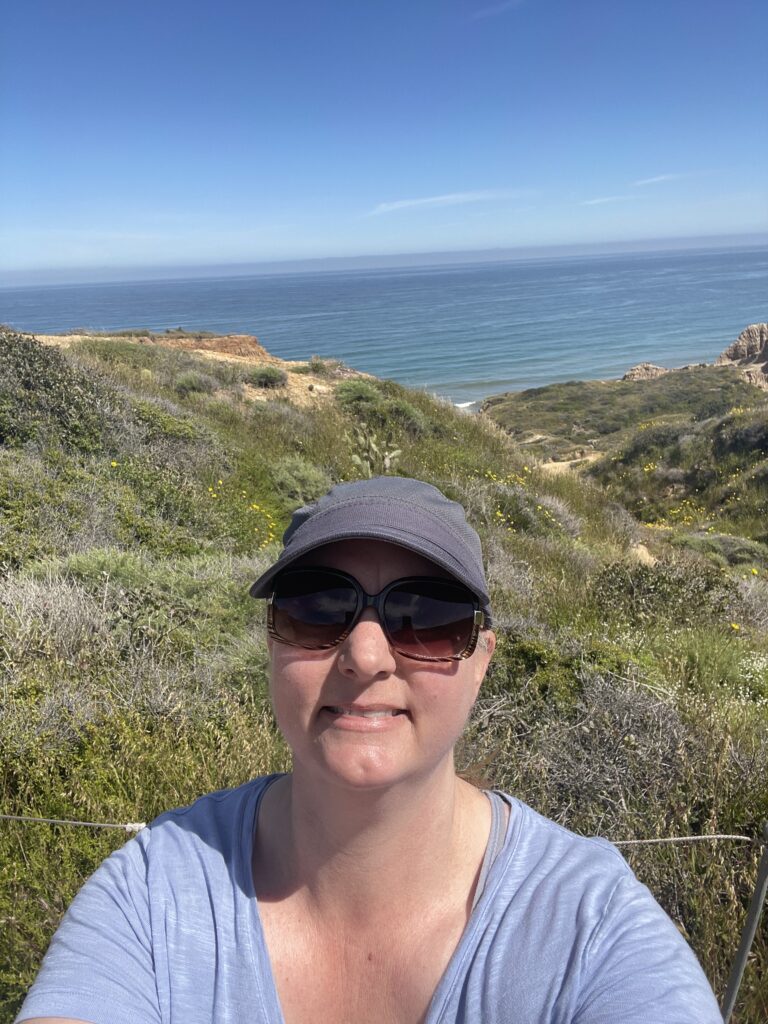
Very few people will ever tell you to hike the Torrey Pines Extension. In fact, most tourists – and even many locals – don’t even know it exists. Located just inland from North Torrey Pines Beach, separated from the main reserve by the Los Peñasquitos Lagoon, this smaller, quieter pocket of wilderness is an absolute hidden gem.
Before we dive into my favorite route through the Extension, it helps to understand why this land is so incredibly special.
The Rarest Pine in North America
To appreciate the Extension, you have to know a little bit about the tree that gives the area its name. The Torrey Pine (Pinus torreyana) is the rarest pine tree in North America. Today, it grows naturally in only two places on Earth: right here on the San Diego coast, and on Santa Rosa Island off the coast of Santa Barbara.
These gnarly, wind-sculpted trees are a living relic of the Ice Age. Thousands of years ago, the climate here was cooler and wetter, and Torrey Pines thrived. As the region transformed into a dry desert ecosystem, the pines died off, surviving only in this specific microclimate where the coastal fog provides just enough moisture to keep them alive.
In the early 1900s, philanthropists like Ellen Browning Scripps and visionary locals like Guy Fleming realized this rare forest was at risk of being completely wiped out by development. Thanks to their massive conservation efforts, the main Torrey Pines City Park was protected (eventually becoming a State Natural Reserve in 1959).
But what about the Extension? In the late 1960s, a pristine grove of Torrey Pines across the lagoon was slated to be bulldozed for residential housing. A grassroots group of passionate locals banded together, raised millions of dollars, and partnered with the state to purchase the land, permanently saving what we now know as the Torrey Pines Extension.
Hiking the Extension: A 3-Mile Hidden Loop
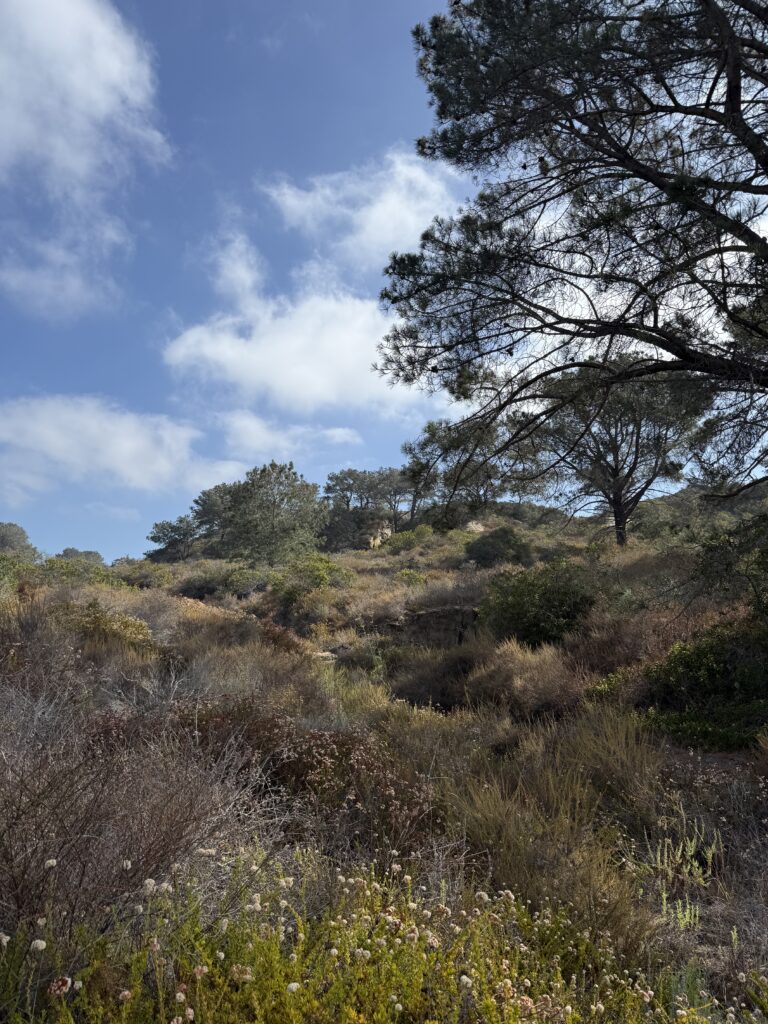
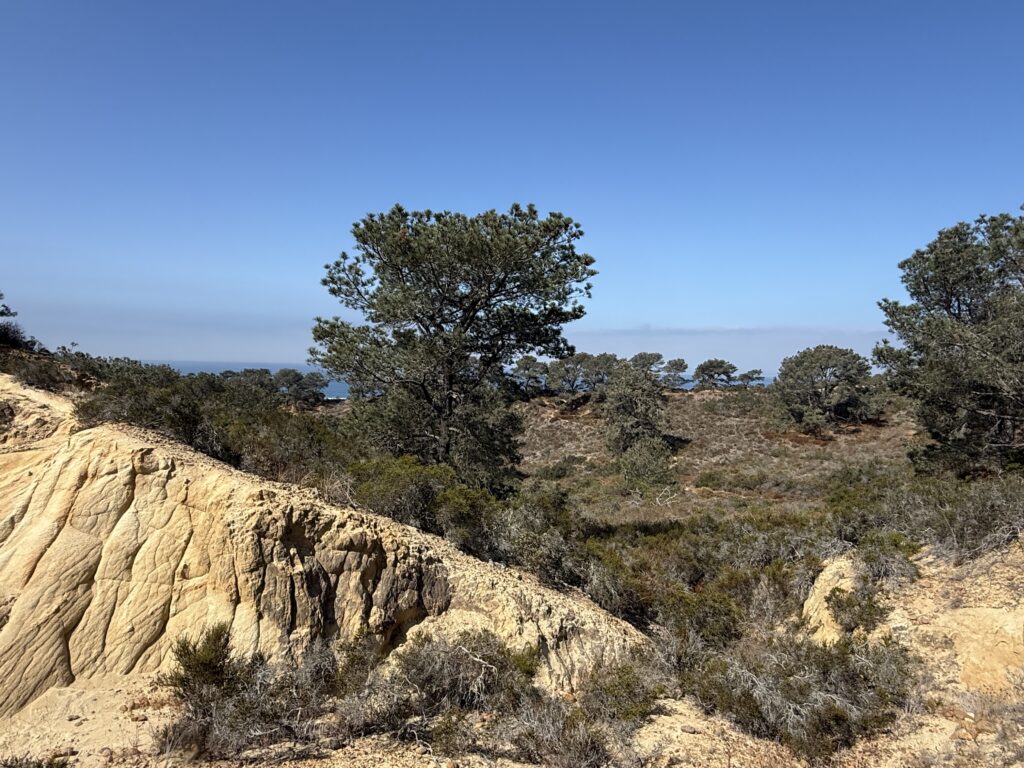
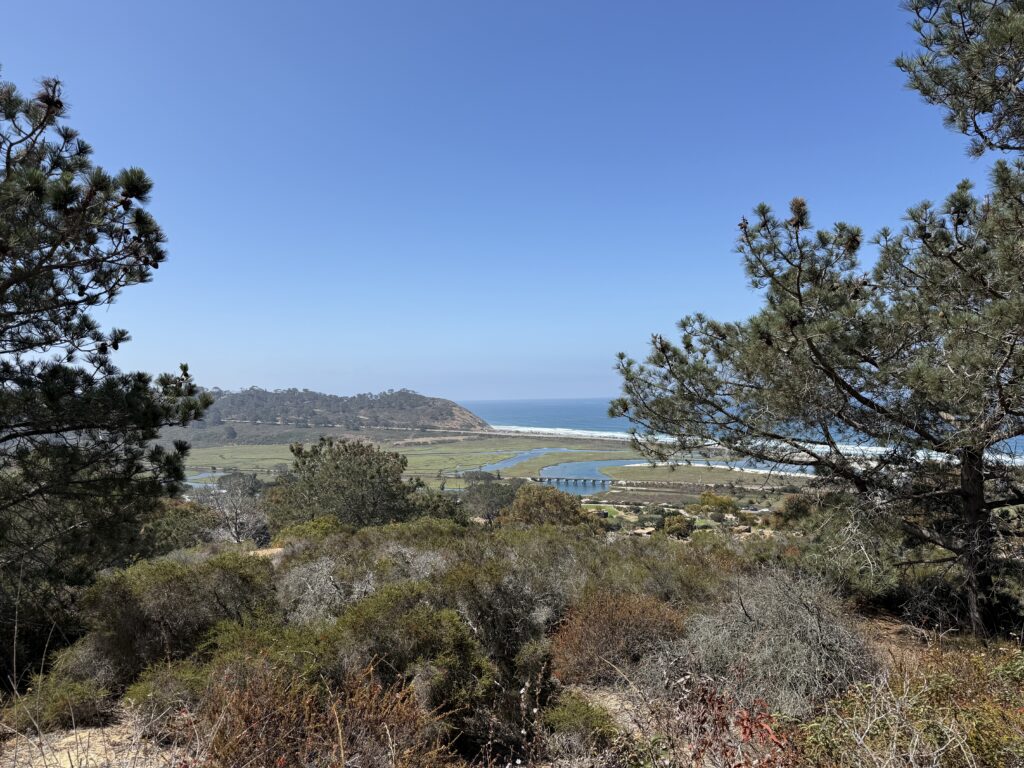
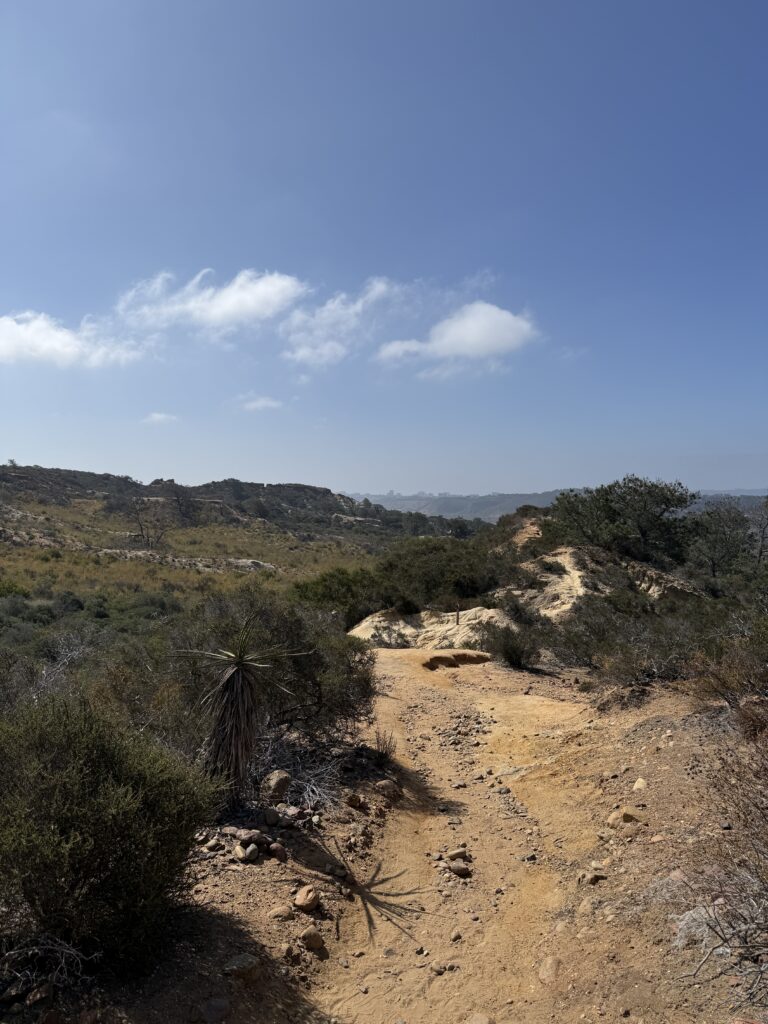
Because it’s tucked away behind a residential area, the Extension sees a fraction of the foot traffic of the main reserve. You get the same dramatic sandstone landscapes, the same rare trees, and the same stunning ocean vistas, but with an immense sense of peace and quiet.
I had hiked the Torrey Pines Extension once about two years ago and absolutely loved it. However, because dogs aren’t allowed on the trail, it fell off my regular rotation. Now, with Pisco gone, returning here finally found its way back onto my to-do list—and it was every bit as special as I remembered.
I’m especially a fan of going in the spring when the trails burst with colorful native wildflowers, but I just hiked it recently and can confirm: it is beautiful year-round.
There are basically 2 main trails in the Extension, and each one is an out-and-back, but I found a way to connect them so I didn’t have to go out-and-back on one and then out-and-back on the other.
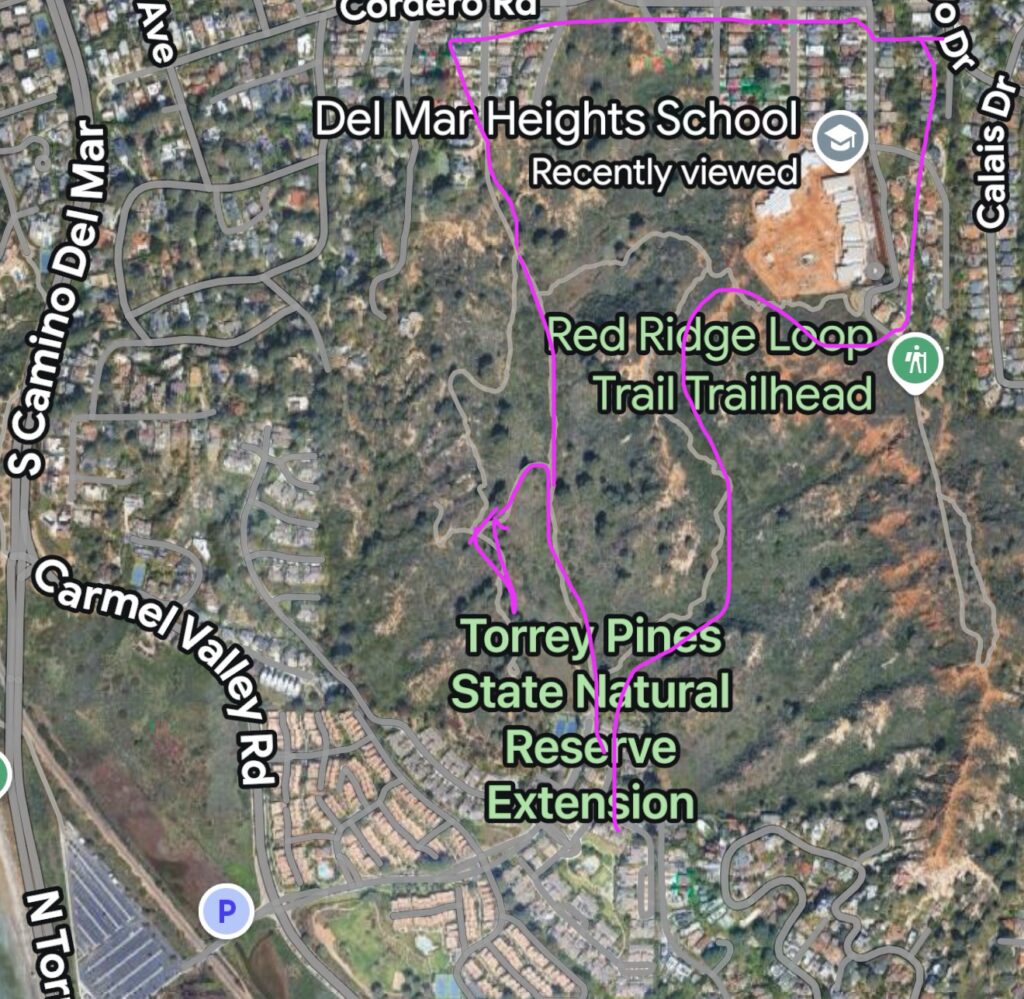
Here is a breakdown of the 3-mile loop I took (see the route map at the bottom of this post!):
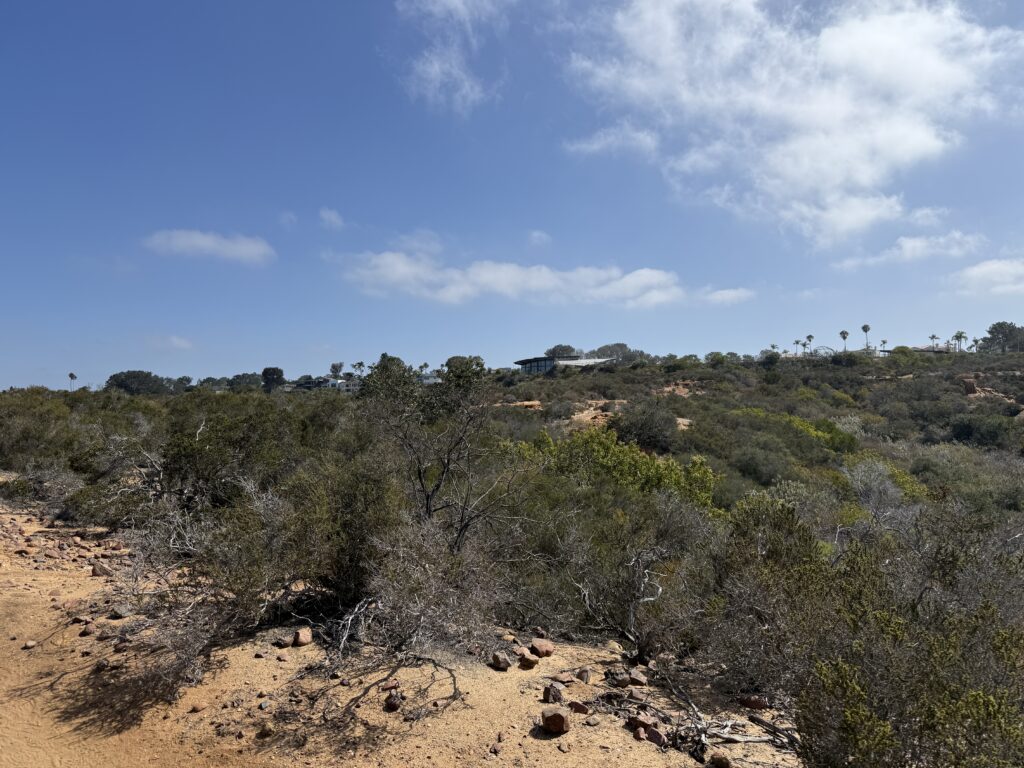
The Ascent: The hike starts with a good, heart-pumping uphill climb. You’re immediately surrounded by beautifully rugged landscape, winding through the unique sandstone formations and chaparral.
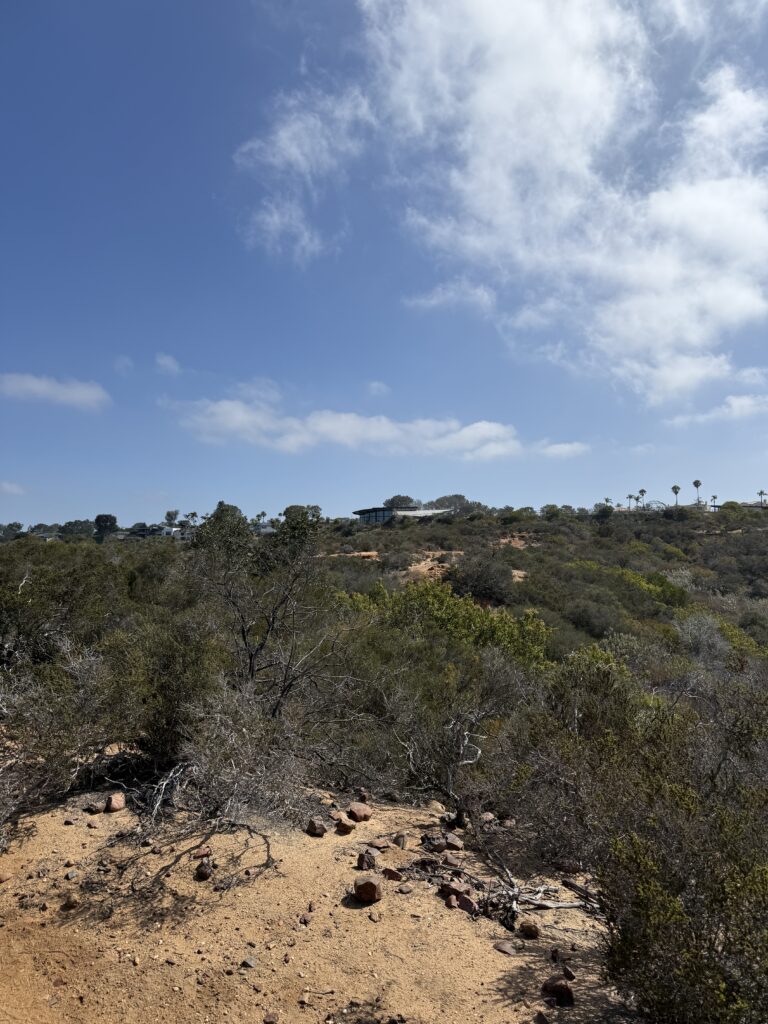
The Neighborhood Views: As you crest the hill, you’ll come out into a beautiful, quiet Del Mar neighborhood. I’m always a fan of walking through neighborhoods like this because the houses are fun to look at. And this route did not disappoint.
The Best Elementary School in the World? One of the most interesting parts of this specific route is that it takes you right past Del Mar Heights Elementary School. Their baseball field and grassy recess space look directly out over the Pacific Ocean. Can you imagine going to a school like that? It has to be the most scenic playground in the state.
Hidden Parking and View: The best part of this hike, in my opinion, was actually a surprise to me. At the top of the other trail, the one we were heading back down on, there is a parking area with killer views. This is a great secret spot for watching sunsets! (Shhh….don’t tell anyone.)
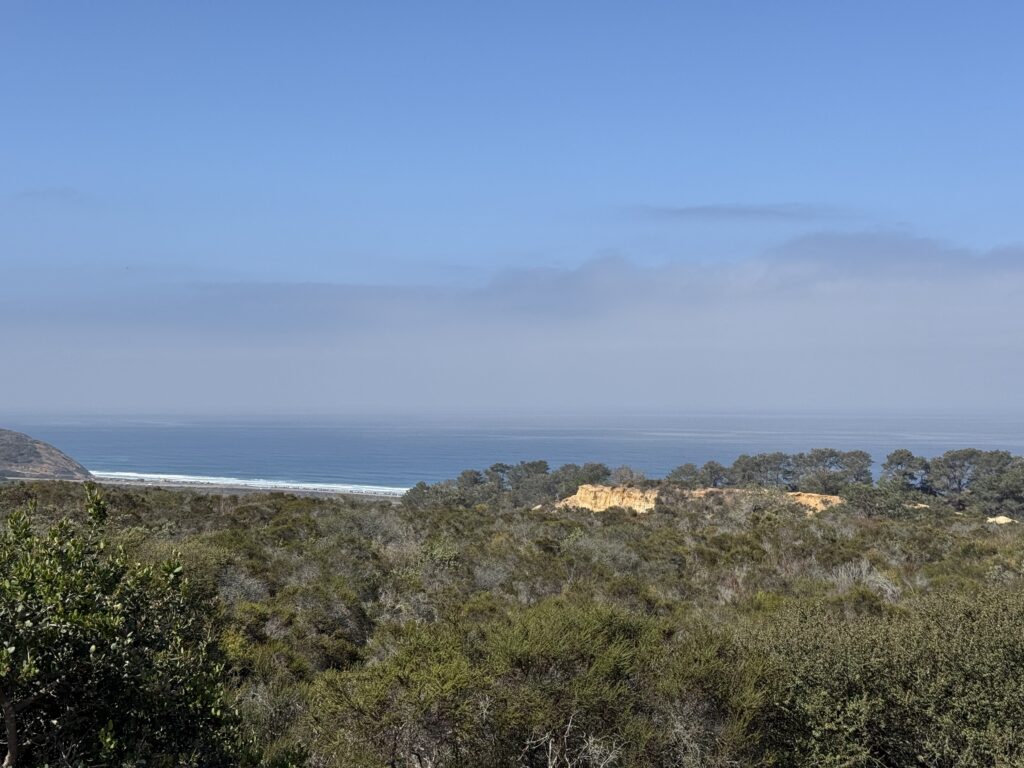
The Overlook: After heading back down into the canyon, we took a final detour back up to an overlook on the left-hand side of the trail. There is a strategically placed bench waiting for you at the top. It is the perfect spot to sit, catch your breath, and enjoy a few minutes of well-deserved rest while staring out at the water.
Know Before You Go
Location: The main trailheads for the Extension are located off Del Mar Scenic Parkway and Mira Montana Drive.
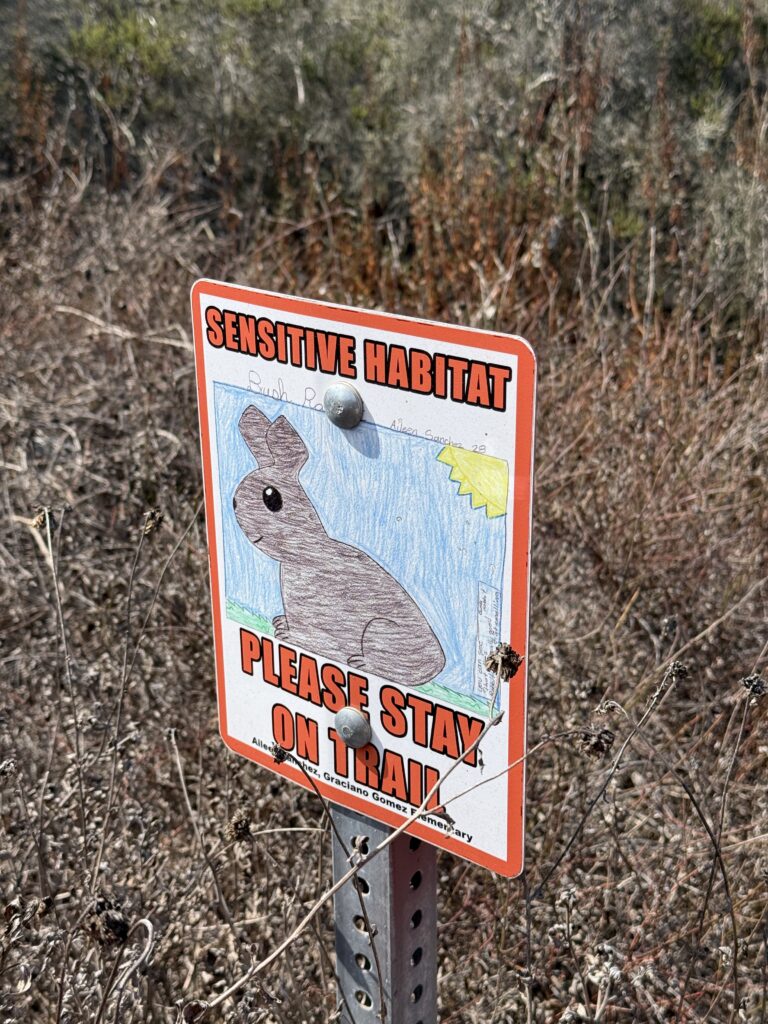
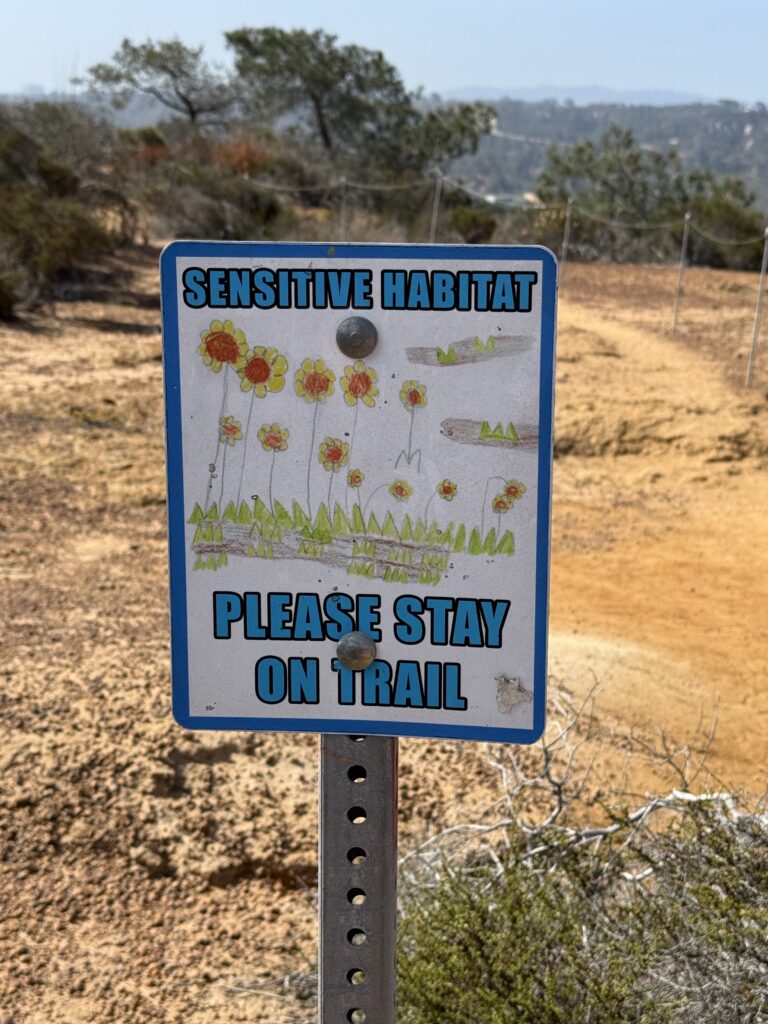
Leave No Trace: Just like the main reserve, this is a protected habitat. Stay on the marked trails to protect the shallow roots of the Torrey Pines, and remember that no dogs or food are allowed on the trails.
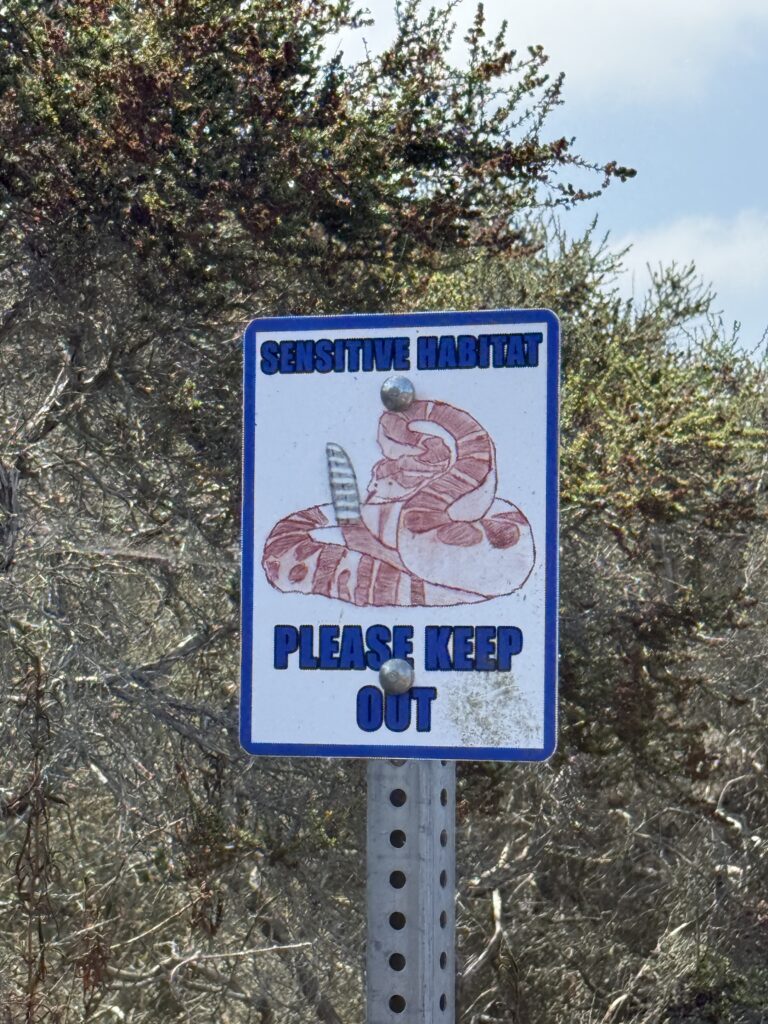
Be Snake Aware: Like everywhere in San Diego, you might encounter a rattlesnake. On a previous visit, a hiker heading down warned us they had just passed one on the trail. We didn’t end up seeing it, but it was a good reminder that they’re definitely around! Many of the trails are fairly narrow, so wear long pants or tall socks to protect against brush (and snakes!), and keep a lookout while you hike.
The Route: Check out my map below for the exact 3-mile loop we took!
Have you ever explored the Torrey Pines Extension, or do you usually stick to the main reserve? Let me know your favorite local trails in the comments!
If you are thinking about moving to an area, driving through it can tell you if a place feels like you, but walking through it is how you truly get to know it. After stumbling across a Google Map detailing Oceanside’s many murals, I decided to create an Oceanside Mural Walk for my Facebook group. It turned out to be a great way to spend a morning, combining vibrant street art, ocean views, unique architecture, and charming neighborhood vibes.
I purposely had us start away from downtown so we could find parking more easily – it is summer after all. Here is the exact route we took, and the highlights you shouldn’t miss!
1. Fuel Up at Plantology Cafe
We started our journey at Plantology Cafe (913 S Coast Hwy), which shouldn’t surprise anyone who knows me. I mean, plants and coffee? The building itself sets the tone for the entire walk: a stunning terracotta façade painted with delicate hummingbirds, climbing monstera leaves, and lush botanical artwork. After grabbing drinks, we hit the sidewalk ready to hunt for murals.
2. Cruising along Coast Highway & The Strand
As we headed toward the coast, we passed retro roadside gems like the iconic 101 Cafe, adorned with a massive “Cruisin’” mural featuring classic hot rods, woodie wagons, and a roller-skating carhop, a perfect throwback to Southern California’s classic beach culture.
From there, we cut down to The Strand to walk right along the ocean. The sound of crashing waves and the crisp Pacific breeze accompanied us as we strolled north. Along the beach road, we spotted this cool modern home that reminds me of a surfboard!
3. Oceanside Pier & The Top Gun House
Continuing along The Strand brings you right to the base of the iconic Oceanside Pier, so of course we had to walk on it. We didn’t go all the way to the end, but it’s a great way to take in sweeping panoramas of the surfers catching waves, palm-lined shores, and the wide sandy beaches that stretch out in either direction.
As we left the pier, I was reminded that the famous Top Gun House (the historic 1887 Graves House featured in the 1986 film) is right there. It’s a gorgeous piece of preserved Victorian architecture sitting right against the modern backdrop of coastal hotels. Today, the house has been turned into an An’s gelato shop with an airport boarding area theme called An’s Gate D5. We didn’t get any gelato, but if you’re in the area, you should, since it’s been voted the best ice cream in the country.
This was taken when Pisco and I went to explore Oceanside to get content for my YouTube video about the neighborhood.
4. Downtown & Artist Alley
After taking in the ocean views, we looped back inland into the heart of downtown Oceanside to see the civic center fountains which I always enjoy. A highlight of downtown for art lovers is Artist Alley, which is a pedestrian lane tucked behind some shops on North Coast Highway that functions as an open-air gallery. Every surface here tells a story. They also have events there, such as makers markets and First Friday Art Walk here May through September which you can learn more about on their IG.
This is made of glass. It was my favorite art of the day.
5. Charming Residential Bungalows & Victorians
To complete our loop back to Plantology, we took a quiet route through the surrounding residential streets. Honestly, since I’ve explored Oceanside’s downtown before, this was the part I was most excited about. While the homes in the area may be clocking in at $1-2 million, it feels like the neighborhood I grew up in, a basic, older Southern California neighborhood. The homes here are mostly small coastal bungalows – some painted in pastel hues, some Spanish style, some quintessential beach bungalow – and every so often, a grand, beautifully restored Victorian house standing tall above the palm trees, one of which has been turned into a restaurant called The Victorian at Hill Street.
6. Snack Break at Tremont Collective
On our way back, we stopped at an open-air food court area featuring a lineup of local spots, including Tacos 1975, Thai Style Kitchen, and a burger joint called Crackheads. The space surrounds a central bar with outdoor seating and yard games, making it feel like it’d be a lively, fun hangout spot in the evening.
We ordered tacos and churros from Tacos 1975. While the tacos were just okay (nothing to write home about), the churros were absolutely fantastic and well worth the stop. Next time I’ll be getting a burger since I’m still on the hunt for the best burger in San Diego. I just wasn’t in the mood for a burger that day.
If you’re looking for a fun way to do some exploring, see some art, and get some exercise in the sea air, this is a great way to spend a day.
Tips for Your Own Walking Tour:
Map it out: Use the Visit Oceanside interactive mural map or save key stops on Google Maps before you start.
Wear comfortable shoes: The entire loop covers about 2.5 to 3 miles depending on how far out on the pier and around downtown you venture.
Wear sunscreen: Even if it’s overcast, especially if it’s overcast.
Take your time: Between the giant murals, the ocean scenery, and the architectural details, you’ll want to take pictures constantly. But you also may stumble on a restaurant or shop you’d like to check out! This is an easy route to do around lunch or dinner.
Want to learn more about Oceanside? Check out my website.
Have you explored the street art in Oceanside yet? What’s your favorite mural in North County?
A couple of weeks ago, I participated in a very California experience: I got evacuated.
I looked at my phone one morning to find multiple texts from a friend asking if I’d gotten the alerts about a fire.
I hadn’t.
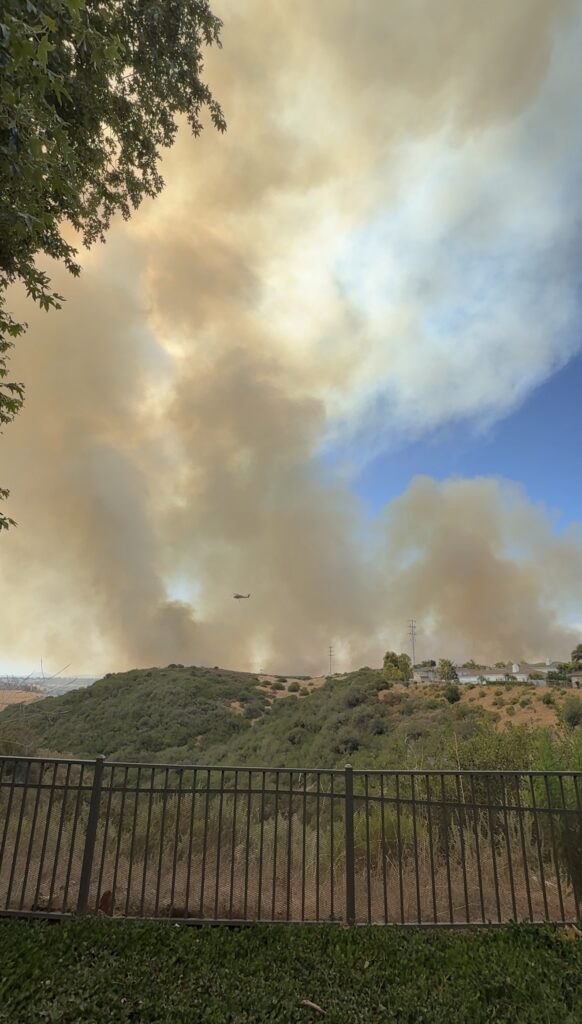
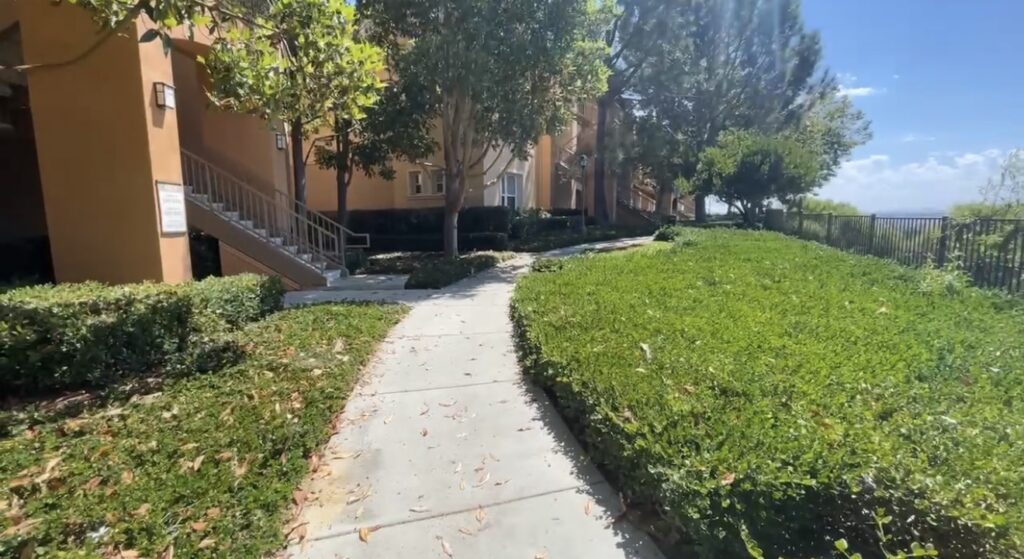
I’d been in the shower. So I looked at the Watch Duty app, like any good Californian would do (hint hint….get this app, or another fire alerting app), and saw that not only was there a fire that had started close to us, it was REALLY REALLY close to me. Like in the canyon right outside my complex. It was the Sorrento Valley fire and was in the Peñasquitos Canyon. The homes in Torrey Hills were in danger.
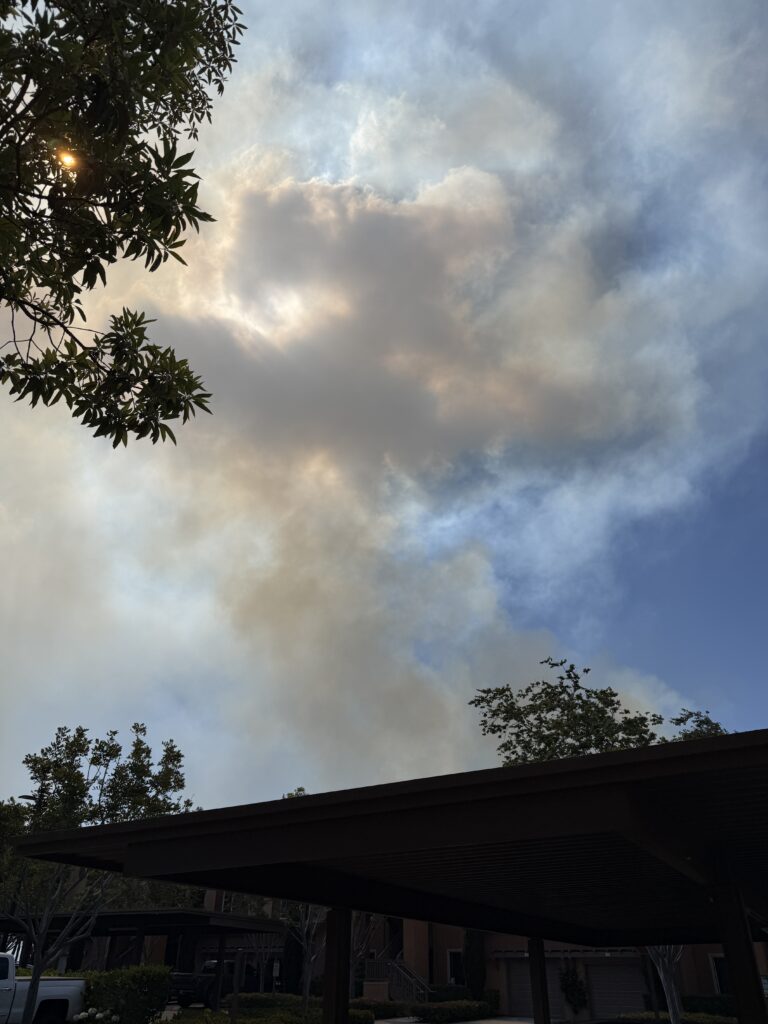
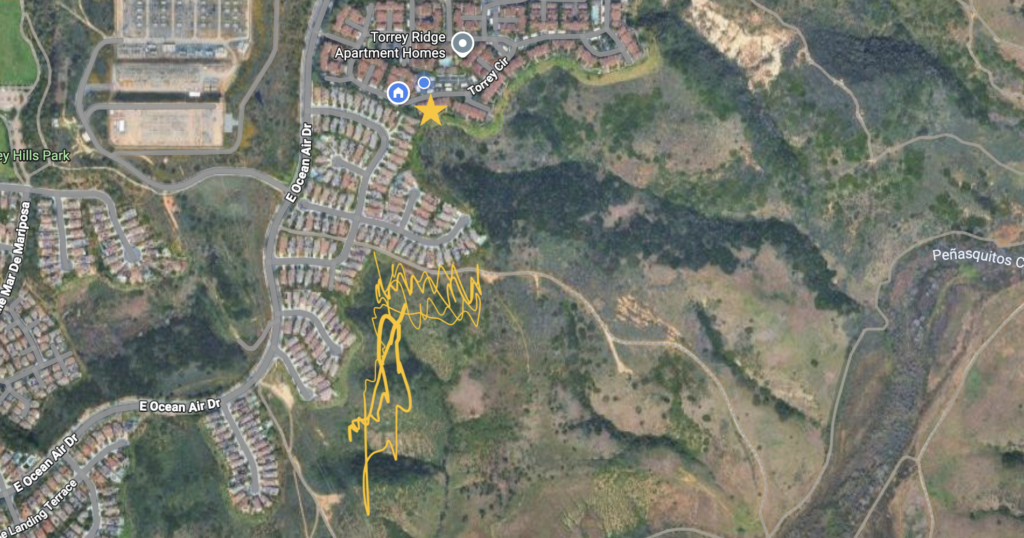
I immediately rushed outside to see what there was to see, and sure enough there was a huge plume of smoke right there. To give you a picture, here’s a map. I was standing where the star is, and the smoke was coming up over the houses where the scribbles are. The fire was just one turn of the canyon away from us and way too close to our neighbors.
From my apartment.From the yellow star.
As I watched the smoke, it started to turn lighter, which for anyone new to fires, is good news. Dark smoke = bad, light smoke = better. But then the wind kicked up and Watch Duty updated from 3-4 acres to 30 acres, and that’s when I got nervous. I headed back to my apartment to try to get my cats into their carriers because I knew it wasn’t going to be easy.
Unfortunately, they could tell something was wrong, so they were already kinda spooked. I tried to get Bindi into her carrier… she’s the one who used to actually like her carrier… but this time she fought with all she had, and I was unsuccessful. Then I tried Livvie, and amazingly, I actually got her in. So then I went back out to check the fire, thinking I’d give Bindi a minute to chill before I tried again.
Livvie (aka Squeak)Bindi (See? She normally likes boxes a lot.)
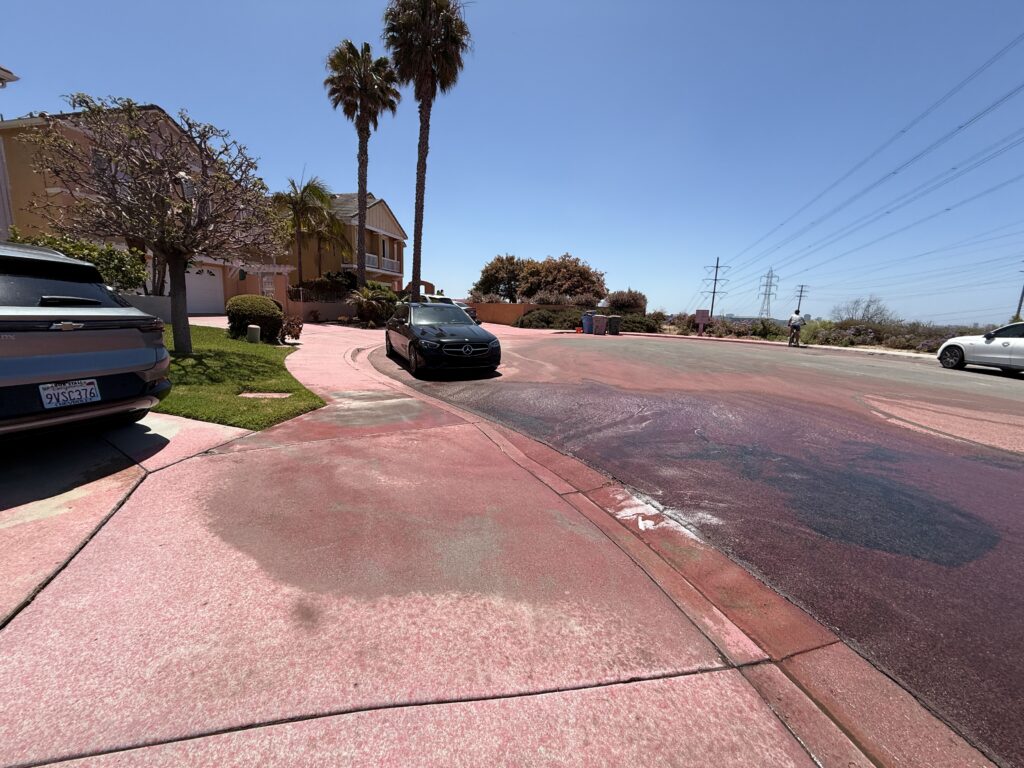
When I went back out, the helicopters were dropping water, and the fixed-wing planes came in and were dropping the red fire retardant. It was amazing. They were flying so low, and the drops were very precise; it looked like they were coloring within the lines of a coloring book. Unfortunately, there was this one spot that kept erupting in thick black smoke that did not give me a warm fuzzy. And Watch Duty announced that they were requesting additional air support.
Retardant was dropped perfectly around this cul-de-sac.
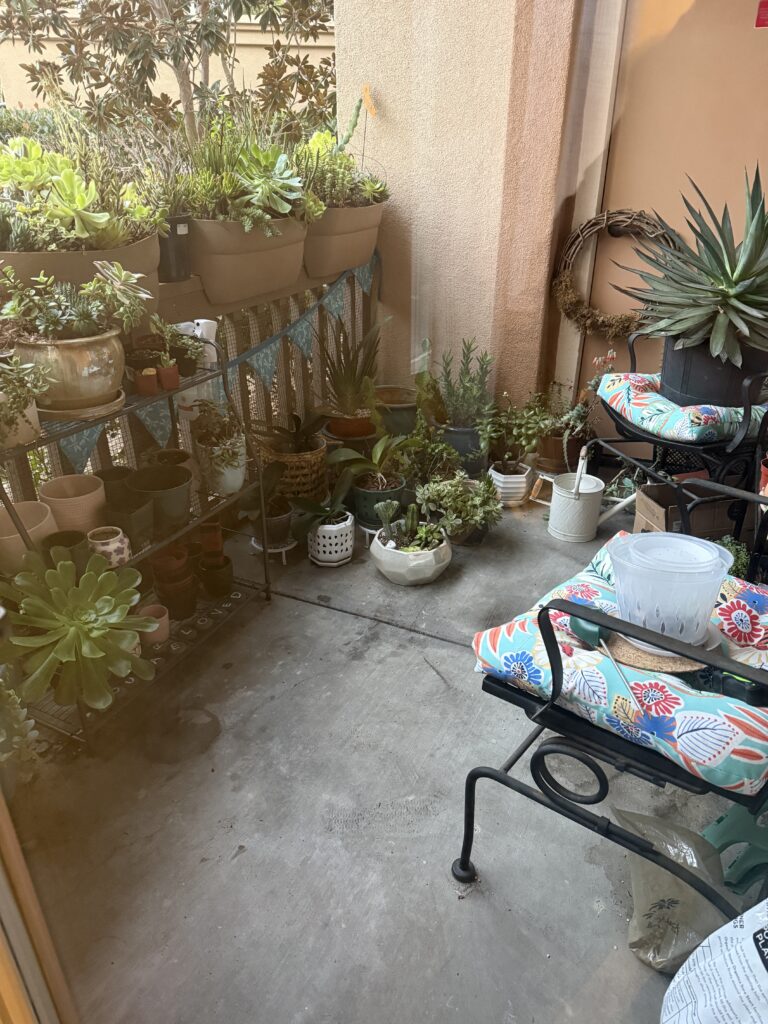
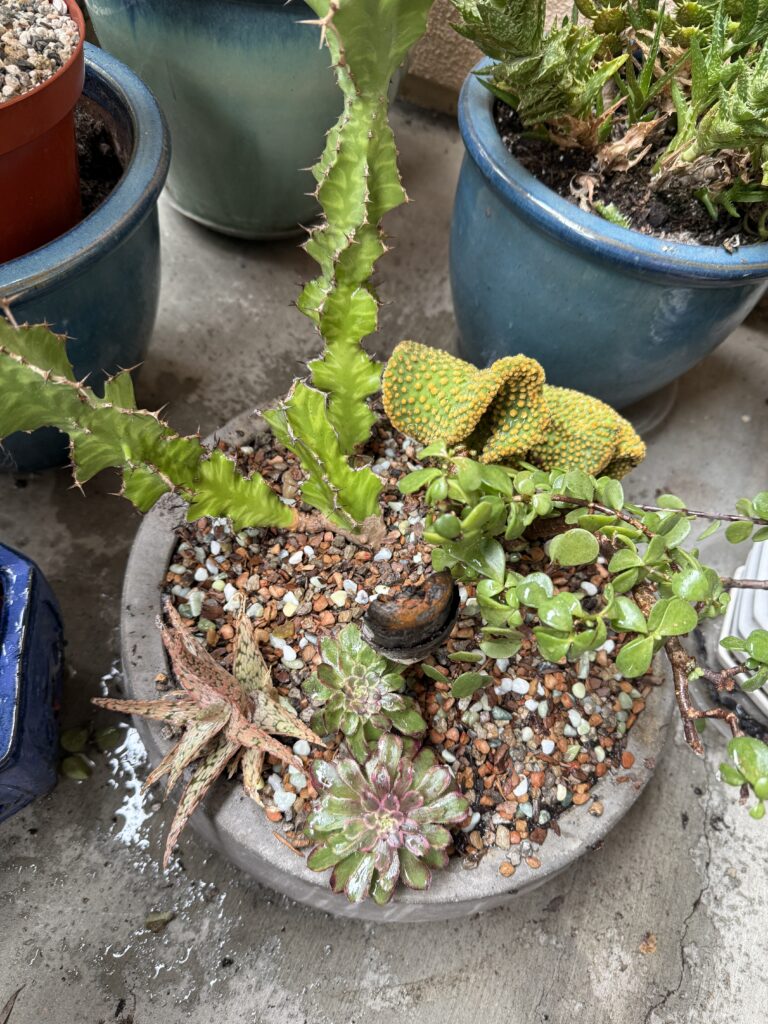
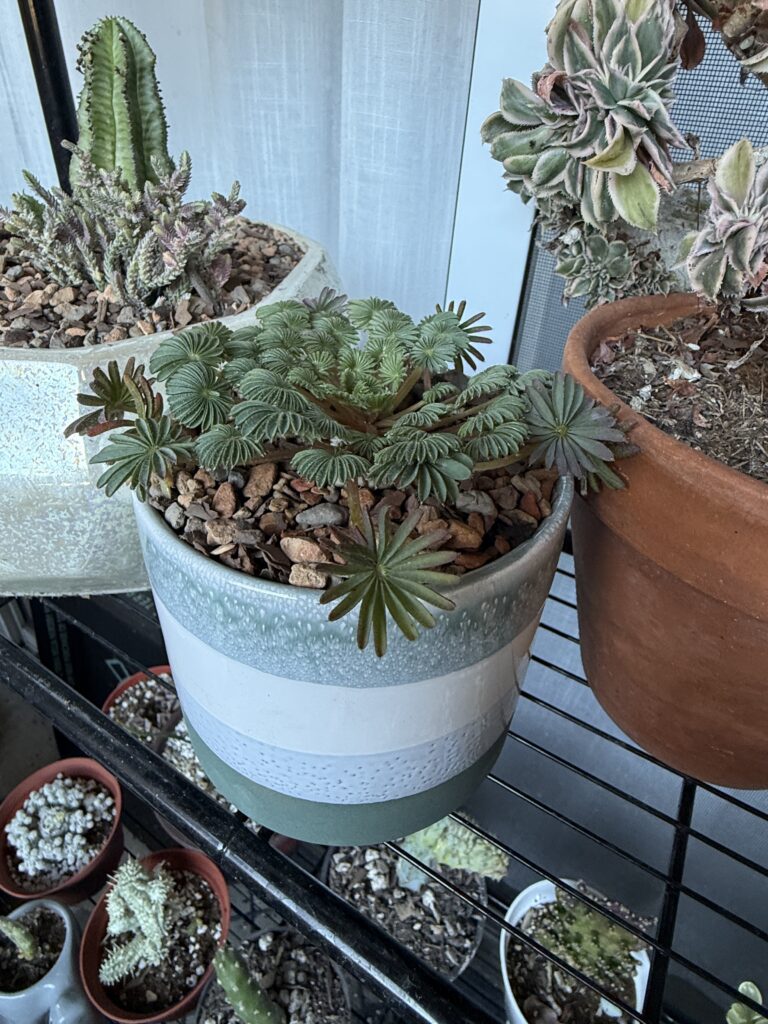
So I headed back to my apartment to pack up some of my plants to be ready in case of evacuation. If you don’t know me, I have a slight plant problem. My best friend and I collect succulents, the weirder the better. She has most of them, but my tiny little patio is filled to the brim. As I was walking back to the apartment, I got the alert for mandatory evacuation. Not just get ready to evacuate. Go! And go NOW!
I knew the fire wasn’t in our little part of the canyon yet, so I wasn’t completely freaked, but I also trust the firemen that they know when we should leave, and always want to follow their directions. I mean, I’ve seen all the movies, and know that if you wait, you get stuck in the traffic, and the fire storm, and die. I will always listen to the firemen.
I got back to my apartment ready to fight Bindi again only to find that Livvie had managed to get herself out of her carrier!! It was a soft-sided one, so she apparently was able to wiggle the zipper open. Now she was behind the couch, and I knew there was no chance I was going to be able to get her. So I tried to get Bindi in her carrier again, and she got so scared that she peed on me….and then ran behind the couch. Now what?
As I debated what to do I started packing the car. I realized that trying to figure out what to take when you’re stressed about possibly losing your home and your pets is harder than it seems like it would be. I could not think! I did pack up some plants, and was grateful that I happened to have some flats to put them in, but they were pretty flimsy so it was precarious carrying them to the car. Ultimately many of them fell over in the car, and spilled or got damaged. I evacuated to my best friend’s house, and she kindly sent me home with a much more sturdy cardboard flat. Lesson learned though: make sure I have on hand appropriate things to carry plants with in case of evacuation.
Then I started grabbing artwork. I collect art when I travel. Not fancy stuff. Mostly art from street vendors. Pay $20 for the art, spend $400 framing it. 😂 I piled it in the car haphazardly and had to take multiple trips. I had no idea if the frames would get scratched or if the glass would break. Lesson learned: have some empty plastic bins with bubble wrap in them ready for an evacuation to make this easier.
As you know, I lost my dog in April, so I grabbed his ashes and all the artwork and things I have to remember him by. I also got my last cat’s ashes. This was when I started realizing the things I wasn’t taking. Things that I was looking at and realizing they weren’t important enough to pick up in that moment. I had room in my car, but I also wanted to get out of there, and if it came between my life and stuff, there were only certain things that I was willing to take a few minutes to grab. It turned out, there are some things that I -love- and thought for sure I would have taken, but in that moment, they didn’t pass the test. Interestingly, this included clothes. I did grab medications, and my travel toiletry bag, so I think I had a toothbrush.
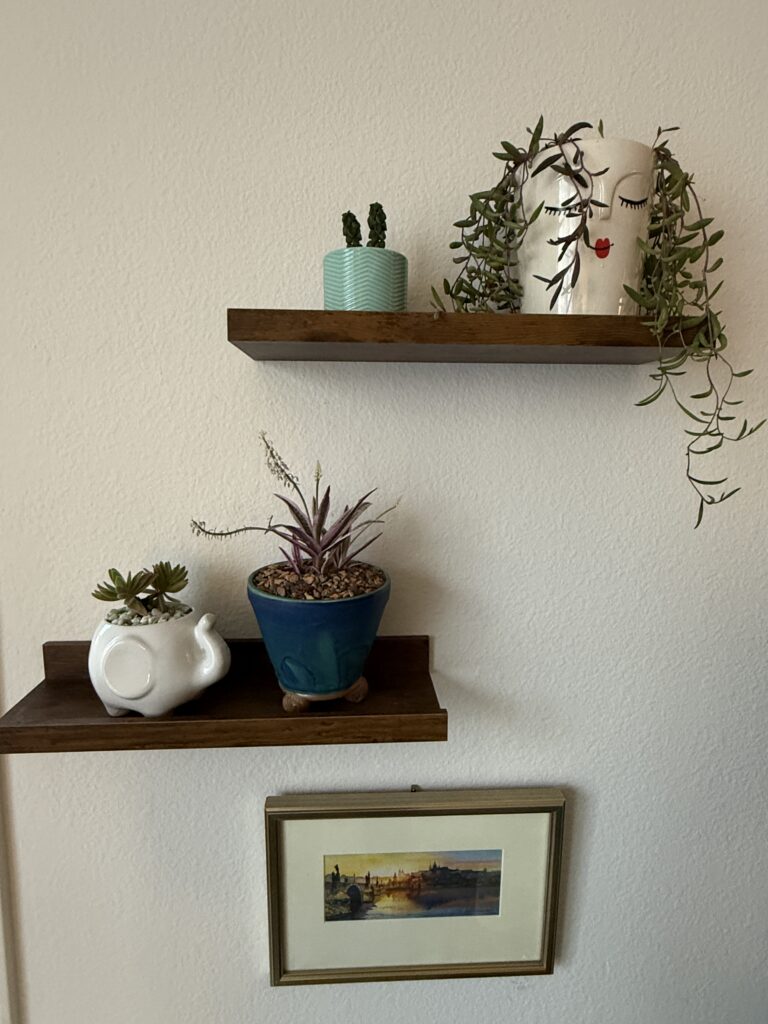
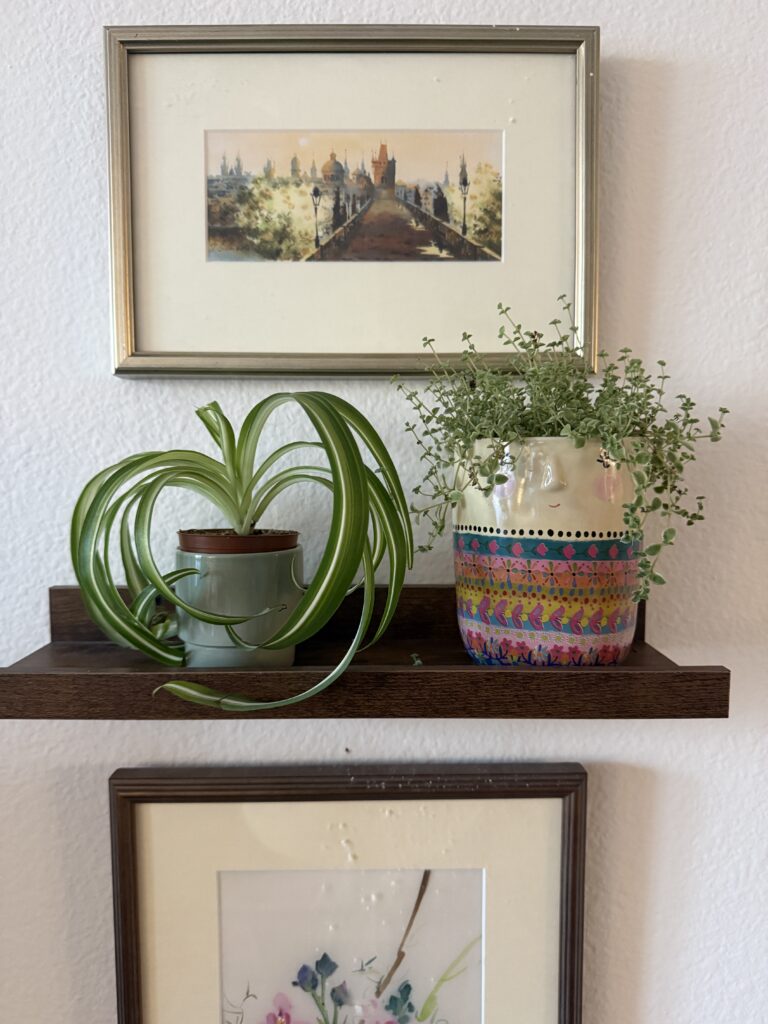
More plants and paintings from Prague.
The reality is that I could have stayed in the apartment and waited for the firemen to come bang on doors, or waited until the building next door caught on fire before I left. Both of these things would have put the firemen in more danger. Both would have put me in more danger. But both would have given me more time to get my and cats into their carriers. I love my cats. They are family. I just lost my dog. Losing my cats would have destroyed me. Knowing my cats were scared and in pain and wondering why I wasn’t protecting them would have killed me. But their survival instincts unfortunately also run completely counter to my ability to protect them.
I couldn’t get them in their carriers. And I made the gut-wrenching decision to leave them. I left the front door unlocked and put a note on the door for the firemen that there were 2 cats inside. It was a horrible decision, and I have been judged for it. I totally get it. I’d judge me too. I did it as a born and raised Californian, knowing that in 99% of the fires in California (that’s my made-up number, I haven’t actually checked for accuracy) the fire is put out and no structures are damaged. I did it knowing that the full force of the fire department, and lots of air support, was already being thrown at this fire. I did it knowing that my complex has sprinklers in the canyon on the edge of the complex, and is surrounded by fire-resistant landscaping. I did it knowing that there is another building between my building and the canyon, and there were already firemen in our complex. I did it knowing that we have fire sprinklers in our apartments, and hopefully the worst that would happen is the cats would get super wet. In short, I did it under the assumption that the true risk was much smaller than the mandatory evacuation order was making it seem.
That didn’t stop me from ugly crying the entire drive to my best friend’s house. There was still a wildfire right next to my home. There was still a mandatory evacuation order in place, which the firemen wouldn’t have put in place if they weren’t concerned about the possibility of the fire getting out of control. It was a horrible decision to make, but I don’t believe that I would have made the same decision if I actually thought my building was at risk. I think if I really thought the building was at risk, I probably would have been one of those people in the documentaries getting out of the house just as it catches on fire, and trying to drive through the firestorm. I would end up starring in the documentary because I had spent so much time trying to catch the cats that I had to be rescued. I would have done exactly what I said I wouldn’t do because I would do everything in my power to get my cats, because I don’t think I could live with myself if I actually thought they were at risk.
But what this taught me is that we can’t do this again. The cats have to be more willing to get in their carriers. So now the carriers will be part of the furniture of my apartment. They will be filled with catnip and treats with the hope that the cats are already sleeping in the carrier when I need to lock them in it. One can wish. But at the very least, I need to have a chance to get them in. So I need to make the carriers less scary and more positive. This is my new goal.
I will also be creating an evacuation list, and ensuring I have the right supplies in place to be able to pack up quickly and easily. I did remember my computer and a charger, but I nearly forgot my important documents, and in my rush I wasn’t even sure where they were. I found them, but my brain was so freaked it was having trouble thinking straight. They should be in a fireproof box somewhere easy to find and grab. I need to make it so I don’t have to think, I just have to grab.
As for clothes, a friend mentioned that taking your dirty clothes can be a good idea because you know those are clothes that fit and you like, and are season appropriate because you just wore them. Of course, if you just did laundry, this doesn’t work quite as well, so maybe just have a list of basics that you remind yourself to grab. If you’d like to make your own list and plan, Cal Fire has recommendations on their website. They even have a tool to help you make your own checklist.
I was able to go home after 7 hours of being away. I think a lot of people in my complex never even left. I’m just not willing to be one of those people. I listen to experts. Even if they’re being overly cautious, they’re doing it for a reason. They’ve seen things, and know things that we don’t. For example, the area that was under mandatory evacuation was above the canyon where the fire was burning. I met people in my complex who were also watching the fire when it first started who thought that meant we were safer. They thought being on a canyon made us safer, and that since the fire had to go up hill that would keep us safer. Both of those things are completely opposite of reality. Living on a canyon is one of the more dangerous places you can be from a fire standpoint. Part of that is because fire moves fastest uphill because the tops of the flames are heating the brush ahead of it as it goes. Firemen know this and apparently not all residents do – trust the firemen.
When I was six, I was in a fire in Malibu that burned 50,000 acres and 125 homes. My dad had built a house on Winding Way Rd on top of a hill. There was a canyon behind us and the Santa Monica Mountains behind that. The fire had started in the Valley and I was the first to spot the flames coming over the mountain towards his house. It was minutes from the time I saw the flames to the time that the fire was encroaching on my dad’s house. The ups and downs of the canyons can make the fire move very fast as embers fly across the canyon. During that fire, my dad didn’t even have the option to evacuate. There was no water service to his house, he had to truck it in. The fire department literally parked at the bottom of his driveway, and essentially said, let us know if your house catches on fire and we’ll help you put it out, but otherwise you’re on your own. My dad had to stay to protect his own house. He was the fire department for his own home. Luckily he was successful.
Fires are a part of life living in California. Most people moving here worry about earthquakes. That’s what California is famous for. Ask any native Californian though, and they’ll tell you that earthquakes are much less of a concern for Californians than wildfires. And as we just had 4th of July, this is an apt topic. According to Daniel Swain, who is a climate scientist with the University of California Division of Agriculture and Natural Resources, in an article for the San Jose Mercury News, “scientific studies have shown the day of the year when the most wildfires start is July Fourth.” The number and severity of wildfires have been getting worse over the past century in California and that trend is expected to continue.
In a weird way, I’m grateful to have had this “dress rehearsal” for an evacuation so that when I need to evacuate next time, and I do believe there will be a next time, I’ll be better prepared.
For more information about fire preparedness for your home and your family, check out the Cal Fire website.
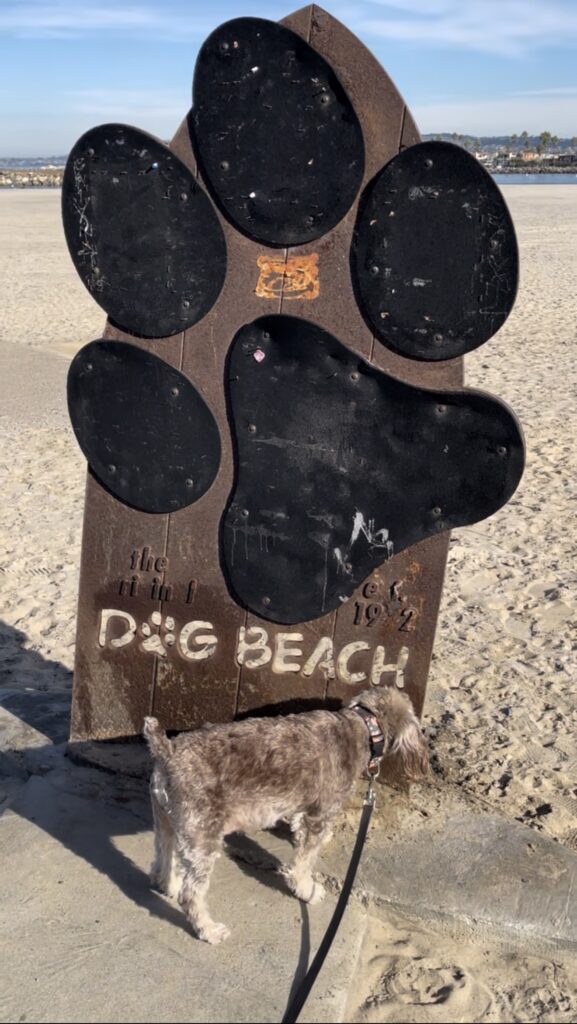
Did you know that San Diego has a river? And did you know that that river starts near Julian and goes through Mission Trails Park and then Mission Valley and ends up at Mission Beach – dog beach, specifically? Yeah, I wasn’t really aware of this either for a long time.
I don’t think it really sank in until I saw a picture of Mission Valley from the early 1900s with all the concrete gone. It looked like it was beautiful. I’m really sad it doesn’t still look that way.
But here’s the interesting thing about this river…..much of it doesn’t look like a river. This part blew me away. If you go down into Mission Valley and look for a river, you likely won’t find it, instead you’ll find this:
But guess what? That’s the river!
The river is known as “the upside-down river” because unless it has rained recently, the river often runs underground. There are places within Mission Valley that look like a normal river, but for the most part, those areas have been excavated to bring the water to the surface.
The San Diego River is 52 miles long, and is one of the most biodiverse places in the world. There are 25 endangered species represented in the river watershed, some species only grow along the San Diego River and nowhere else in the entire world. These include the Arroyo Toad, the Least Bell’s Vireo, Southwestern Willow Flycather, Coastal California Gnatcatcher, and the San Diego Mesa Mint.
Credit: San Diego River Park Foundation via SDG&ECredit: California Department of Fish and Wildlife
There’s a path along the river in Mission Valley called the San Diego River Trail. It’s nearly 9 miles long going from Dog Beach to the 15, but there are a couple of sections still to be completed. I’ve always been curious to check out the trail, but the reviews of it tend to sound like this:
“I was excited to run on this trail since our hotel was close by. Less than a mile in I turned around and came back. Several homeless people sleeping in tents along the trail under bridges. It smells and there’s lots of trash.” – Eli Slesk on Google Reviews
“Far too many homeless encampments along the trail, in some places there are objects blocking the trail. Plenty of trash scattered all over. Wasn’t what we had in mind for getting out in nature for a walk. I’ll avoid this area for now.” – Rob Lentz on Google Reviews
“It could really be a nice 4 mile hike. Unfortunately, there are parts of it where I did not feel safe.” Petra Konow on All Trails about a section of the trail in the middle of Mission Valley
That being said, the reviews do seem to be on an upward trend, and given what I learned from the San Diego River Park Foundation, homelessness along the river is down quite a bit in recent years. But unfortunately, this is the reputation the trail has.
Speaking of the San Diego River Park Foundation, what triggered this blog is my recent adventure of getting a tour at the San Diego River Park. The San Diego River Park Foundation was started in 2001 when a few people noticed that the river was really dirty, and they found out that there had been a sewage spill that no one was even aware of. This lead to them banding together and tracking down all of the neighborhood groups, small foundations, and other organizations that existed to take care of parts of the river from the beach to the mountains.
Together they became the San Diego River Park Foundation with a vision of creating a park system along the entire length of the river. They’ve spent the past 25 years cleaning up the river, removing non-native plants, and buying up land to keep it from being developed. Every year they remove 1 million pounds of trash, they keep tabs on the homeless population, and ensure they are warned about flooding when storms come through. They are also building parks, and recreation areas so that the public can actually enjoy, and learn about the river.
The first park that is being completed is called Grant Park. It is located on the southern shore of the river off Camino Del Rio North right by the 8/805 interchange. The park is beautiful. It’s 17 acres that used to be an old sand mining pit, but is being transformed into a landscaped space with native plants, and different gathering spots. There are multiple gardens within it, including gardens that are autism friendly, a butterfly garden, and there will be a nursery so they can grow their own replacement plants for the landscaping. There is also an area with picnic tables for events, and a space where there will be a new building for offices for their organization.
The primary purpose of the park is as a place for school children from around the area to come and learn about the river and about science. They have a building that acts as a classroom with microscopes and other technology to teach the kids. There is also an art gallery filled with art from the San Diego River Artists’ Alliance – I was blown away by the art. It’s all inspired by the river and was beautiful. They have fish tanks where the kids get to watch trout hatch and they provide eggs to schools that have their own fishtanks so kids can experience that in their own classrooms as well. They have a number of other science focused activities that they can undertake with kids on field trips and they are very focused on introducing it to the kids in a way that will make it interesting an approachable.
The park arranges for the Kuymayaay to come and tell the children about life on the river before all the development, which is something I totally wish I could attend. They also take the kids into the river and teach them about the ecosystem of the river, and expose them to nature that most of these kids never see.
Grant Park isn’t fully opened to the public yet, but they do have some nice event spaces in case you’re looking for a unique place to hold an event. And they do host some events themselves that are open to the public including bird walks, a nature focused story time for the little ones, and something that sounds really neat to me which is the SD River Community Art Day which is coming up on June 27th. They will have “River-inspired artwork, displays, and sales by members of the San Diego River Artists Alliance, Kumeyaay Tribal Members from Baja, Cahuilla Tribal Members, and other local artists.” They will also have basket making demonstrations, mural painting and other fun activities for the whole family. There will be live music, the Kona Ice Truck on site, and you are encouraged to bring a picnic snacks to enjoy in the park if you’d like.
The goal is for more locations like Grant Park to be opened up along the river. Until that comes to fruition, there are still a lot of places you can check out parts of the river and the San Diego River Park Foundation lists 16 of them on their website. These include places like Mast Park and Walker Preserve in Santee, Mission Trails Regional Park, Cedar Creek Falls, and of course Dog Beach in Ocean Beach. Some of these you may not have even realized the water running through them was indeed the San Diego River.
One of the next parks to be developed will be where the San Diego Riverwalk Golf Course is today. The Riverwalk Golf Club land has been sold and will be developed into Riverwalk San Diego which will be a 200 acre mixed use space including 4300 multi-family housing units, retail space, office space, a new trolley stop and transit center, and, possibly most importantly, a 60 acre park on the river as well as flood capacity improvements in the area. The first phase is under construction now and some of the housing will be available in 2027, but the transit and retail is slated for 2028. Unfortunately, it sounds like the park is even further off as they are keeping the golf course open for the next 7-10 years before transitioning it into a park.
Places like the golf course (and future park) are very important to Mission Valley. We all known that Mission Valley floods whenever we get a big rain. It used to be that there was plenty of land around the river that the water could spread into, but as human development has encroached on the river, this flooding has become a “problem” — I hate to use that word since we created the “problem” that didn’t exist until we built where we shouldn’t have built. And the flooding has gotten worse because of all the concrete. The ground used to be able to absorb the water and help mitigate the flooding, but now the water has nowhere to go. This has lead to cars being flooded, road closures, the first floor of a hotel had to be evacuated once. And this year, with a Mega El Niño expected, we’ll likely see this again, possibly worse than in recent years.
Finding that balance — between controlling the land around the river and letting the river be itself — is ongoing work. It’s the kind of thing that doesn’t happen without dedicated advocates, and the San Diego River Park Foundation has made it their mission to protect this resource, and keep it woven into the life of the city for future generations.
I’m so grateful that I got the chance to tour this unique park, and learn about the San Diego River Park Foundation, and their work. I got the opportunity through the Solana Beach Eco Rotary Club which is one of only 3 eco focused Rotary clubs worldwide. If you have any passion for our environment and want a great organization to volunteer with, I highly recommend this group. They are clearly passionate and provide really interesting learning opportunities as well.
Have you explored any parts of the San Diego River before?
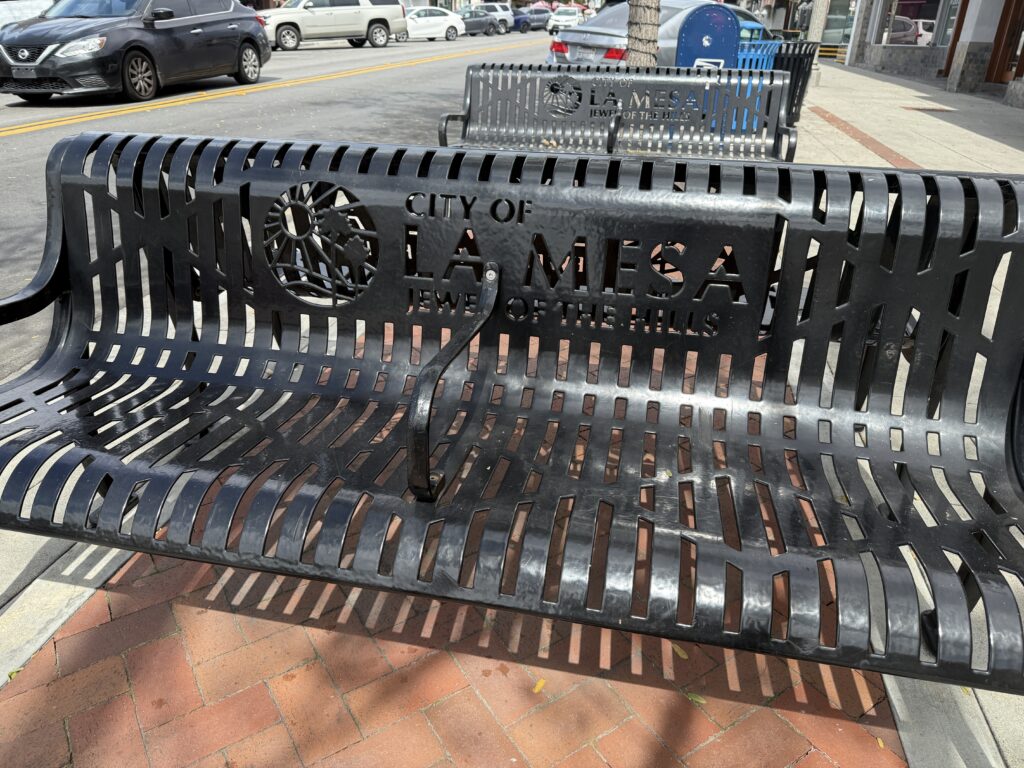
One of the things I wasn’t able to do with Pisco the way that I wanted to, was to explore La Mesa on foot. I mean, we did walk down the main downtown street – La Mesa Blvd – which is lined with restaurants and old historic buildings. And we went down to the historic La Mesa Train Depot to see the original depot building and the old train cars, but the neighborhoods were not something that Pisco was interested in doing. Partly because of his age, La Mesa is after all known as “The Jewel in the Hills,” and hills and age don’t mix well; but also because there are fewer people walking in the neighborhoods who might pet him, and there are absolutely no restaurants that might give him food. He was a very strategic dog.
So, this weekend I arranged to go walk around the neighborhoods in La Mesa. For those who don’t know already, I run a Facebook Group for women over 40 (yeah, I’m old, in fact I’m old enough I may have to start a group for the next age group up), and I’ve been arranging “neighborhood walks” for the women in my group. We’ve done Bird Rock, which was lovely, but landed on a rainy day so only one brave soul came out, and we did indeed get stuck in a downpour right at the end. Amazing neighborhood though, the homes there are so beautiful, and there are spots to get some stunning ocean views – definitely worth trying again.
Bird Rock view
We did Mission Hills which was one of the first neighborhoods that I fell in love with when I moved back to San Diego. The beautiful, stately Spanish and craftsman styles homes, the wide tree-lined streets, the cute little shopping district. It’s no wonder it demands a high price tag.
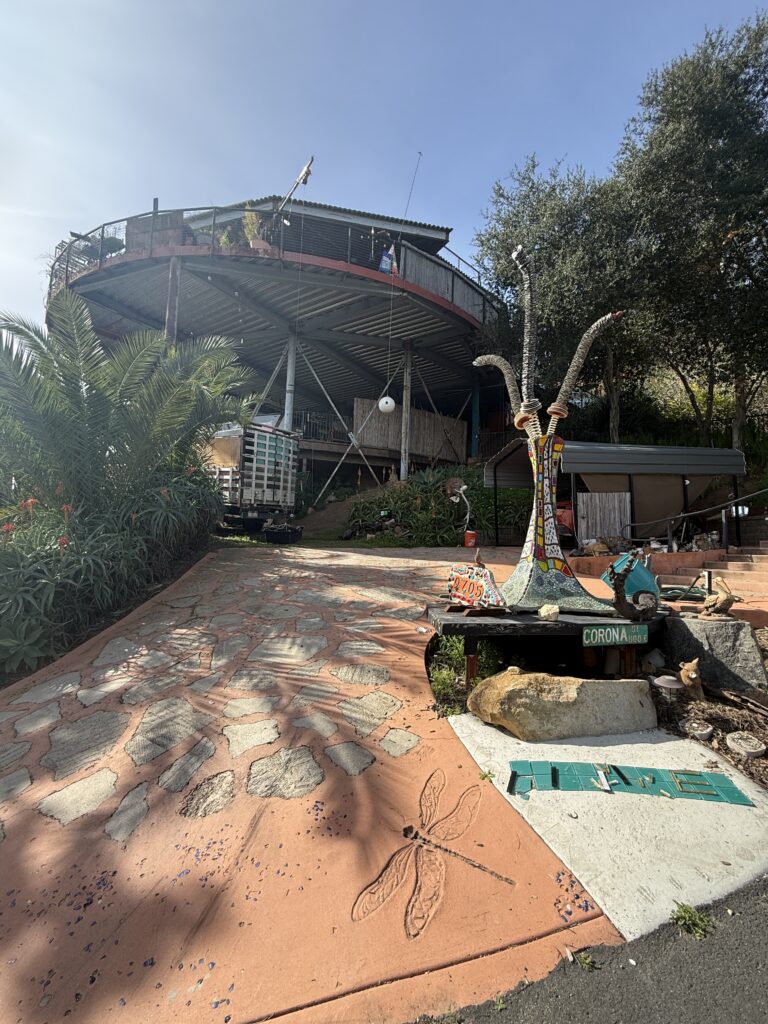
And we did Del Dios, which is out by Lake Hodges, and is known as a bit as a haven for artists. It has amazing views, with homes that have been personalized by the artists. You’ll find art installations hidden around every corner, interspersed with the horses and succulent gardens. I’ll do a post about this one in the future.
Del Dios spaceship house
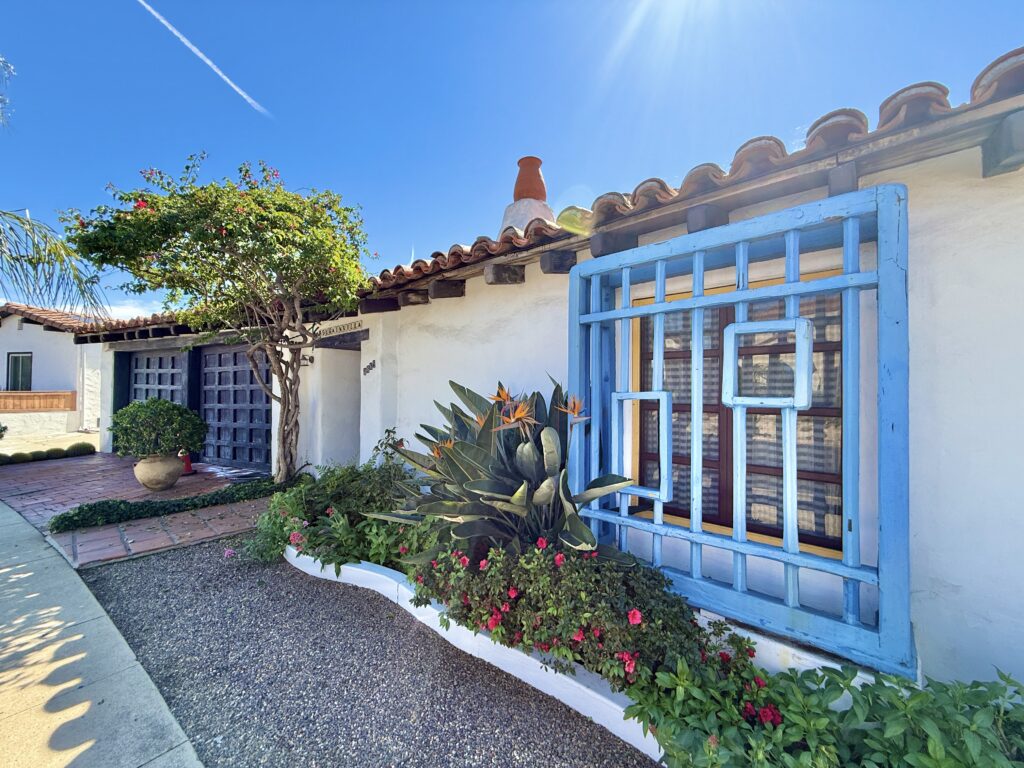
And of course we did Kensington because it’s my absolute favorite, and we’ll probably do it again as well. The Spanish style homes can not be beat. We also found out that the people there are incredibly nice – one neighbor brought water out to us because she saw us walking in the heat (it turned out to be quite a hot day), and then she ended up inviting us (I think there were 8 of us??) into her home to show us around because it had a historic designation and I had been curious about it. The house was beautiful, the neighborhood makes my heart happy. I hope to live there one day.
But this weekend, I had arranged La Mesa. And sadly, I only had 1 person turn up. Now, part of me wasn’t that surprised, because, well…..La Mesa. If you’re not from here, let me tell you a little bit about La Mesa.
Kensington
La Mesa is an inland city within San Diego County of about 60,000 residents. It’s about a 20 minute drive from La Mesa to Ocean Beach, downtown or the airport without traffic. It has a trolley stop, so it’s actually a great place to live if you work downtown, or in Mission Valley. And to top it all off, the schools in the area are highly rated, there is good shopping available, and Sharp Grossmont Hospital is even located in La Mesa. But, La Mesa is inland. One thing that people in San Diego are prone to do is be a bit stuck up about living close to the coast. And since La Mesa is east of the 15, it’s honestly out where most people in San Diego never go.
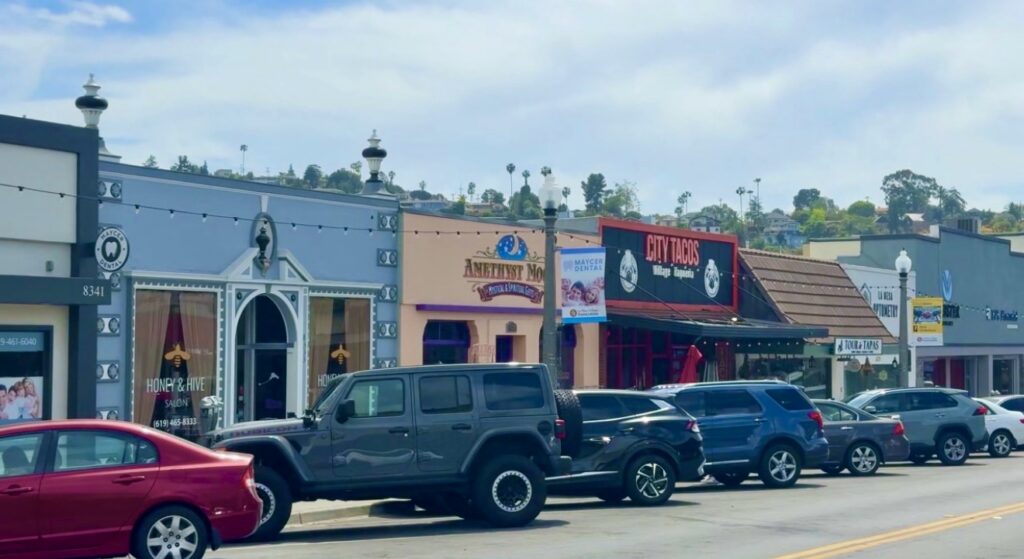
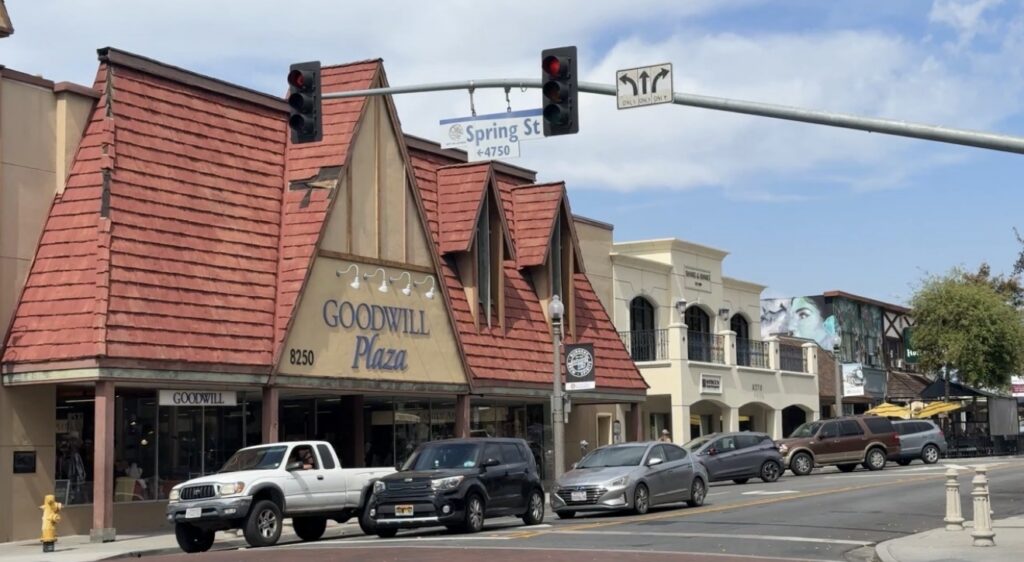
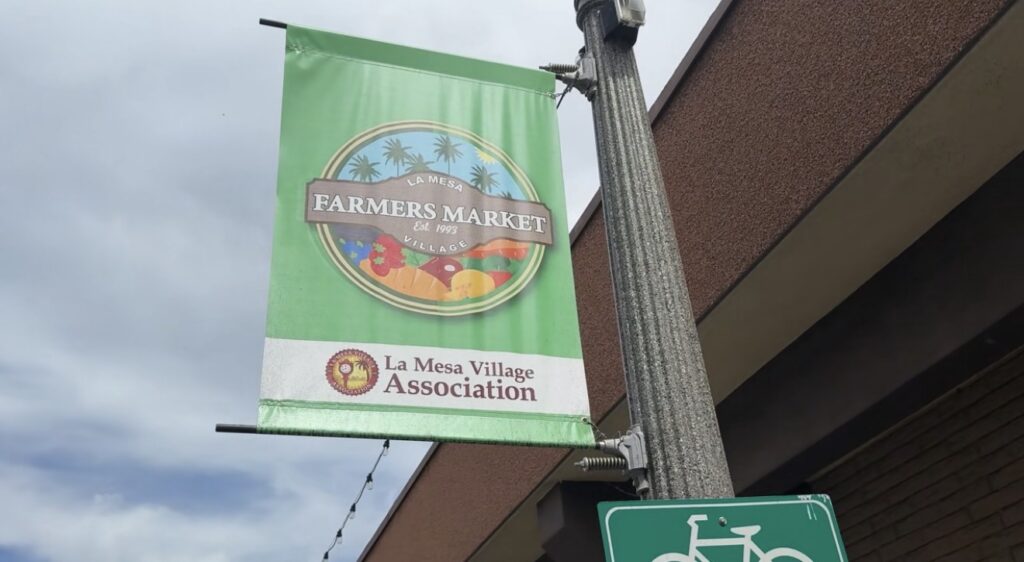
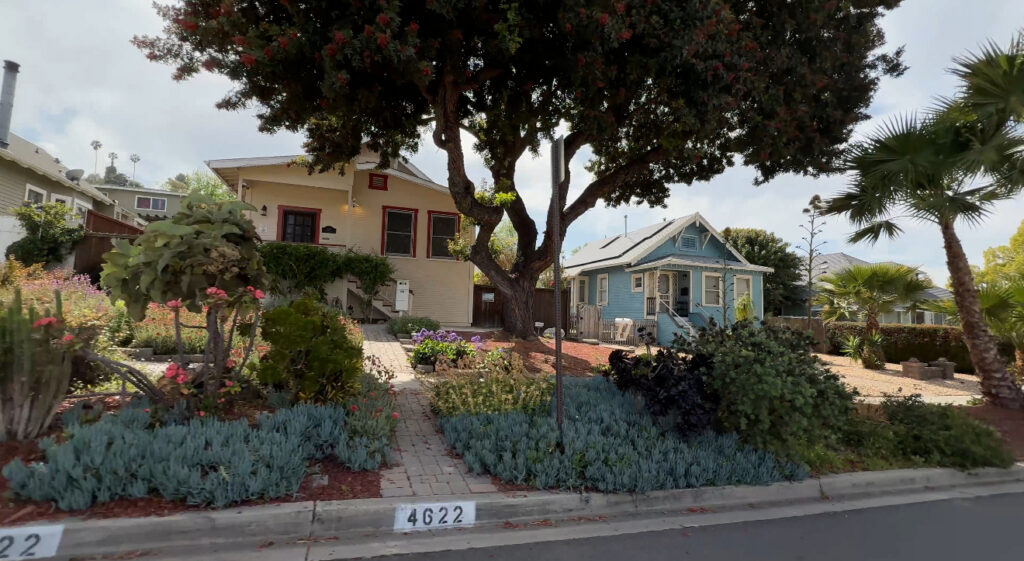
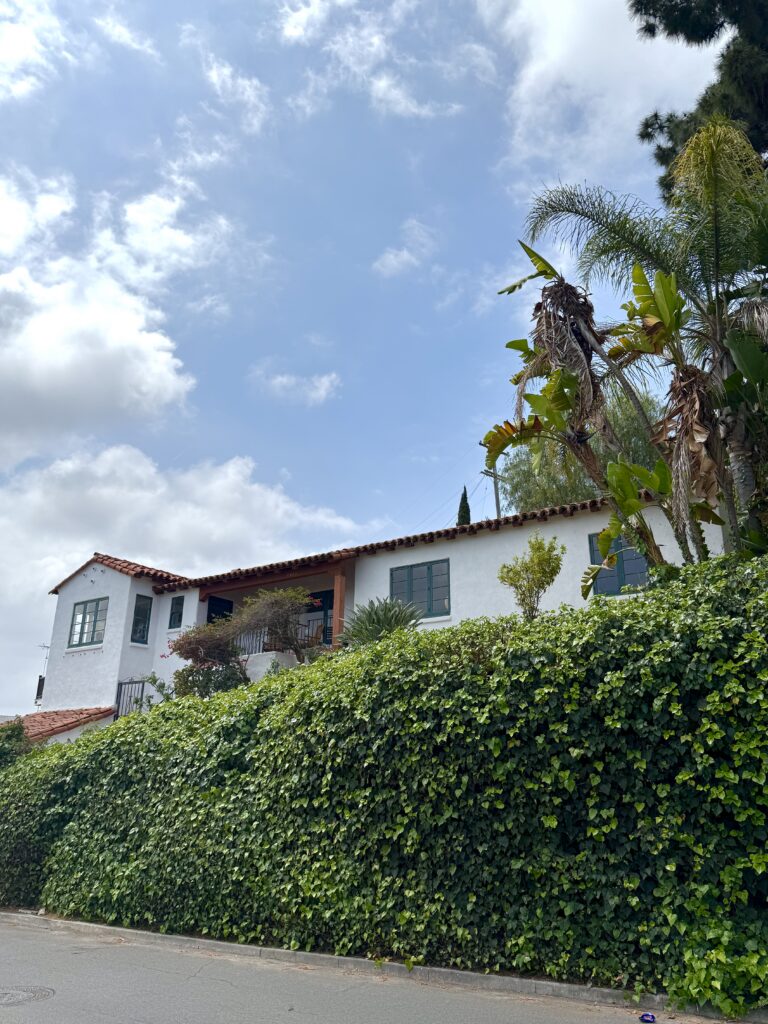
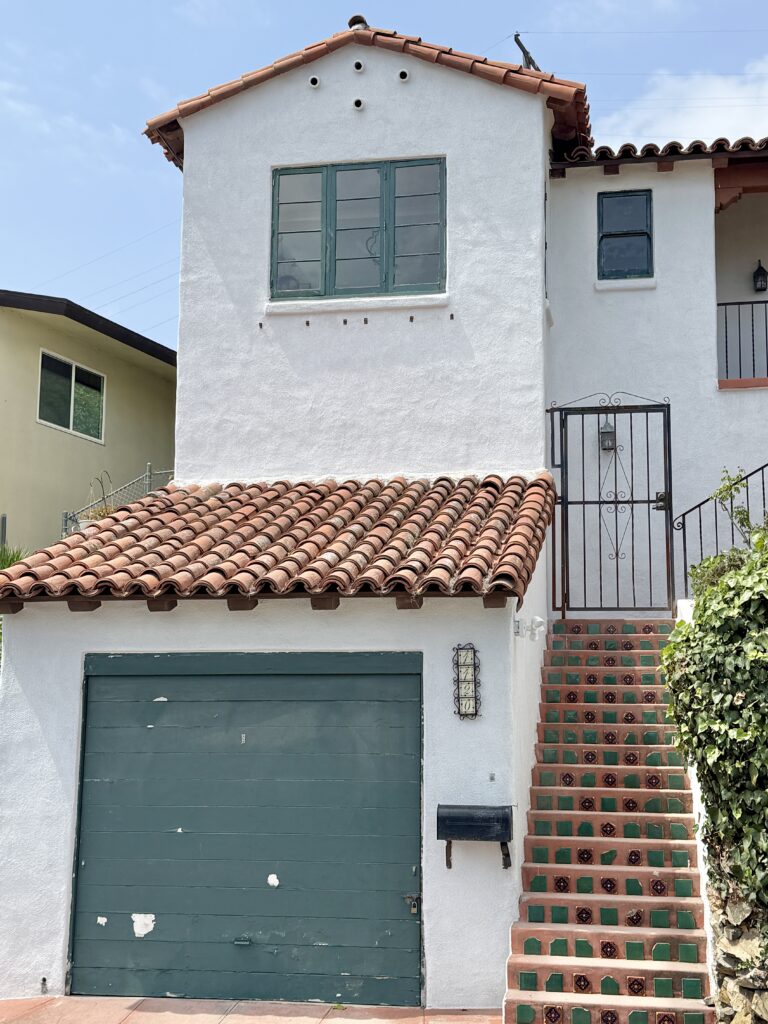
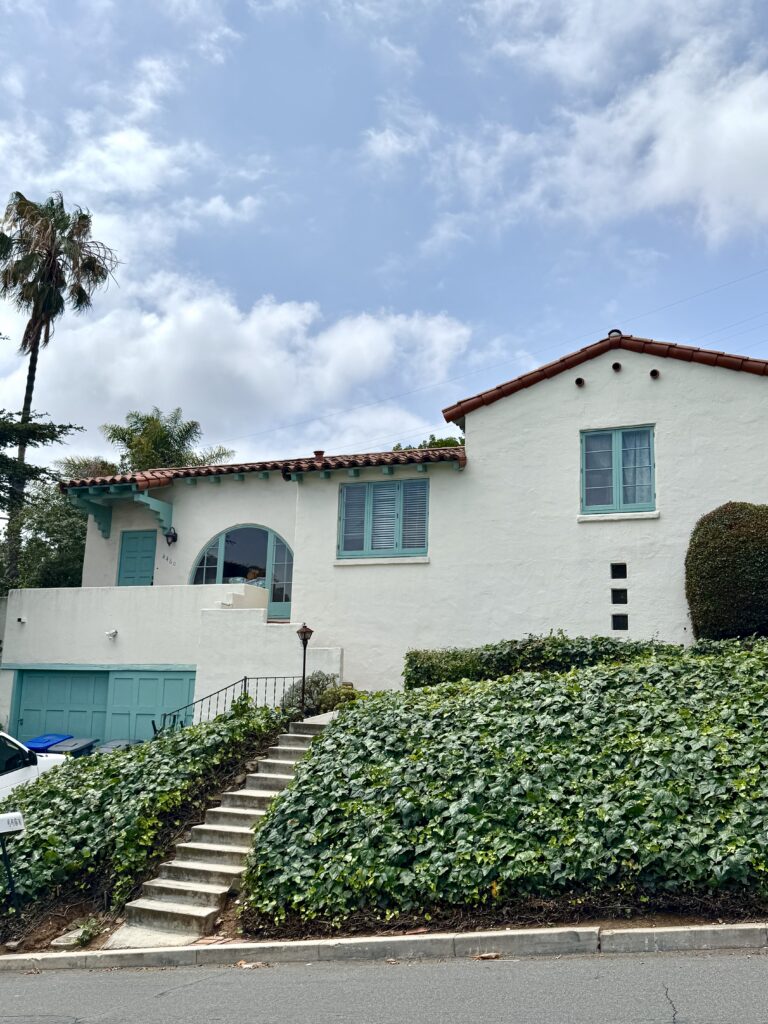
But, here’s the thing people don’t get….. La Mesa is WONDERFUL. If La Mesa weren’t so far from my best friend, I would probably live there. The architecture in La Mesa is a mix of mid-century ranch homes, craftsman bungalows, Spanish revivals, moderns that have replaced tear-downs, and oddly, some homes that kind of look like they belong in the mountains. There is an adorable downtown area with antique shops, and boutiques, more coffee shops than you can count, and some really good restaurants (we went to Casa Gabriela afterwards for lunch and it was quite yummy). There is a farmer’s market every Friday afternoon that I have been dying to check out, and the city has multiple annual events including a Flag Day Parade, classic car show, Taste of La Mesa Village, and halloween and holiday events as well.
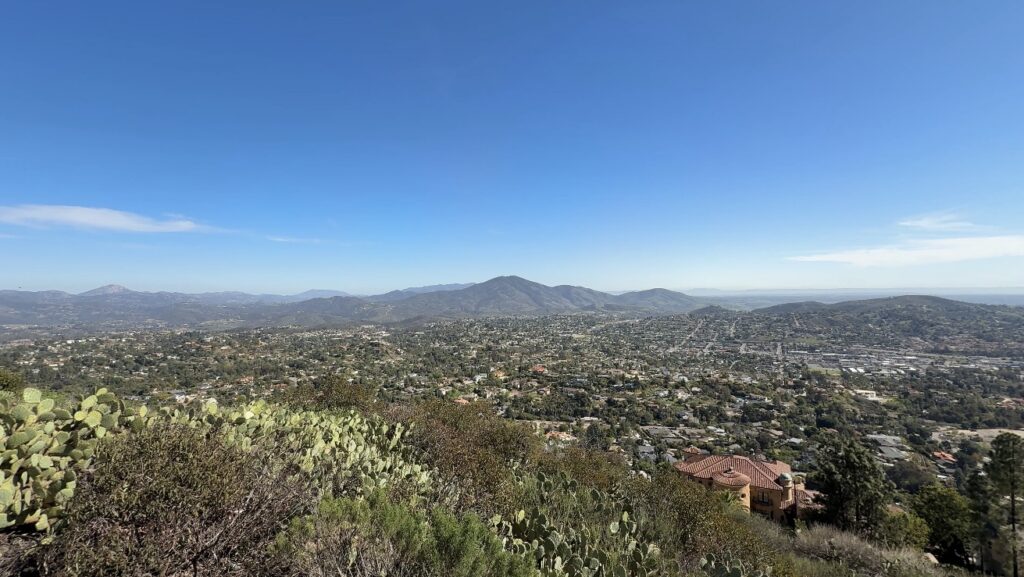
The surrounding neighborhoods are an eclectic mix – there are sections that just look like your basic southern California flat mid-century neighborhood full of ranch and bungalow houses, others that are more craftsman-y, and then there are the hills, which are my favorite. The hills have winding roads going up them that remind me of the Hollywood hills. They’re lined on both sides with cool houses and you can get amazing views from all sides.
When people move to San Diego, especially if they are younger, they’re told to look at North Park, Pacific Beach and Little Italy. If you have money, you’ll be told about La Jolla, Coronado and Del Mar. And if you have a family, you’ll be told Carlsbad, but if you have a family and money, then it’s Carmel Valley and Encinitas. All of these are more coastal. Pull up any list of “best places” to live in San Diego and the names on the lists are always coastal, and always the same. And I’m not going to argue with them, I think anyone who can afford to go coastal probably will.
But, what these “best places to live” lists do, is they make people overlook the fact that there are amazing places to live in San Diego county that are just a little bit inland and less well known. And guess what? You’re still in California, and you’re still living the San Diego lifestyle!
The other thing these lists do is make is so that if you can’t afford to live in one of “the best places to live in San Diego” that people think either they just shouldn’t move to San Diego, or they’re going to hate it, or they aren’t as excited about where they’re going to live. And that’s just a shame in my book, because there are so many hidden gem neighborhoods in San Diego that no one has ever heard about.
La Mesa is actually one of the places that I use as an example when I try to explain to people that when you move to San Diego, you don’t have to live at the coast to enjoy San Diego. You can be just 20-30 minutes from the beach and have amazing views in a place like La Mesa for a fraction of the cost of somewhere like La Jolla.
And honestly, I’d choose La Mesa over North Park. And let me tell you, saying that out loud may get me thrown out of San Diego. But La Mesa doesn’t have the homeless population that North Park has. La Mesa is easier to get around than North Park. La Mesa has parking. La Mesa has a trolley. La Mesa has a real Target (not that we’re shopping at Target anymore, but you get the point). La Mesa has Trader Joe’s. La Mesa has lower price per square foot, so you can get more space. La Mesa has a lot going for it.
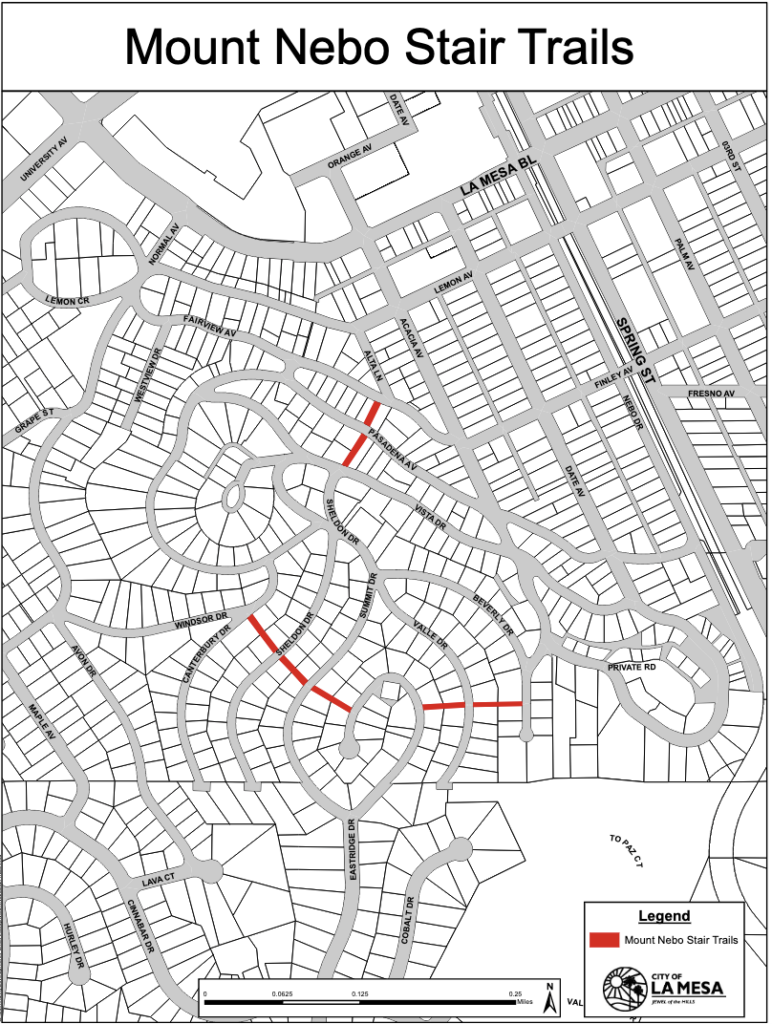
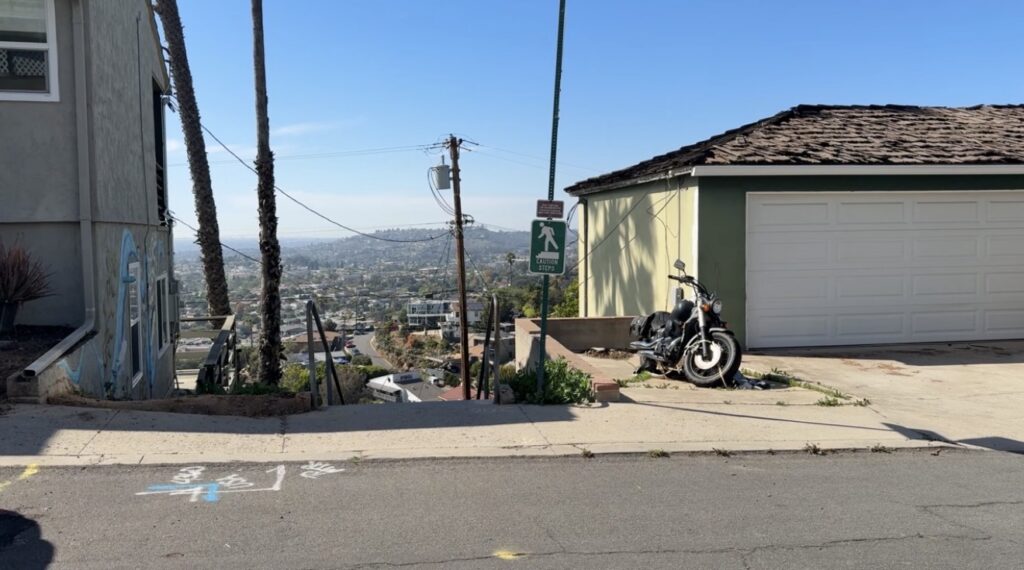
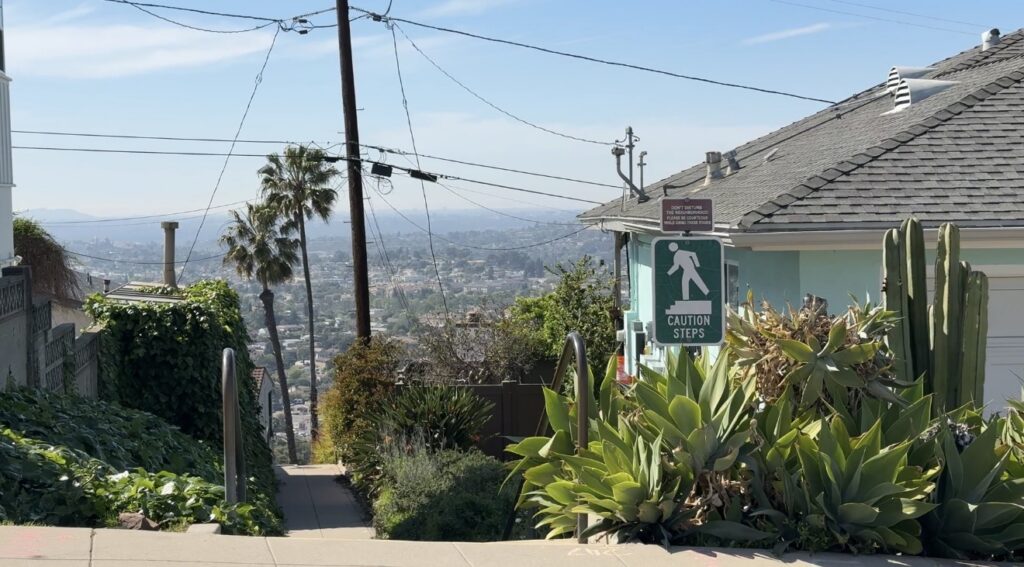
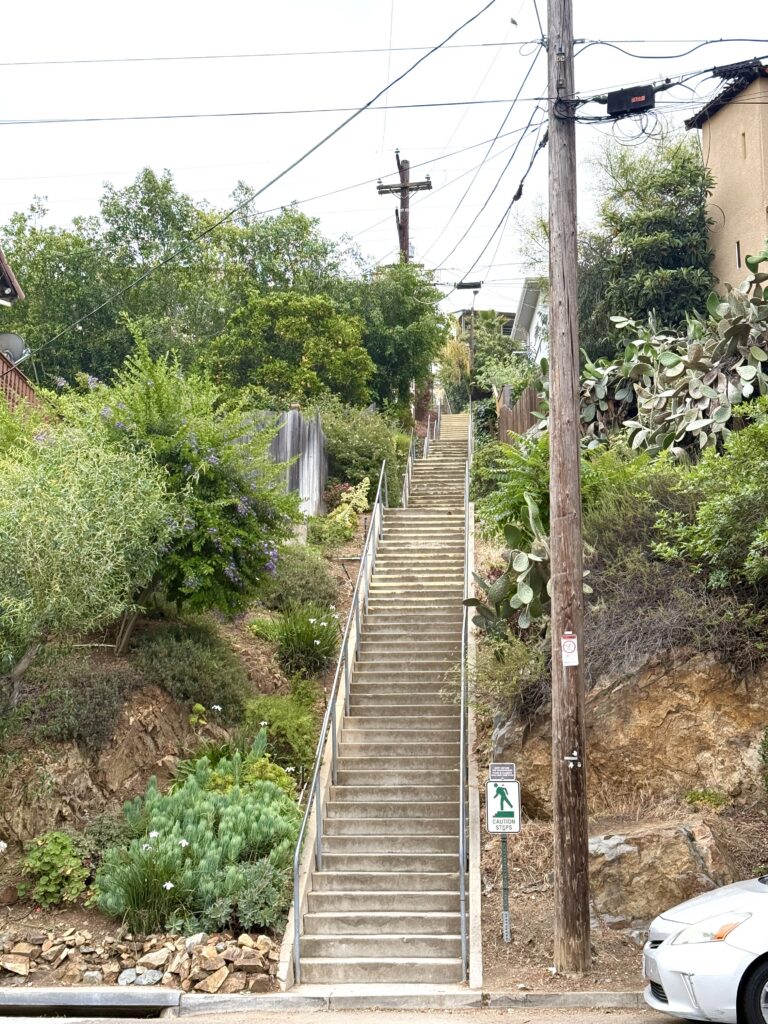
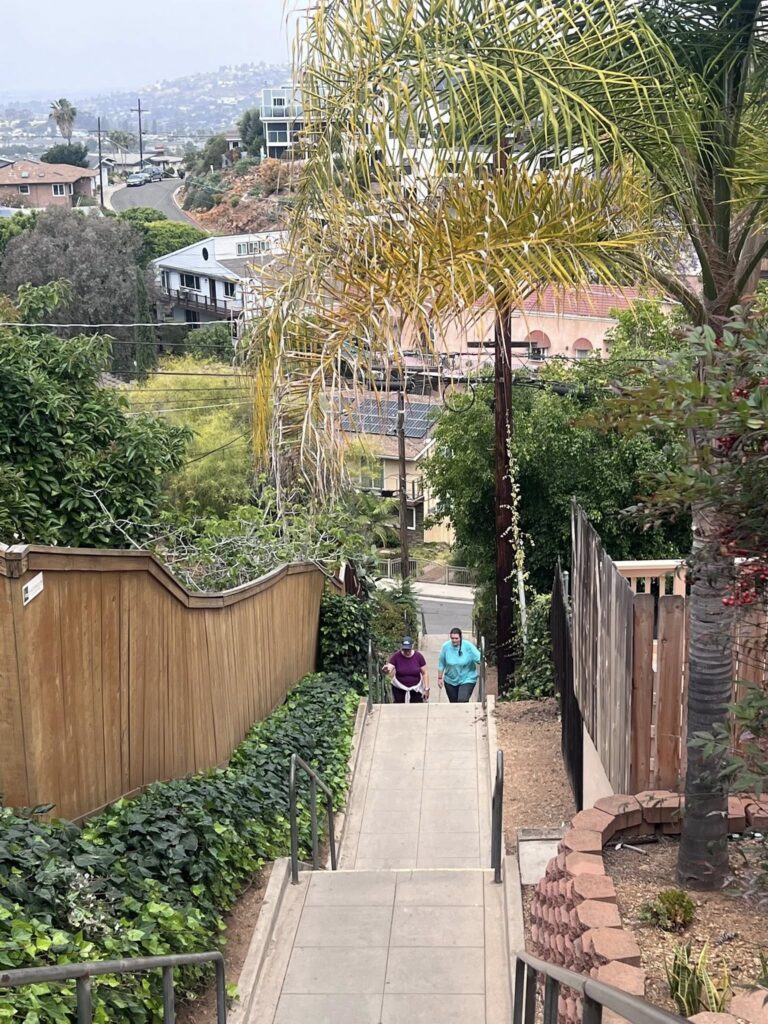
Now, I mentioned how much I love the hills in La Mesa, but I will say, they can also be a drawback. They make walkability in some areas a bit more challenging. For example, if you’re really in the know, you can find the hidden La Mesa stairs. These stairs are in the Mt Nebo/Windsor Hills area and while the streets literally corkscrew up the hill, these stairs allow you to walk directly up or down the hill without having to walk all the way around and around on the street.
The original plan for the neighborhood walk this weekend was to tackle a few of the staircases, but in all honesty, it had taken everything in me just to show up (grief is real, it’s unpredictable, and you don’t get to decide when it ends), so climbing 245 stairs was not something I had in me that day. Luckily my friend, after already climbing a good bit of hill just to get to the start of the steps, was perfectly fine skipping them as well.
And then we saw another woman preparing to climb the stairs, and somehow we ended up talking to her, and she was recovering from surgery but was training because she was going on a cruise, and wanted to be able to climb this lighthouse that had 300-and-something stairs; and next thing I knew I was being peer pressured into climbing the stairs with her. We still only went up from one street to the next – there were 2 more streets to go – but I’m proud of me for doing something rather than nothing.
Above is the picture I took when we were just planning to take a picture and say we saw them….. and then a picture of me actually climbing them. I climbed them Kilimanjaro style….pole pole (pol-ay pol-ay)…. which means you go really slowly and the goal is to never get out of breath. The best part of the stairs is that if you turn around when you get to the top, there are great views (see above). It was overcast this particular day (thanks May Gray), but we could still see some hills in the distance.
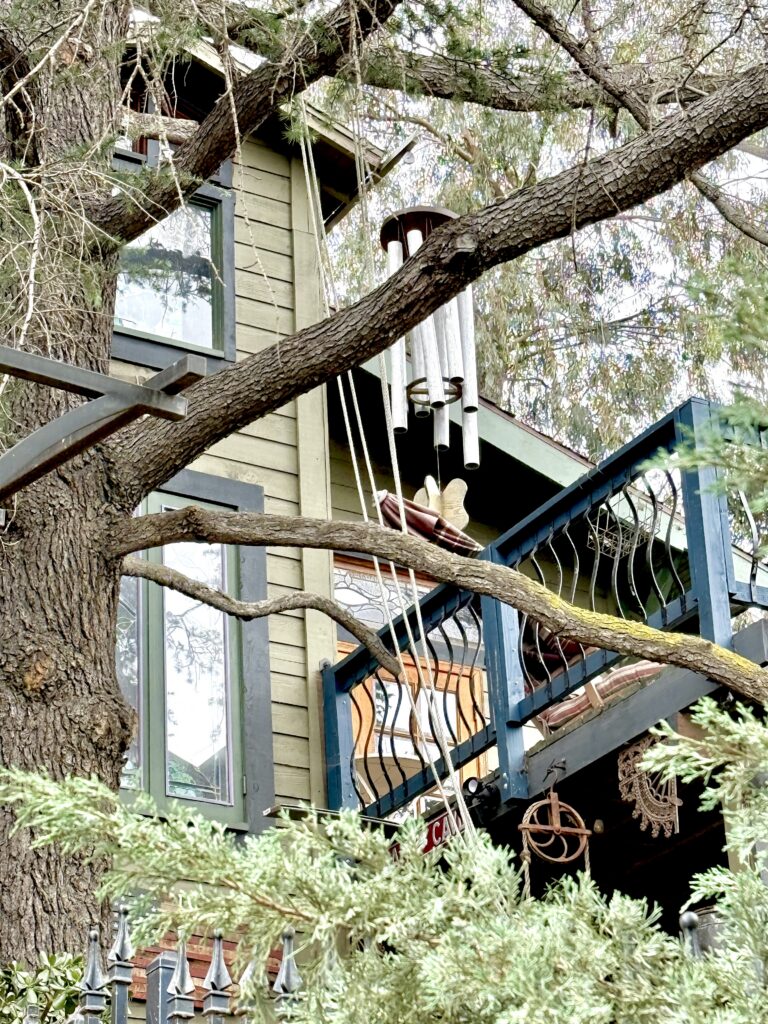
My favorite thing about these neighborhood walks is that you see things you would never see if you are driving by. For example, we saw this one house that at first glance looked like it must be the haunted house on the street. As we looked closer, though, we realized it looked like a stately Craftsman, but it was under this huge old tree, and was behind a big hedge with stuff all over the place, so was hard to see. It had a massive wind chime hanging over the porch and an old (fake) well pump, and a bucket and pulley system to bring the water up (also fake/not usable). Once we spent some time looking at it we realized it wasn’t the home of the neighborhood witch, but rather the neighborhood artist.
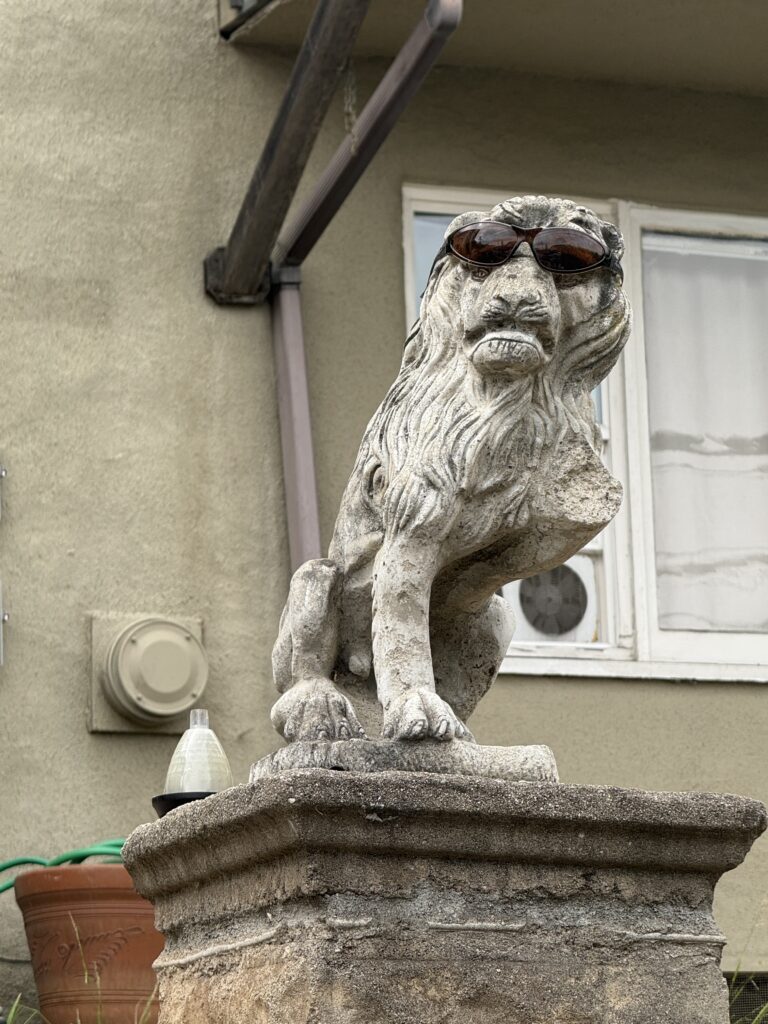
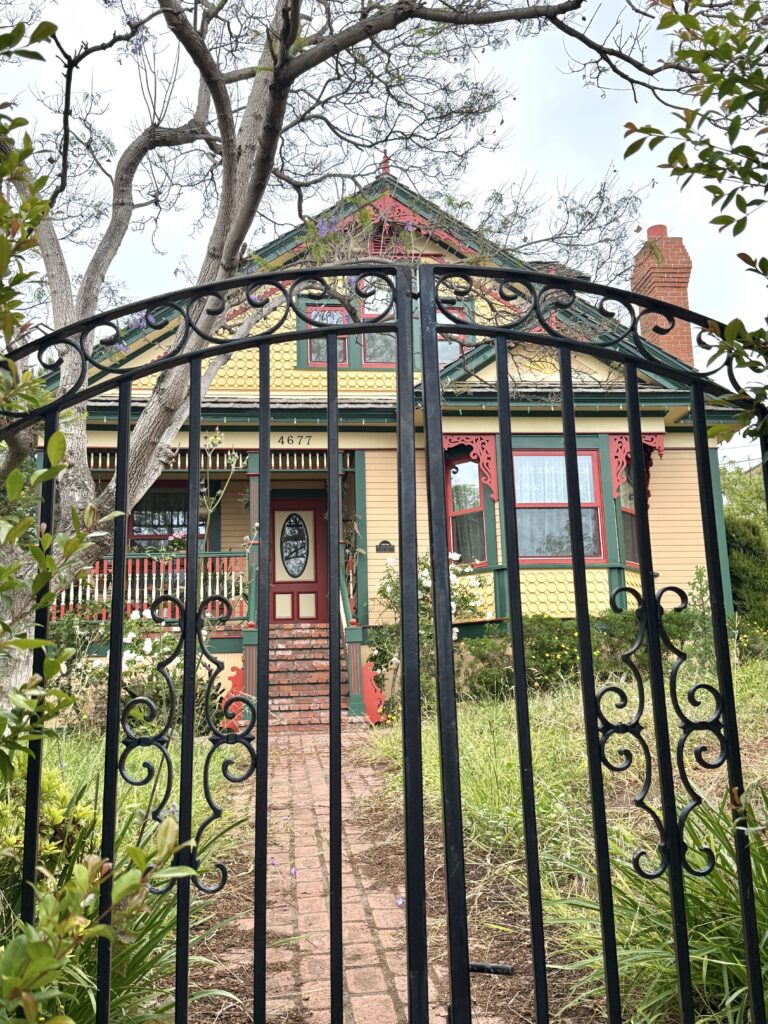
Then there were these statues of lions wearing sunglasses. And of course the fuzzy and flowering cacti. This Victorian gingerbread home captured my attention as well. And this modern version of a Spanish style home had us mesmerized.
This is one of my favorite things about La Mesa – the diversity of architectural styles. I love that there is a historical element being retained which you can see in some of the old craftsman and Spanish revival styles homes that still hit the market from time to time, as well as in the amazing art deco buildings that line La Mesa Blvd downtown. But then you’ll see the modern element coming in as well as the aging and not well taken care of homes get torn down and replaced with newer options.
I still probably need to go back and explore some more of La Mesa on foot.
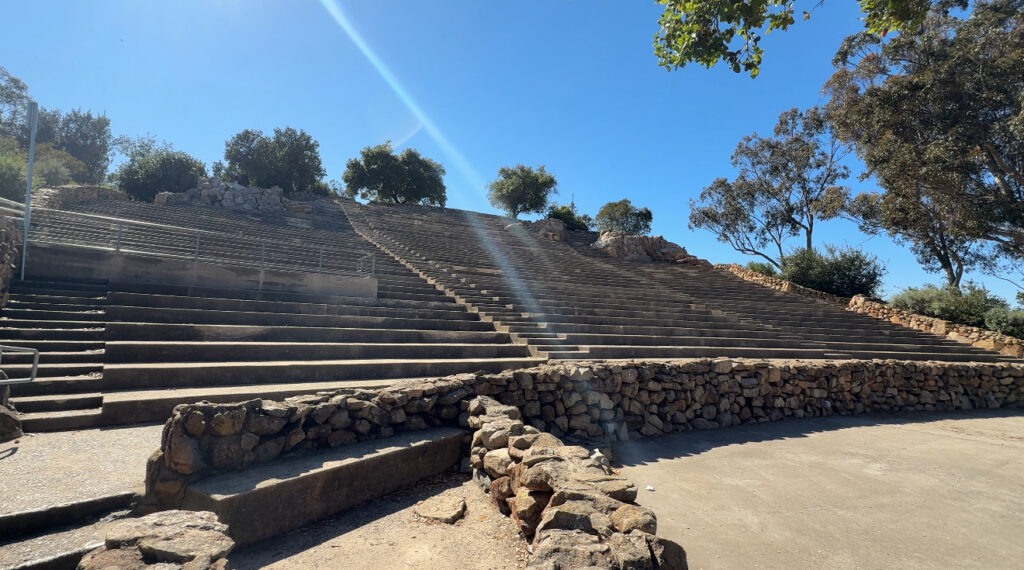
The nicest part of La Mesa is called Mt Helix and there are some incredible houses on it. It also has a park at the top with an amphitheater where they have concerts, and a food and wine festival, and other community events. I’d like to attend an event there at some point. The hill itself, while windy and narrow, has a pedestrian path that lines the road making it easy for folks from the surrounding neighborhood to walk up to the park.
There are parts of La Mesa that are great for first time home buyers (yes, at San Diego prices), and a whole area with condos that are quite nice, and are less expensive than their coastal counterparts. One of those areas is called Severin-Grossmont and it’s known for it’s mid-century contemporary ranch homes. This would be a fun neighborhood to walk around and see what people have done with their homes and their often fairly large lots.
Lake Murray is another great thing that is in La Mesa. It’s a lovely lake with a walking trail, and you can kayak and fish, and there are lots of places to have a picnic or watch the sunset. Pisco particularly enjoyed watching the ducks and geese. I have yet to walk all the way on the walking trail – it’s an out and back. We went once and didn’t make it very far. I didn’t go back because there were times I’d take him to a trail like that, and we’d make it about 10 feet before he’d say “no way, Jose”, so I wasn’t rushing to drive all that way for nothing. Which means, I need to plan to get back to Lake Murray again soon.
So what do you think? Does La Mesa sound like a neighborhood you’d enjoy?
If you’d like to see more about La Mesa, I did make a video about it which you can check out here. In the video, I actually drive around La Mesa, so you get a different perspective:
If you’re anything like I was, one of the first things you research before moving to a new area is what it’s going to be like for your dog. And if you’re considering San Diego, I have good news: this city is seriously dog-friendly. We’ve got four dedicated dog beaches, each with its own personality. I’ve been to all of them, many times, and I’m going to give you the real rundown on what I love and what I don’t love about each one.
No fluff. Just the stuff you actually need to know before you load up the car.
Ocean Beach Dog Beach
Ocean Beach Dog Beach is the OG. Literally, it’s so established that most locals just call it “Dog Beach.” It’s been around forever, it’s well-known, and it deserves its reputation as a San Diego institution.
That said, if I’m ranking the four beaches, this one lands at the bottom of my list. But that by no means makes it bad, after all, there are only 4 names on the list, it’s just usually my last pick if I’m looking at all options.
Here’s my main issue: parking. During busy times, finding a spot can be frustrating, and the spaces in the lot are tight. The beach itself also has a large soft sand area, which sounds lovely until you’re trying to walk across it and your legs are burning. I’ve learned to head down toward the water immediately from the parking lot and walk near the rocks to get to the water, it’s much easier, but it’s also more crowded, which is why I’ve spent plenty of time slogging through the deep sand just trying to avoid people. Also, all the trash cans are way back through the soft sand, so at some point you’re gunna get to deal with it.
The other thing I’ll mention: the first time I visited, there was a noticeable amount of dog poop in the sand. Other visits have been totally fine, so I think it’s one of those “depends on the day” situations. Just worth being aware of. Also, Ocean Beach is Ocean Beach and every so often there are reports of dogs getting poisoned after getting into drug paraphernalia that has been left laying around – not usually on the dog beach itself, but nearby. So stay vigilant if you are taking your dog here.
What I genuinely like about Ocean Beach: the variety. You’ve got crashing waves, and the inlet where the San Diego river meets the sea, which is calmer water; so whatever your dog prefers, it’s there. But, at the same time, the surf area is much calmer than at Coronado because the break is out further, so your dog can actually go in it. And the beach is always off-leash, no seasonal restrictions or time windows to worry about, which is a real plus.
Coronado Dog Beach
Coronado comes in at number three on my list, and honestly, it’s only that low because getting there takes a little more effort. My first tip, is do not listen to Google Maps – I just mapped it on y phone and it put a line around the entire Coronado beach as the “dog beach”. This is WRONG. The dog beach entrance is only at the far end of the beach.
Some people find parking to be challenging. I never have. You just have to plan to park in the neighborhood directly adjacent to the park and walk over. And this is one of the drawbacks of this beach, there is usually a bit of a walk to get to the beach access, and then there is also a walk to get down to the actual beach itself.
Here’s the upside of that walk, though: by the time you reach the sand, your dog has usually taken care of business near the trash cans. Definitely a point in it’s favor. But I should note that the little park that is just outside the entrance to the beach does not allow dogs in it, so make sure they’re doing their stuff on the beach side of the street.
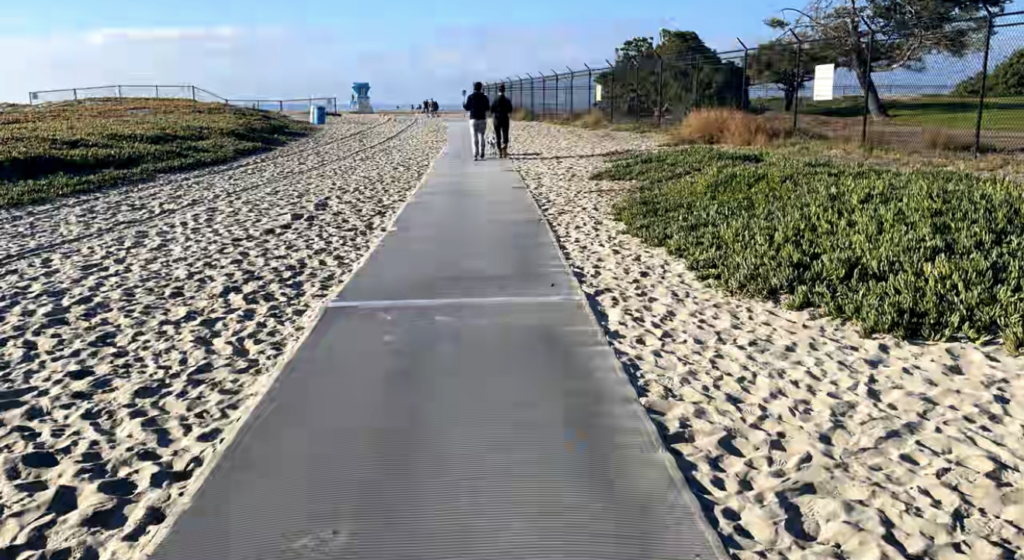
There is a decent walk from the street to the beach, but there is a pathway that makes it so that you don’t have to walk on the sand for most of it which makes it much better for the warmer days. There’s still some soft sand to get through, but not very much, especially compared to other beaches.
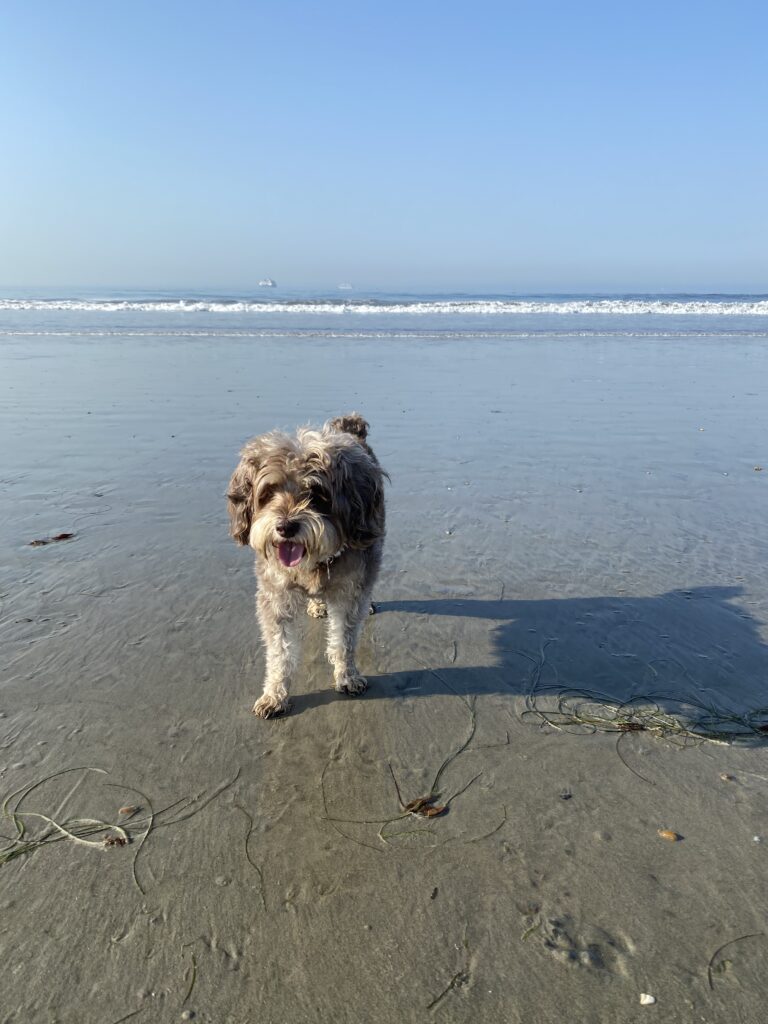
The beach itself is beautiful. It feels like a classic Southern California beach – long, straight, deep, with crashing waves. Like all of them, it’s best at low tide when you’ve got more packed sand and room for the doggos to run. Coronado Dog Beach is always off-leash, which I appreciate, and is the biggest of the dog beaches with waves; so if you want to go to a dog beach, but want it to feel a little more peaceful, this is that beach.
Something that makes this beach very unique is it’s location. To one end, you can see the Hotel del Coronado in the distance. Walk the other direction and you’ll eventually hit a fence marking the edge of the military base. And if you come in the morning, keep an eye out for sand dollars; Pisco had zero interest in them, but I think they’re a lovely bonus. One note though, you can’t walk down to the Hotel Del, you’ll see when you walk into the beach that as you come in, to the right is the dog beach and to the left – towards the hotel – is no dogs allowed.
One practical thing I really appreciate about the Coronado dog beach is that there is a rinse station so you can wash your dog off before heading back to the car. This is a detail that comes in super handy when your dog is covered in sand, and it’s the only dog beach that has one.
Fiesta Island
Fiesta Island might be the most underrated of the four, and it’s honestly my second favorite. The logistics alone make it worth considering: it’s easy to get to, parking is simple (you can literally park almost anywhere you want), and the whole island is off-leash dog-friendly. Not just a designated stretch of beach – the entire island.
There is a main dog beach area where most people congregate on the back of the island, and there’s also an inland section that is considered a dog park where you can actually do kind of a mini-hike. It’s also great if your dog isn’t a water dog or you just want to walk without getting sandy.
The water that surrounds the island is calm, with no big waves, so dogs can swim easily. Because of this, I actually recommend this to people when they are bringing their dog to the beach for the first time. It gives them an introduction to the water without you having to worry about them being carried away by a wave. I started Pisco at Coronado and I was terrified he was going to get swept out to sea. It took me a while to take the leash off.
Pisco didn’t actually like the water very much, so this was the only place he ever went into the water and it was because it was calm and shallow….and usually only to try to check out something that was floating nearby.
Because the water is flat, it’s also great for water sports from paddle boarding to kayaking to jet skis to water skiing. Pisco loved chasing the kayaks and jet skis, which was both adorable and slightly ridiculous. But that means it can also be a great place to come if you want to go paddle boarding or kayaking with your dog.
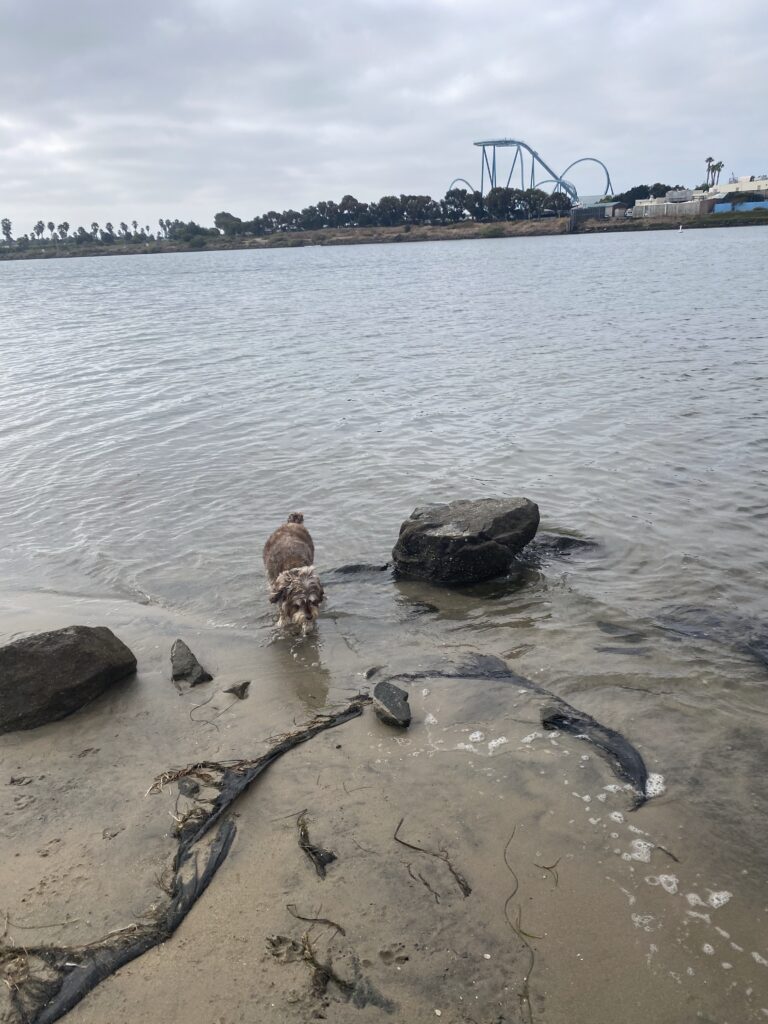
Now, the honest part: the sand and water at Fiesta Island aren’t pretty. There’s often white foam in the water, and the sand is compacted with patches of seaweed, and depending on the weekend, there can be litter from people who hung out there. In fact, the water can be down right dangerous and there are often warnings that bacteria levels are too high for it to be safe to swim. It’s a good idea to check the water quality before letting your fur child swim in it – this is actually true of all the beaches. You can do that at sdcoastkeeper.org.
One fun bonus for summer evenings: you can see the SeaWorld fireworks from the island, and since by the time you’re reading this they may have switched the fireworks for drones, this could be a fun place to take your furry best friend to celebrate the holiday. That being said, if there are still fireworks, please be VERY careful – every single year there are lots of dogs that go missing because they are scared away by the fireworks. Don’t put your dog in a position to be so scared that they feel they need to leave you because you aren’t protecting them.
If you want a longer walk, Fiesta Island is great for that too. You can circle a significant portion of the island without retracing your steps, which I appreciate when I want to actually get some exercise and not just stand around while Pisco sniffs things.
Del Mar Dog Beach
Del Mar Dog Beach is my favorite. It’s not even close.
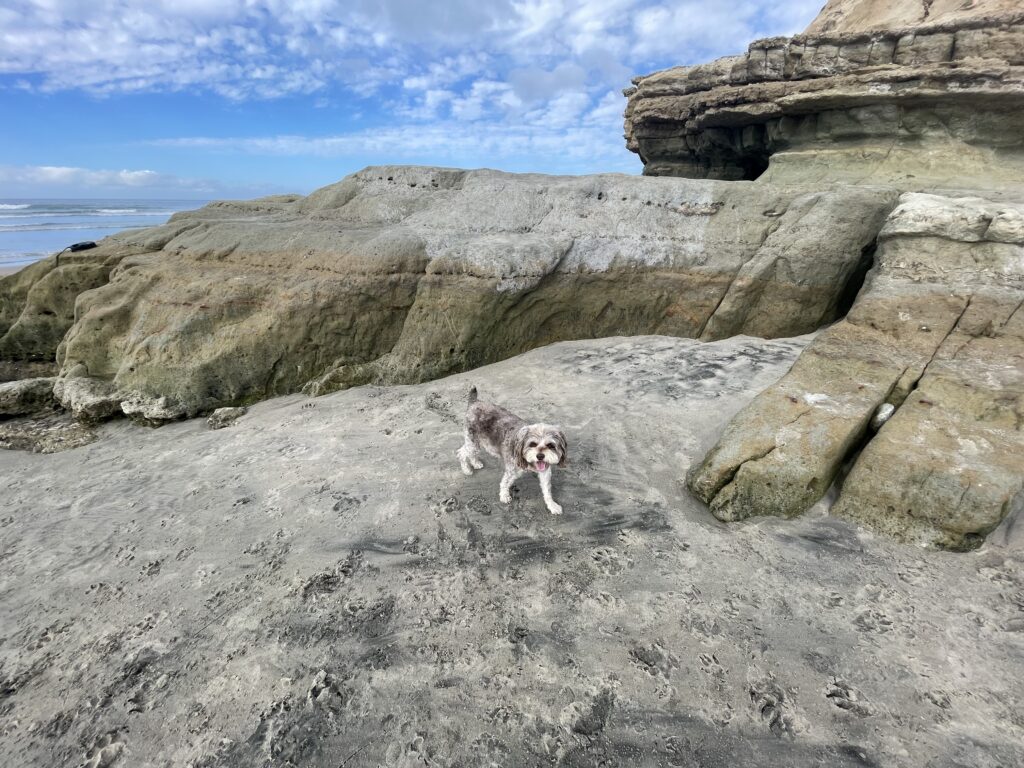
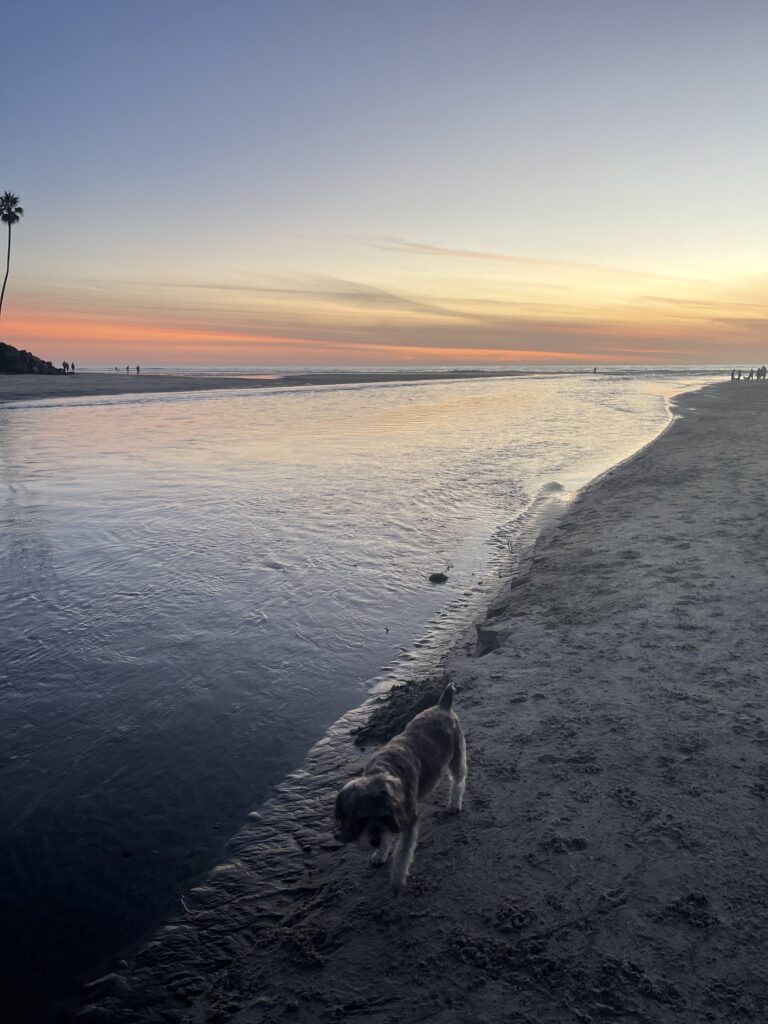
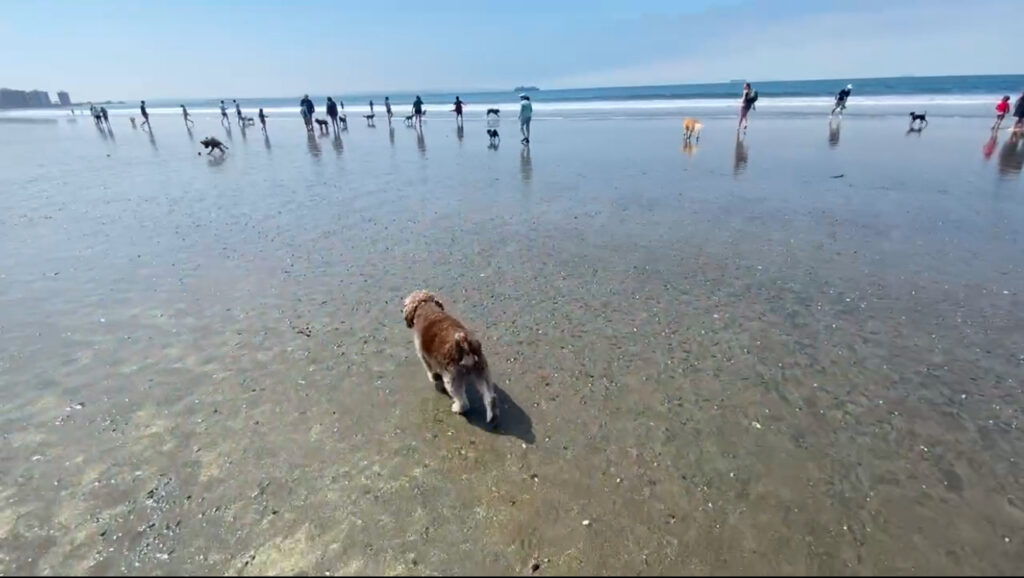
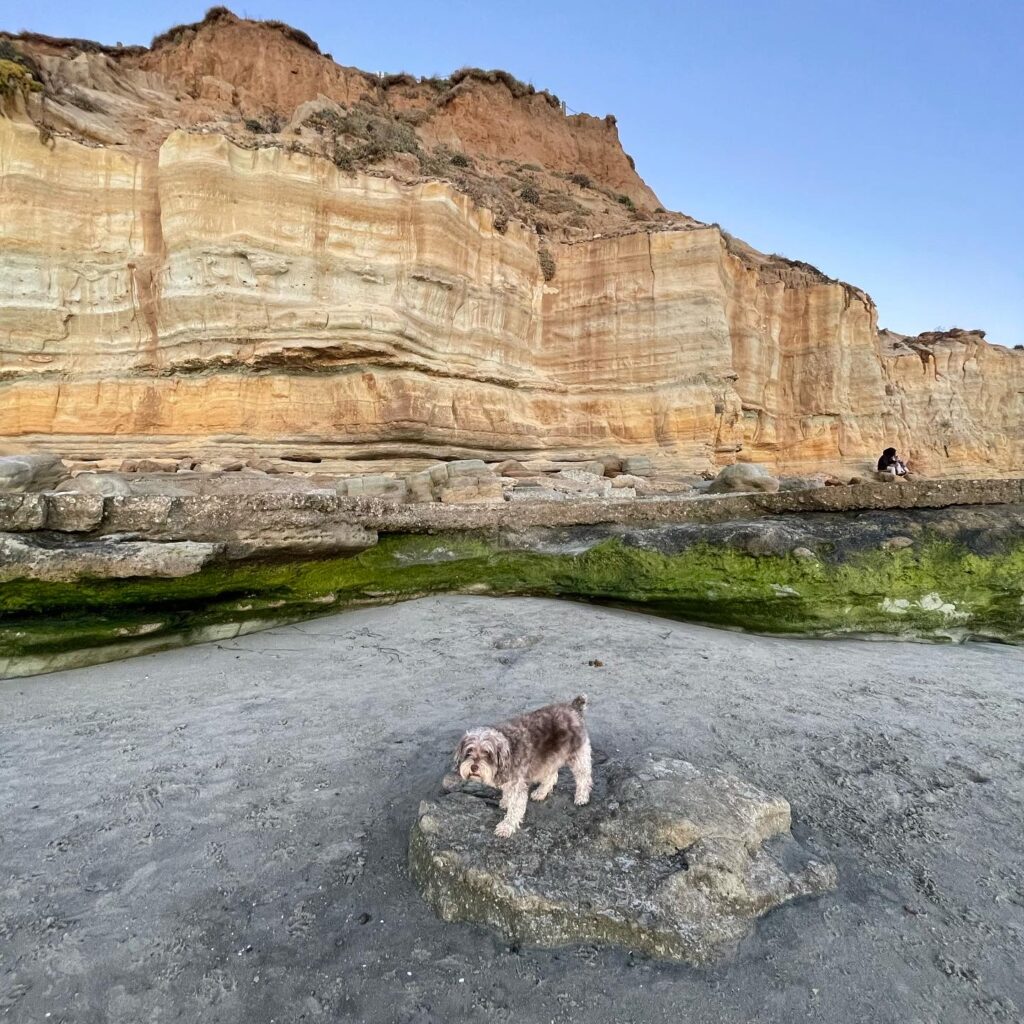
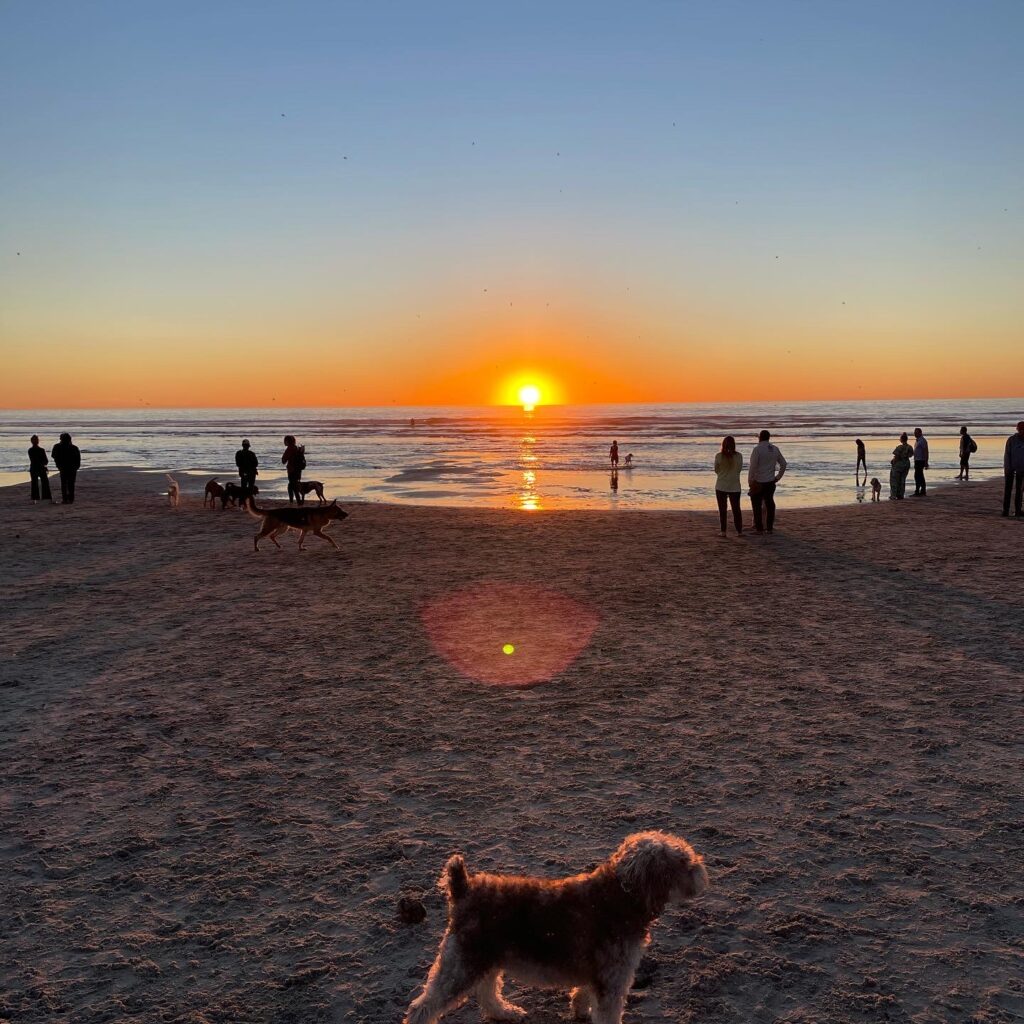
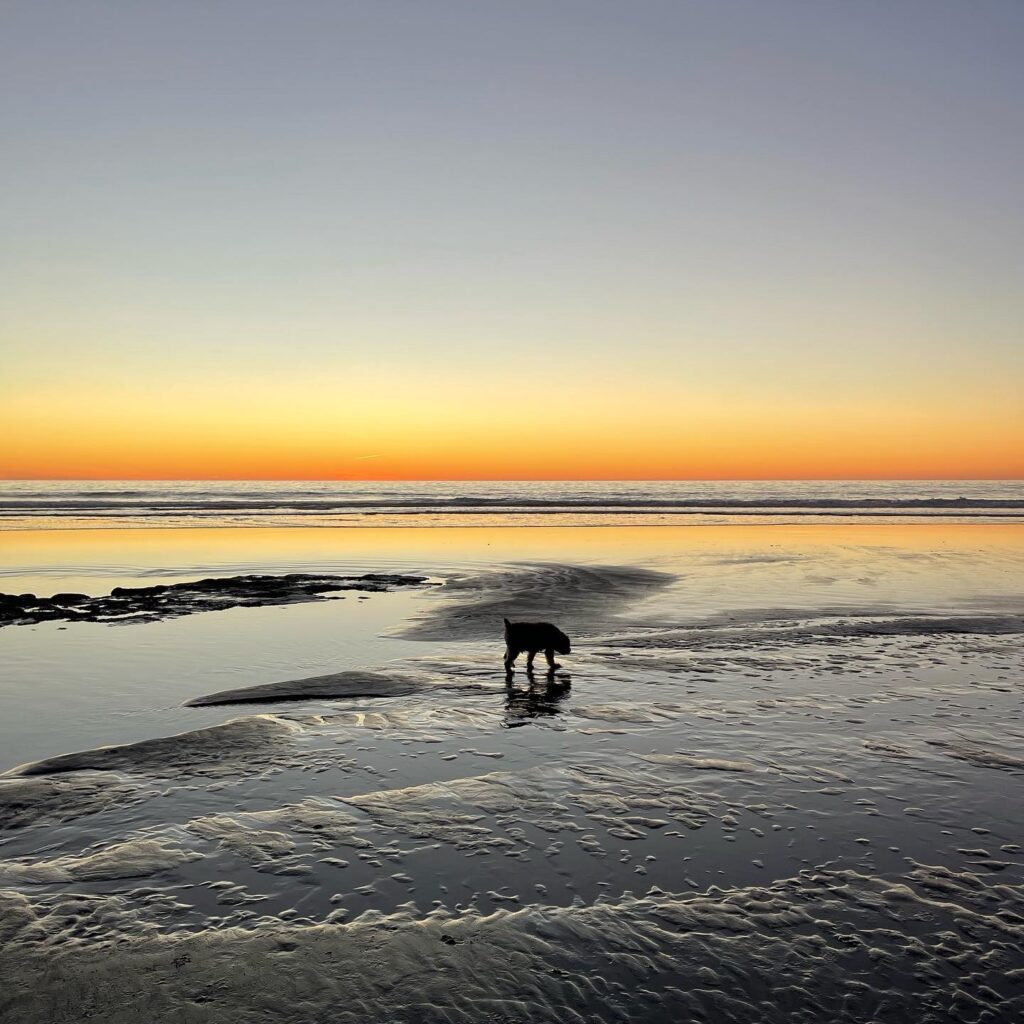
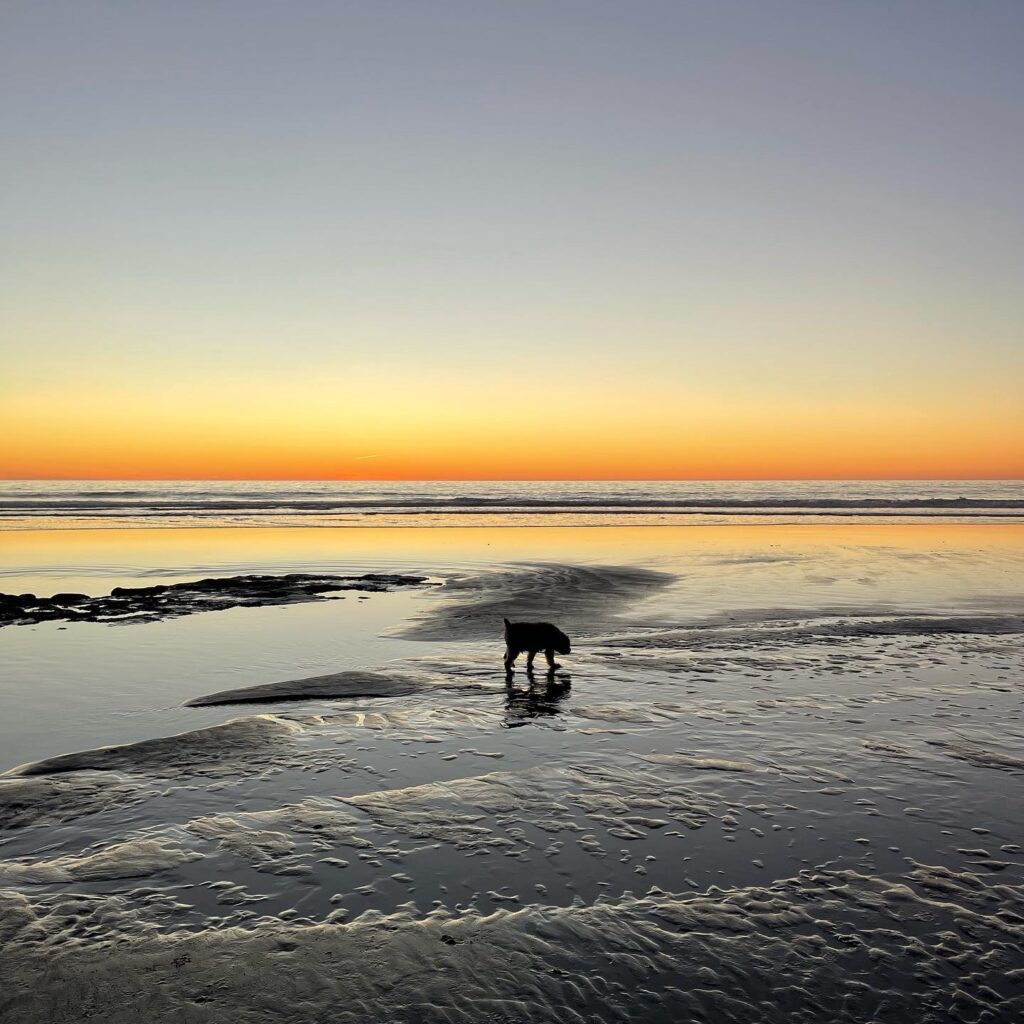
This is the most scenic of the four — full stop. The cliffs, the tide pools, the way the sunset reflects on the wet sand at low tide. I linger here to take in the scenery more than at the other dog beaches. Of course I’m also biased because this has been my closest dog beach for the longest time.
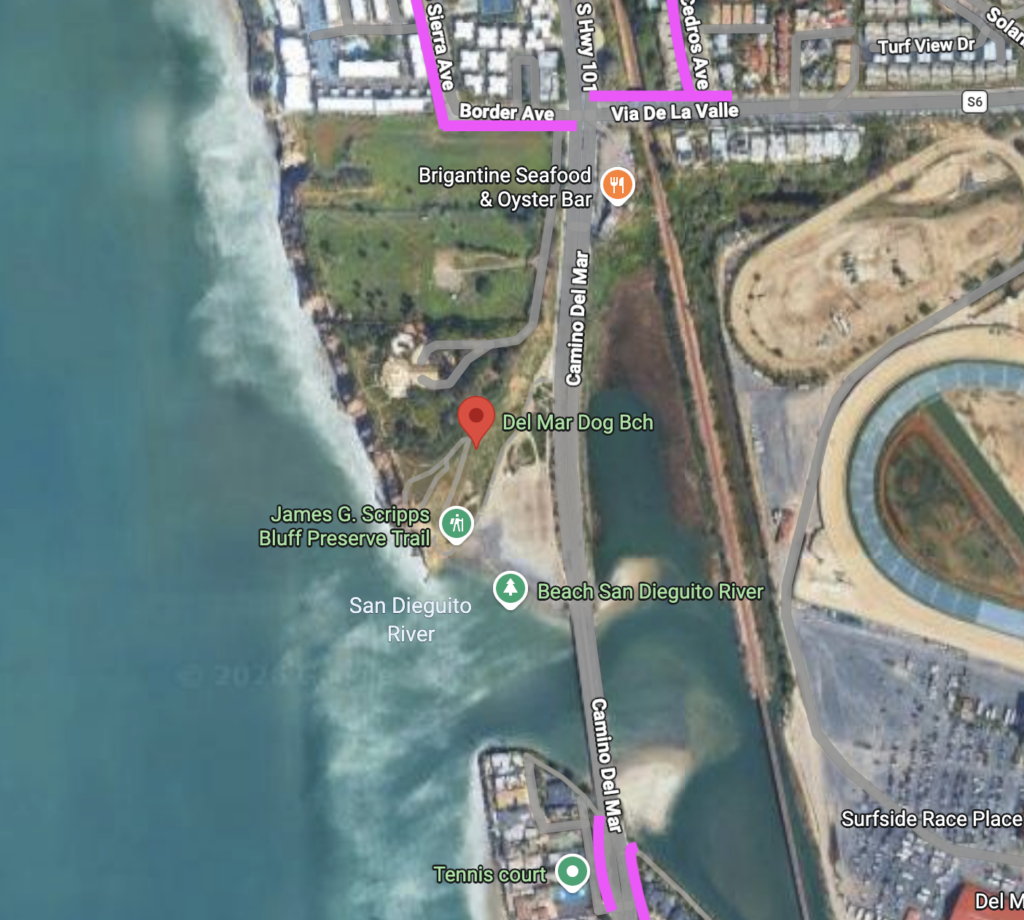
Parking can be a little annoying if you want the closest spots (they’re paid), but park a couple of blocks away and you can usually find free street parking without too much trouble. My best recommendations are either on Border Ave (which is the road next to the vacant lot – it’s what Via Del La Valle turns into if you continue across the 101), or the north side of Via De La Valle (the south side has meters, the north side does not). Worse case you’re down Cedros or S. Sierra Ave, neither of which are still that far. Or you can go the other direction and park on Camino Del Mar on the other side of the river. This again, also gives your dog time to get their business done before you hit the sand and while you’re close to the trash cans. Of course, if you have an older dogger, it may be worth it to pay for parking to be closer so they can spend more time at the actual beach and less time getting there and back. You can see these recommendations highlighted in pink on the map below.
As you enter the Del Mar Dog Beach, you’ll notice a Memorial Dog Garden where people have left painted rocks in memorial for their dogs. The garden gets decorated on the holidays and is a sweet addition to the area.
A few things to know before you go:
Check the tides. A lot of this beach disappears at high tide, so timing matters. When the tide is out, you can walk north along the shore, check out the cliffs, and explore tide pools. It feels more like an adventure than a dog walk. If the tide is in, there’s still the main dog beach area, it’s just a smaller space so you don’t get to do much walking.
Mind the cliffs. They’re gorgeous, they’re beautiful to look at, but they can, and do, crumble. I kept Pisco away from the base, even though he was very committed to peeing on them every chance he got. I did not want either of us to get smooshed by falling rock – yes, people have died this way in just the past few years.
The calm water area has a current. There’s a calmer stretch where the San Dieguito River meets the ocean, but the current is strong. If you let your dog swim there, make sure they’re a confident swimmer and keep a close eye on them. I’ve definitely seen some dogs looking very nervous as they were trying to swim back to shore but not looking confident they were going to make it.
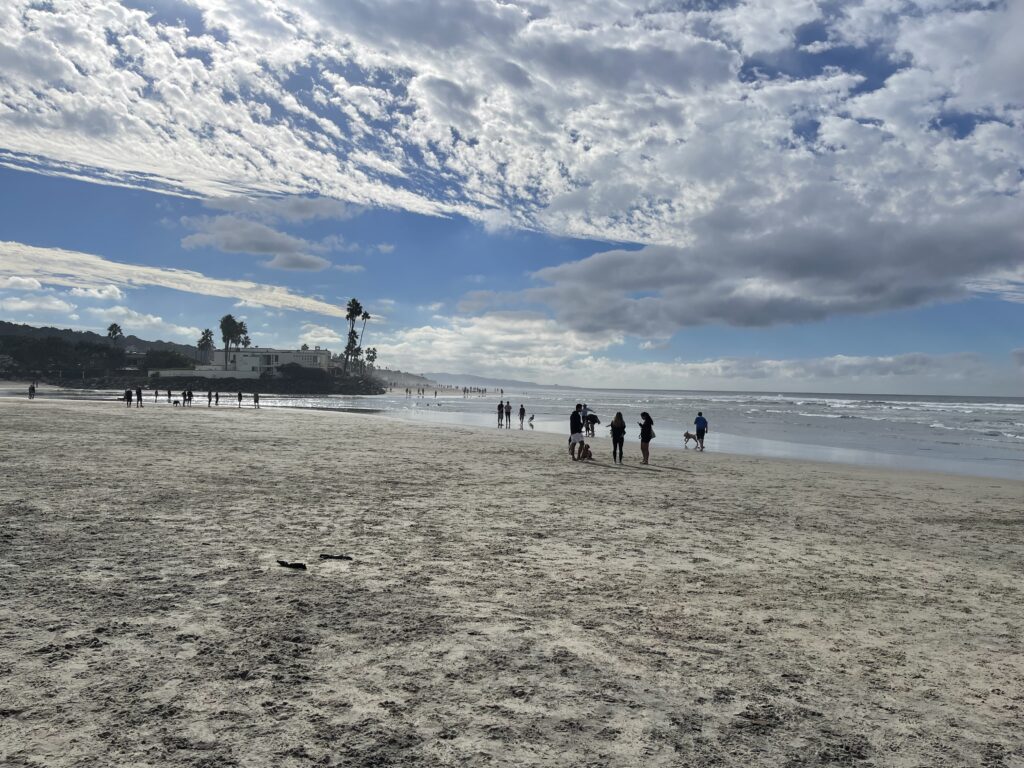
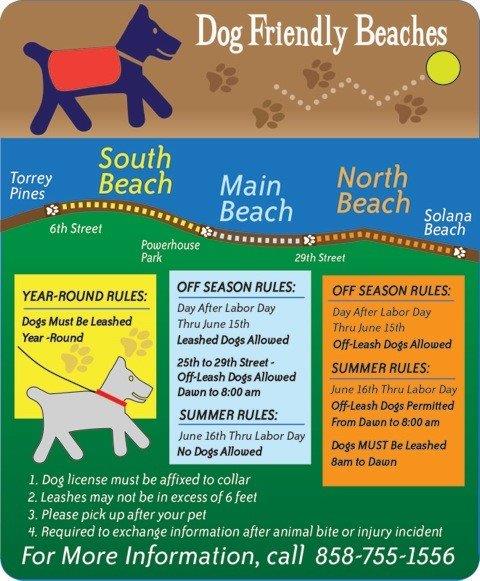
The one real trade-off at Del Mar: seasonal hours. During the off-season (Labor Day through June 15th), the north dog beach is off-leash all day. But in summer, off-leash hours are limited to dawn until 8 a.m. I’ve seen this enforced, so don’t assume you can show up at noon in July and let your dog run free.
Even with that restriction, Del Mar Dog Beach is worth every bit of the planning it requires. It’s one of the few beaches in all of North County that allows dogs at all, which makes it especially precious.
Del Mar Dog Beach is also the site of the Helen Woodward Surf Dog Surf-a-Thon which is exactly what it sounds like – a dog surfing competition. And if you’d like your dog to participate, they even offer classes ahead of the event so your dog can learn. Don’t worry, the competitors for the most part are not professional level surf-dogs, they are dogs just like yours and mine who just enjoy being in the water with their hoomans.
Dog Beach Safety and Care
One thing I want to point out is an important safety reminder that I don’t think a lot of people thing about….. Sand gets hot, like really, really hot. If you’ve ever been to the beach and tried to walk on the sand barefoot during the day, you know what I’m talking about. It’s like trying to walk across hot coals. Well, that’s what it feels like for your dog too, they just don’t complain because that’s just how dogs are. They’ll suffer in silence until their paws blister. Don’t do this to them. Take them to the beach only when it’s cooler, or if you can carry them to the wet sand, or if they can wear booties to the wet sand. Don’t so the, “oh, we’ll just run over there real quick” – try doing it yourself first, I bet you put your shoes back on.
Also, dogs have a tendency to get thirsty while they’re running around having fun, and will grab a quick drink of the ocean water, which of course is only going to make their thirst worse. So if you have a really active dog, take water with you.
As mentioned, water quality can be sketchy, so check to see if it’s safe before letting your dog frolic in the ocean or bay. If you wouldn’t let a kid get in the water, don’t let your dog in there. There are also critters in the water to be aware of. Both in the bay and in the ocean, there are sting rays, and it is possible your dog could end up on the wrong end of one. Jellyfish also wash up on shore. Mostly they are fairly harmless, but best to keep your pups away from them as a precaution.
If tide pools are visible, please be vigilant to keep your dog from causing harm. Just as with a child, dogs should not be touching the wildlife, this includes walking on it. It might be cute to watch them sniff it, but please be aware of their safety and the safety of the sea creatures. We are visiting the home of the sea creatures; let’s treat it with the respect that it deserves.
This should go without saying, but take poop bags, watch your dog, pick up their poop. I’m blown away by how many people take their dogs to the beach, and then just stop paying attention. It’s not safe for your dog, and it’s how we end up with a beach full of poop.
Finally, be prepared to clean them off afterwards. Like I mentioned, most of the beaches don’t have a way to wash off your pup, so if they’re water dogs, they may be coming back to the car completely covered in sand and salt water. Plan to take them to get a bath right afterwards. If they’re the kind that really just get their footsies dirty (like Pisco), these foot washing things can be great (https://a.co/d/053irJuh). At the very least, have a towel in the car to help dry them off and brush off some of the sand.
The Bottom Line
San Diego treats its dogs well. Whether you’re into the gritty, always-open vibe of Ocean Beach, the classic beauty of Coronado, the feral-open space of Fiesta Island, or the scenery at Del Mar, there’s a dog beach here that’ll work for you and your pup.
My recommendation: visit all four. They’re each genuinely different, and what works best depends on where you live, what your dog likes, and which kind of view you prefer.
If you’re relocating to San Diego, and wondering whether it’s a good city to move to with a dog — it absolutely is. And I’d love to help you find the right neighborhood to go along with all these beach days. Reach out anytime.
Want to see more video detail of these beaches? Check out the YouTube video I did on this topic here:
When I moved back to San Diego in 2020, I landed in Hillcrest, right on the border of Bankers Hill. Not on the coast, but what I discovered almost immediately was that I didn’t need to be. Coronado, Ocean Beach, Fiesta Island, Pacific Beach. All of them were just 10 to 15 minutes away on a Saturday morning with no traffic and nowhere to be.
Pisco and I made a ritual of getting coffee and a doughnut – I was working my way through every doughnut shop in central San Diego, which is a project I highly recommend – and then we’d pick a beach and go. Fiesta Island was his favorite. If you’re new in town, it’s this flat, unglamorous little island in the middle of Mission Bay that is completely off-leash, and wide open in a way that allows dogs to be dogs and brings them so much joy. He’d run up and down the sand, chase the jet skis, and I’d stand there being so grateful that this was my life.
Coronado is more civilized. The kind of place that makes you feel like you’re living inside a postcard. It’s got that perfect California beach feel with the long lines of sparkling crashing waves. Or on the bay side you get postcard perfect views of the San Diego skyline.
Pacific Beach on a quiet winter weekday afternoon was its own kind of perfect, lined with the boardwalk and people walking or biking or skating by; surrounded by restaurants, and shops, and tourists snapping pictures of the beauty that we sometimes take for granted.
The central San Diego beaches have an energy to them, it’s younger, more alive, a little unpredictable in the best way. We were regulars. We were happy.
Then I moved to Carmel Valley.
Carmel Valley is a wonderful place, and I’ll write about it properly another time. But what had been 10 to 15 minutes suddenly became 20 to 25. The Saturday ritual got harder to justify. And then came the trips where I’d drive all the way to Fiesta Island, or even Del Mar dog beach and Pisco would get out of the car, go potty, and look at me like he was ready to go home. A 20-30 minute drive for five minutes. That’s when the beach trips quietly stopped.
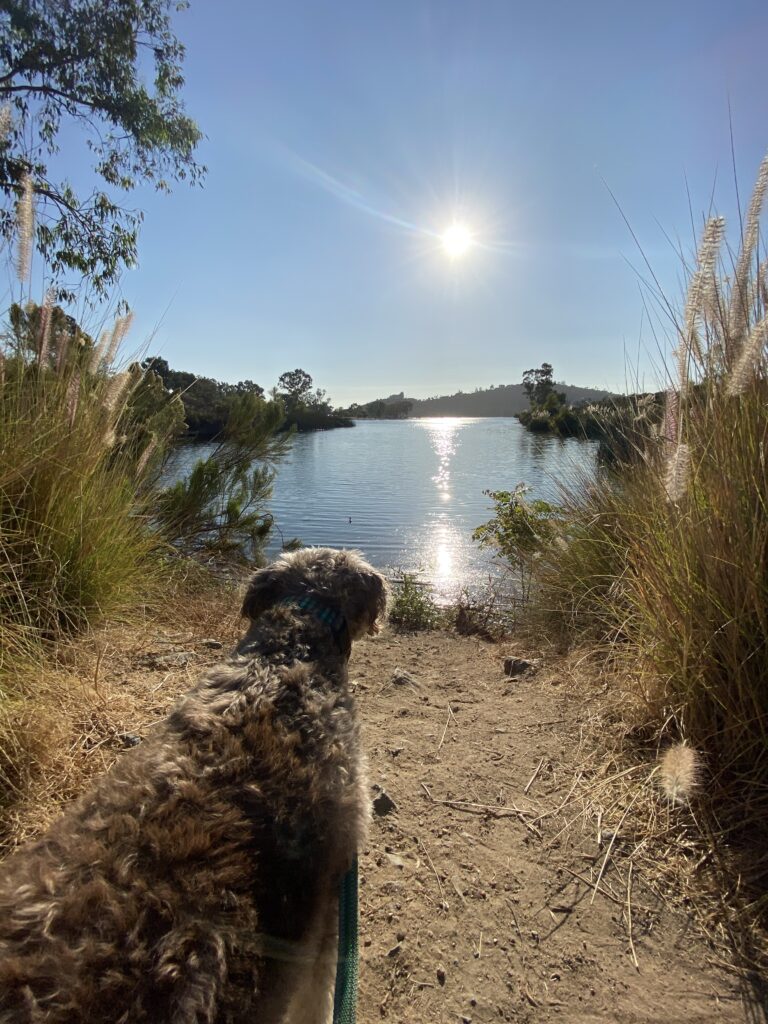
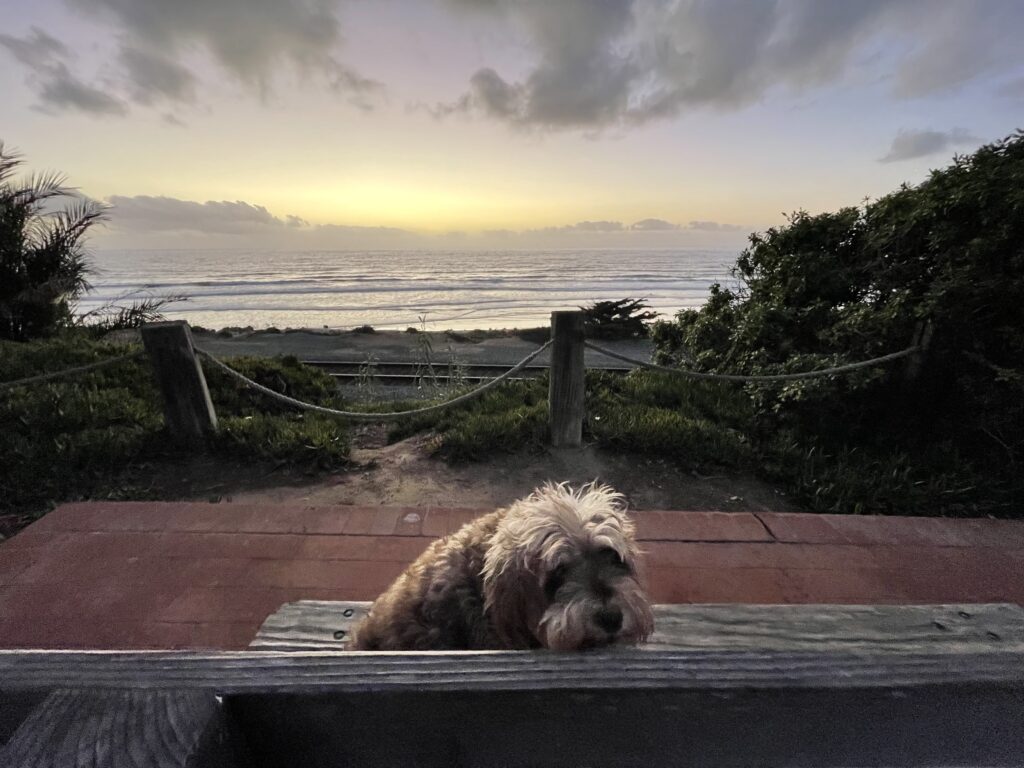
I’d still take him to the main Del Mar beach sometimes, or at least to Sea Grove Park to sit and watch the water. Still beautiful, absolutely, but different, quieter. More subdued. Some of that was the beaches themselves, which have a different energy than the ones we used to go to. Some of it was Pisco. He actually loved just sitting on a bench with me outside and enjoying the fresh air, but he was torn, because there were also so many people he needed to meet! He wanted to meet everyone, investigate everything, and then he’d get tired faster than either of us wanted to admit.
I lost him recently. And I’ve been sitting with the list of things I kept meaning to do and didn’t because either he couldn’t, or wouldn’t, not to punish myself, just because the list exists and now I’m the one who has to do something about it.
I want to walk the entire length of the beach from Torrey Pines all the way down to South Del Mar and back – something he wasn’t willing to do in these past few years. I want to go to Wind and Sea, which doesn’t allow dogs, and just sit there for a while. I want to grab coffee or lunch and plant myself on the sand, and do absolutely nothing useful. Pisco was not a sit-and-do-nothing dog. He had places to be. Now I can be still.
Torrey Pines is on the list too — the trails through the reserve, the views over the Pacific that look like they were designed specifically to make you feel small in the best possible way. Dogs aren’t allowed on the trails, which limited the times I would go. I want to go to the Botanic Gardens and the Wild Animal Park – sorry, the Safari Park, old habits die hard, it was called the Wild Animal Park until 2010 – and all the Balboa Park museums, and hikes that were always too long or too hot for Pisco, and day trips that weren’t good for dogs.
San Diego is a great place to have a dog, but there are limits, and if you’re anything like me and you feel super guilty leaving your dog behind, it means you miss out on some things. So I’m going to take this time between dogs to experience as much as I can that has been on hold.
I’ve been trying to figure out how to start this for a while now.
Do I explain what this is? Do I tell you who I am? Do I just dive in and hope you follow? I guess I’m kind of going with a combination of all three.
I grew up in California and went to UCSD – many moons ago. Back then, San Diego was pretty simple from a college student’s perspective. Campus. Pacific Beach. La Jolla Shores. Maybe Horton Plaza or the Gaslamp if we were feeling adventurous. That was pretty much the map. And it was pretty great.
I left after college, built a life and a career in the Bay Area and then Atlanta, got my MBA, and then one day finally made my way back to San Diego with a U-Haul, and fresh eyes, and absolutely no idea how much I’d been missing.
I moved back in May of 2020. The height of the pandemic. I’m sure you remember what that was like, and you know there wasn’t a whole lot to do. By afternoon both my dog, Pisco (pronounced Pees-co and named after the national drink of Peru, the Pisco Sour), and I, would be going stir crazy. So, I’d put him in the car, and we’d just drive. We’d explore neighborhoods I’d never been to, find streets worth walking down, discover corners of this city that hadn’t existed in my mental map of it. There was no traffic, so it was fun and easy, and I never went less than 85 MPH. The city felt quiet and a little surreal and completely ours. He loved it. I loved it.
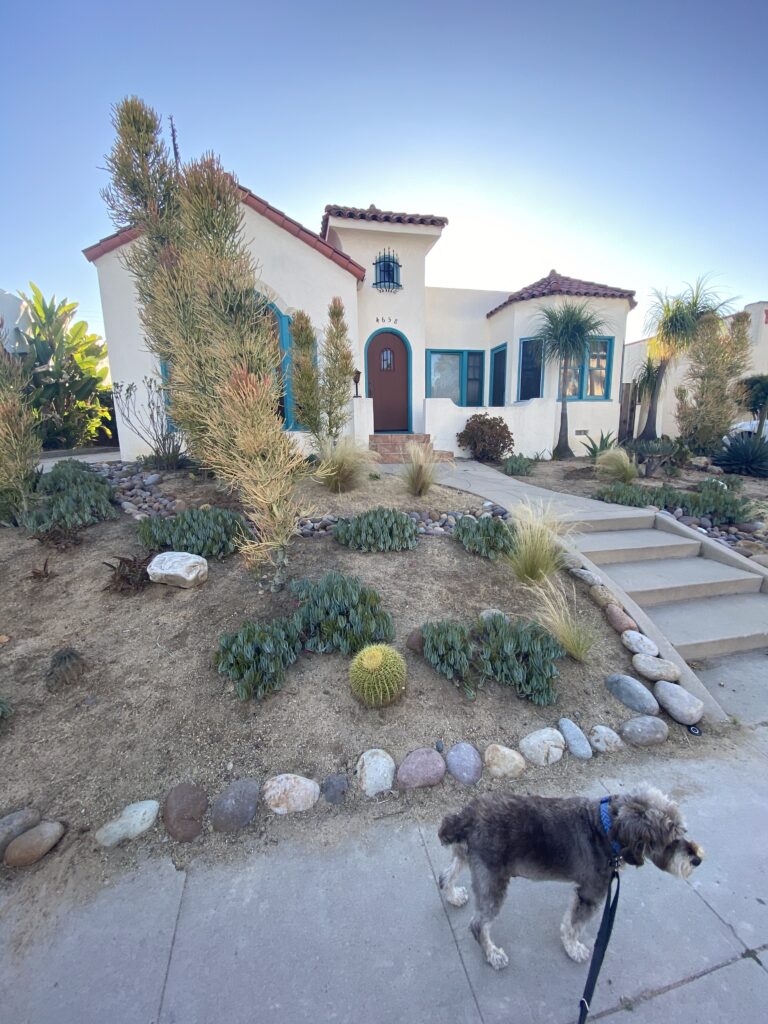
The first time we went to Kensington my mouth dropped as I slowly drove through the neighborhood and watched the beautiful houses go by. Tree-lined streets, gorgeous Spanish and craftsman style homes, this incredible village feel tucked into the middle of the city. I had lived here for four years as a student and didn’t even know it existed. The same is true with so many other amazing areas that I would have been scared to go to back then, but now have become some of my favorite places in all of San Diego. My dog and I found most of them together, one slow pandemic afternoon at a time.
As life came back after the pandemic, our afternoon adventures got harder to pull off. Traffic made it more frustrating to get around, he got older, and had health issues, and didn’t want to walk as much. The weather didn’t always cooperate to leave him in the car if I wanted to get out and explore, and I felt guilty leaving him home to go explore alone, so mostly we just didn’t go. The exploring quietly stopped.
I lost him this past Saturday.
I’m not going to try to explain what that’s like because most of you already know. But here’s what I keep coming back to: I want to go explore for him now. I want to see the things I kept putting off because of his health and logistics and guilt and weather. I want to make good use of this time, because if I’m not going to have him with me — then I have to do all the things I didn’t do because of him. Otherwise what was I waiting for?
That’s why I’m starting this now.
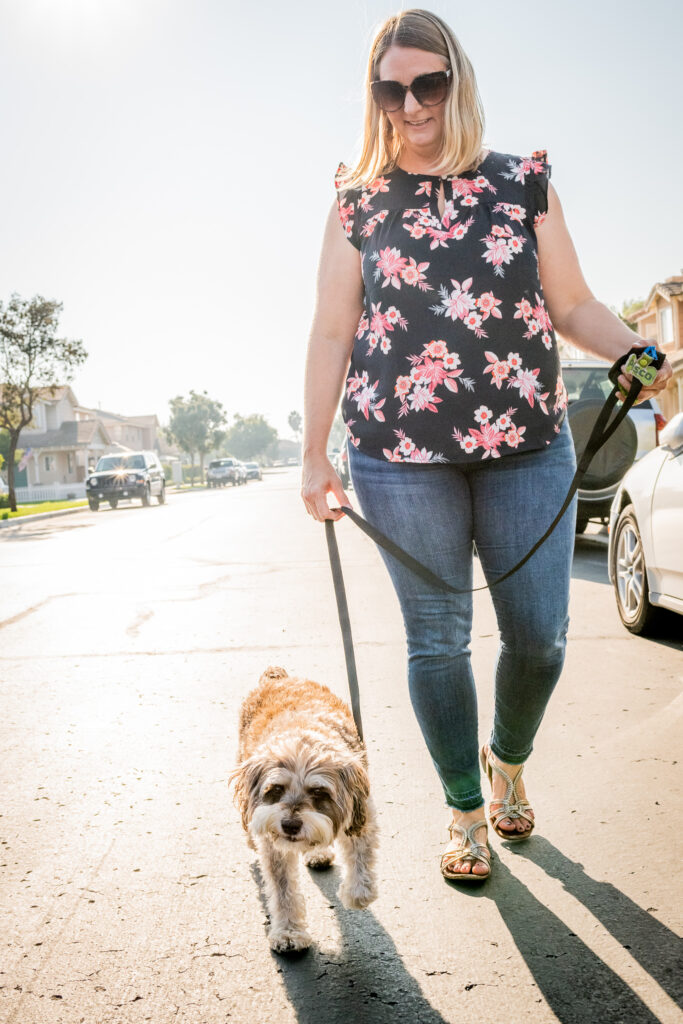
Allesen Wanderland is where I’ll share everything I find – neighborhoods, hidden corners, local spots, what it actually feels like to live here versus what the brochures say. I’m a real estate agent by trade, so yes, some of this will be useful if you’re thinking about buying or selling a home here. But mostly this is just me, exploring paradise and letting it keep surprising me.
I’m going to go find the things he would have loved.
San Diego gets flattened into a postcard pretty fast. A beach. A sunset. A fish taco. Nice, sure, but if you are trying to figure out where you might actually want to live, or even just how the city really feels from one pocket to the next, that version is not especially helpful.
That is where Allesen Wanderland comes in. This is a place for neighborhood details, local perspective, and the kind of details you only notice when you spend time wandering around on purpose. The goal is simple: help you love where you live, or at least get a little closer to knowing where that might be.
What you will find here
Neighborhood perspective beyond the usual talking points
Local lifestyle observations that make a place feel real
Thoughtful guidance for people moving to San Diego and locals looking closer at their own city
A personal point of view without the brochure language
I am a California native, a UCSD alum, and someone who left San Diego and spend 20 years determined to come back. And when I did, I came back with fresh eyes. Which turns out to be useful. I may notice what longtime locals overlook, and I can also point out when a place is being oversold by people who have clearly never tried to park there on a Saturday.
San Diego is not one thing. That is the whole point.
Some posts will be practical. Some will be more observational. Some will probably begin with a walk, a side street, or a question that refuses to leave me alone. All of them will be written for people who want a more grounded, more useful, more human sense of this city.
Who this is for
If you are thinking about moving here, welcome. If you already live here but want to understand San Diego beyond your usual orbit, also welcome. If you like local writing with a little curiosity, a little honesty, and a strong preference for places that feel lived in rather than staged, you are in the right spot.
There is a lot to explore. I plan to keep wandering.